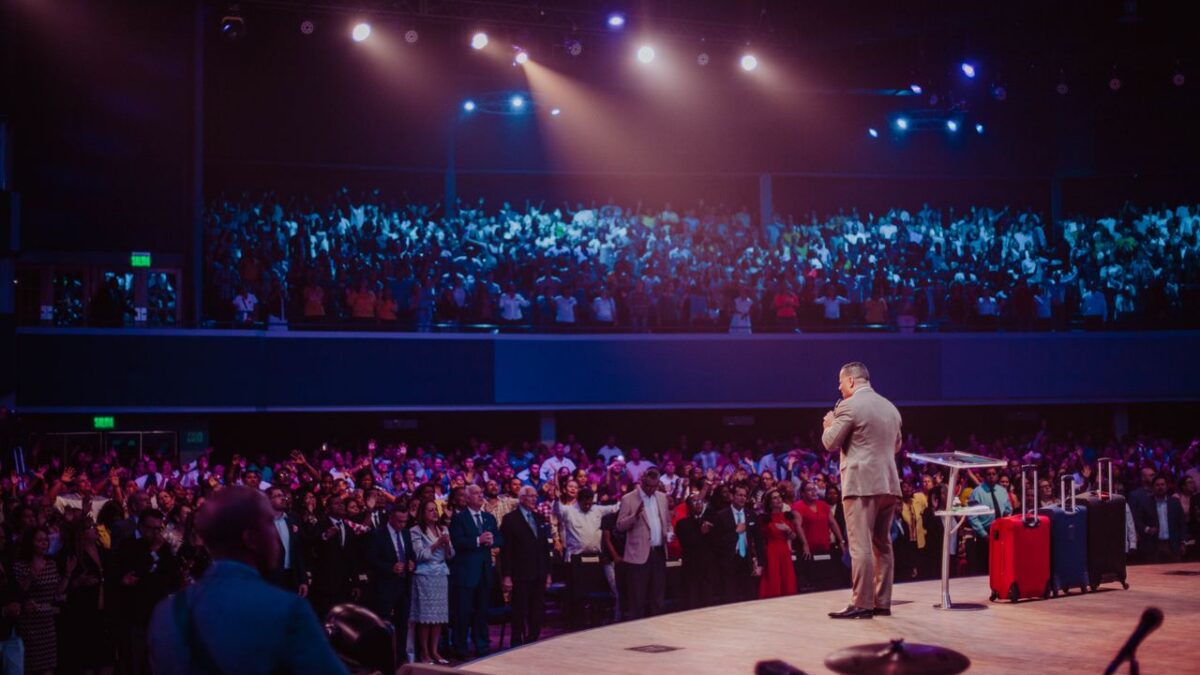
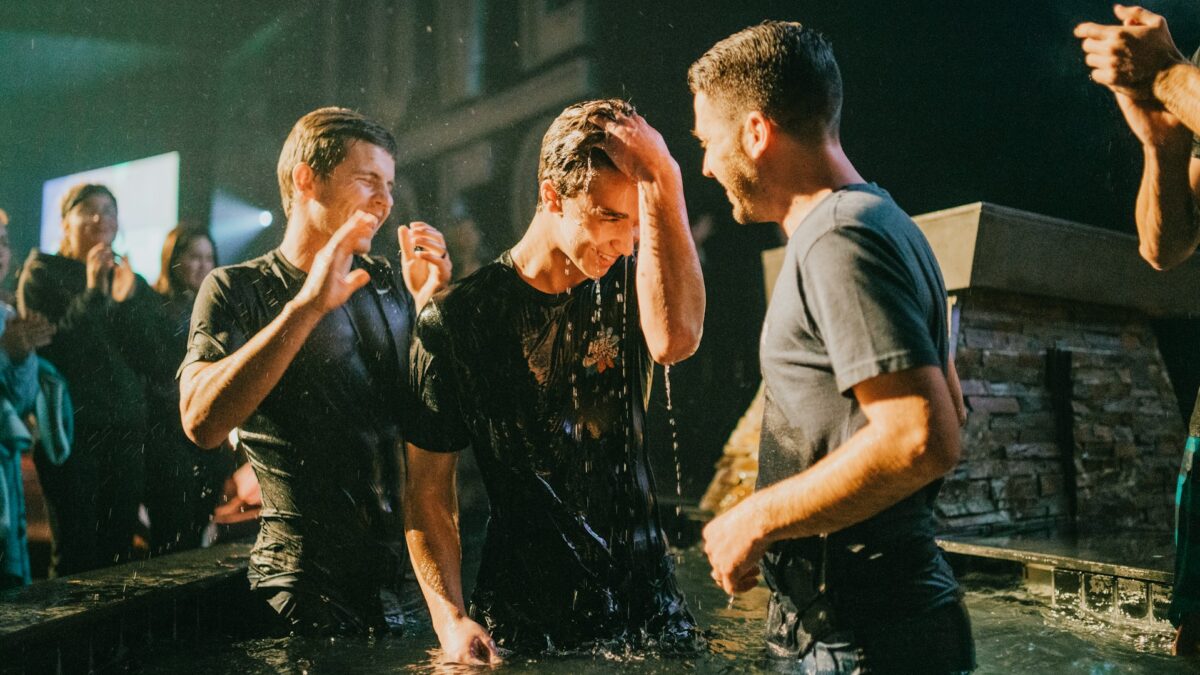

The revival is real, but the devil has backup plans. The evidence that the youth are turning to Christianity is going from anecdotal to data. In particular, young people on the right, especially men, seem to be finding faith.
As InteractivePolls noted on X, a recent Gallup poll found that “42% of men aged 18-29 now say religion is ‘very important’ in their lives — a sharp jump from just 28% in 2022-2023. Monthly religious attendance among young men has climbed to 40% (up from 33%), the highest level in over a decade.”
This might be dismissed as an outlier, but polls are consistently showing that the share of “nones” (those who claim no religion) has leveled off. And there are other signs, such as Catholic parishes welcoming record numbers of converts this Easter.
Even those who doubt the truth of Christianity should not be surprised at a religious resurgence. Consider the alternative. Secular liberalism has proven empty and unfulfilling, devolving into hollow indulgence on one hand and woke madness on the other.
What has the world been selling young men? Mostly the stupefaction of porn, pot, online sports gambling, and endless video games, which, though often seductive, do not make for a life of meaning. Meanwhile, an intellectual culture of constant deconstruction and critique is a joyless dead end, as exemplified by those cheering on those denouncing the reality of male and female as an oppressive construct and therefore cheering the mutilation of children’s bodies.
Amid the meaningless wasteland of modern culture, faithful Christian churches offer not only salvation in the next life but also a better way to live in the here and now. As the Presbyterian pastor and writer C.R. Wiley put it on X, “Simply being an island of sanity is proving to be a church growth strategy.”
It is not just, as Augustine famously acknowledged to God, that our hearts are restless until they rest in Thee, but that the natural law finds a way. As the brokenness of the world becomes more evident, the church can teach us who we are and how to live, proclaiming both the good news of God’s grace and the truth of how we are to live in accord with God’s creation order and our own nature.
No wonder young people disillusioned with the world are turning to the church. But the first shoots of revival are not yet a forest of the faithful, and the devil still has a lot of tricks up his infernal sleeves.
We are also still only seeing the first shoots. This makes it essential to recognize, as Ross Douthat recently noted, that religious revival, or at least its beginning, may coexist alongside religious disaffiliation. After all, revival is necessary precisely because many believers are falling away from the faith.
This dynamic seems to be especially noticeable among Catholics, where ardent new converts contrast with a large outflow of cradle Catholics who long ago abandoned any real connection to their church and its teaching. For every daily Mass-going convert, the Catholic Church is still losing many more who had only been showing up for Christmas and Easter, if that.
Of course, enthusiastic converts can make more, and religious renewal will, in time, bring many back to faith. But this requires that the passion of those finding faith, or returning to it, be nurtured and disciplined. If disciples are not made, then the revival will be derailed.
Thus, it is especially important to get men involved in their congregations and to find ways to give them responsibility and opportunities to lead. This will require wisdom and discernment, of course, and mistakes can, and inevitably will, be made, but it is essential to ground men in the life of the church.
Real work and real responsibility within the life of the church are also potent antidotes to the poison being spread by the many online influencers promoting false agendas and identities, and advancing pride, bitterness, and other sins under the banner of Christian truth.
The spiritual wolves looking to deceive and devour new believers feast on those who are disconnected from the physical life of the church. Those who are busy serving, being discipled, and learning to lead in their turn will be less interested in, let alone have much time for, weird online heresies and hatreds.
These influencers are doing the devil’s work in many ways but perhaps most of all in their efforts to stir up hatred between Christians. The enemy of our souls would love to turn a revival into a melee of arrogant factionalism.
If Screwtape were writing today, he would undoubtedly advise his protégé to encourage debating theology on X. It is not that doctrinal disagreements do not matter, but social media is a terrible place to hash them out. Such arguments tend to turn theology into a cudgel for resentments, or an edifice of pride, rather than a way to love and know God.
And that — loving and knowing God — is what a revival is about, as God calls His people back to Himself.