
This week, Rep. Nancy Mace of South Carolina introduced a joint resolution to bar foreign-born U.S. citizens from serving in Congress, the federal judiciary, and as Senate-confirmed political appointees. The Constitution already prohibits foreign-born citizens from serving as president and vice president, but Mace, who is currently running to be South Carolina’s next governor, wants to extend that to other high levels of government.
Her targets are Democrats like Reps. Ilhan Omar, Shri Thanedar, and Pramila Jayapal — all of whom, according to Mace, have divided loyalties. If the measure were to pass, however, it wouldn’t just bar these left-wing Democrats from serving in Congress, it would also affect several sitting Republicans who are naturalized citizens.
Of course, Mace’s proposed amendment has almost no chance of passing. It would require a two-thirds majority vote in both chambers of Congress and ratification by three-fourths of U.S. states. But that doesn’t mean it’s a bad idea. Prohibiting foreign-born citizens from Congress and the federal judiciary would have the salutary effect of keep radicals like Omar and Jayapal away from power, as well as the cadre of radical foreign-born federal judges, many appointed under the Biden administration, who have worked ceaselessly to undermine President Trump’s agenda since the day he took office.
More important than the merits of the proposal, however, are the reactions to it, which serve as a timely reminder of how thoroughly we’ve been propagandized into believing the false liberal narrative that the United States is a “nation of immigrants.”
Take for example columnist and law professor Jonathan Turley, a man of the establishment right, who said in an X post that he “cannot think of anything more antithetical to our founding than barring foreign-born citizens from Congress. As a nation of immigrants, it is a reaffirmation of our heritage to have these citizens serve in government.” Later, he declared “the founders themselves were immigrants.”
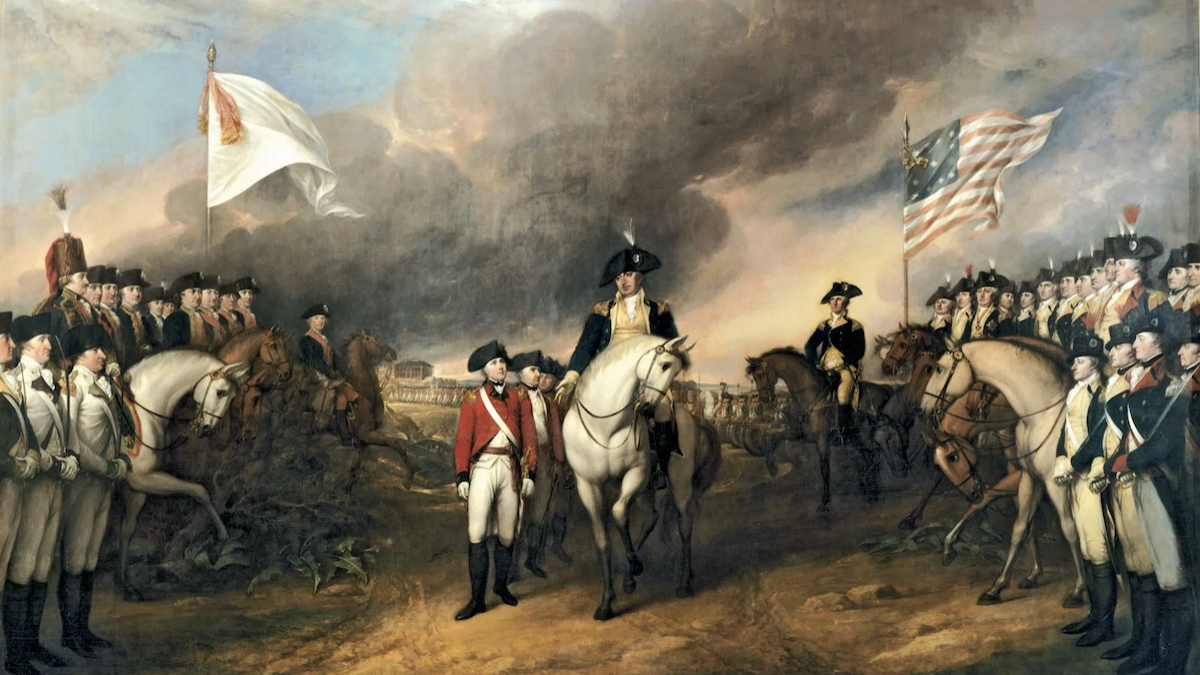
There’s a lot to unpack there, but to that last point, no they weren’t. Of the 56 signers of the Declaration of Independence, only eight were not born in the American colonies — they were born in England, Ireland, Scotland and Wales. All of them were subjects of the British crown, and each of them came to the colonies as colonists and settlers, not immigrants. They traveled from one part of the British Empire to another. When in 1776 they broke away from the mother country, one of their chief purposes was to “secure the Blessings of Liberty to ourselves and our Posterity,” as stated in the preamble to the Constitution. Indeed, the Constitution says almost nothing about immigrants — except that no foreign-born person may serve as president or vice president.
It’s odd, then, that Turley says he can think of “nothing more antithetical to our founding than barring foreign-born citizens from Congress.” Every member of the first Congress (1789-1791) was born in the British Empire, and only nine were born outside the American colonies, in Ireland, England, Canada, and Scotland. None of them were immigrants.
The “nation of immigrants” line is not just ahistorical, though. It’s an insidious attempt to redefine American identity away from the shared bonds of culture and history that have always defined a nation, and assert instead that America is “an idea” or a “creedal nation,” as Supreme Court Justice Neil Gorsuch recently said.
What terms like this really mean, what they are meant to convey, is that instead of being a distinct people descended from common ancestors, America is something far more plastic and ephemeral: a set of Enlightenment propositions about human nature and natural law that anyone can adopt. All you have to do to become an American, according to this view, is assent to those propositions and sign some documents. A recent arrival from Somalia, so long as he has all his paperwork in order and has gone through the proper bureaucratic process, is just as American as someone whose family has been here since the seventeenth century.
Everyone knows that is an absurd position, but often people are afraid to say so for fear of being called a racist or an ethno-nationalist. That’s because the “creedal nation” argument is often framed as a binary: America is unique among the nations of the world because we have a “civic nationalism,” not “blood-and-soil nationalism.” Or, our American identity is based on the founding creed, not on ethnicity — as if ethnicity is the only alternative to creedalism. The implication is that anyone who rejects the creedal nation idea is an ethno-nationalist/racist who thinks only white people can be real Americans.
But of course one need not be an ethno-nationalist to reject the creedalists’ claims about American identity. Indeed, those claims can be rejected on the basis of religion alone. At the very heart of American identity, after all, lies the Christian religion and the principles of government derived from its theological precepts. Put another way, if America is a “propositional nation,” as they say, then the proposition is Christianity and all that it entails. You cannot have, as the basis of nation, the assertion that “all men are created equal,” that all men are given unalienable rights by their Creator, without Christian theological claims undergirding those assertions. That doesn’t mean every American has to be Christian, as if we’re some kind of theocracy. But it does mean that every American has to endorse a Christian theological cosmology.
The point about religion is that America is not an Enlightenment-era parlor game. It is a people who came from a particular culture and religion, British and Christian. Its creed is universal in the same way the Christian creed is universal: it is open to everyone willing to convert, change their life, and be transformed. That’s what assimilation really means. The immigrant must leave behind the cultural practices of his homeland and adopt American culture and habits as his own — above all, he must adopt the Christian idea that all men are created equal, with all the implications that flow from that. That is harder to do than it seems, and it doesn’t happen at all under conditions of mass immigration.
And that’s what all this really comes down to. Not everyone who emigrates here will become an American. Ilhan Omar, for example, will probably never become an American, no matter how long she lives here. That’s because being an American doesn’t mean just being physically present in the United States, with all your documents in order, in hopes of making a lot of money or amassing a lot of power. It means joining, and being adopted into, an existing people — a people with a shared past and a common future and a distinct heritage and cultural patrimony.
Most foreigners, if they fully understood what it meant, would not even want to assimilate. People after all tend to love their own cultures and ancestral homelands, and they generally do not want to leave them behind for another. That’s why so many immigrants today fail to assimilate, or don’t even try. That’s also why, in 2026, it’s worth asking whether we should keep allowing them to hold high federal office.
As we approach the 250th anniversary of the Declaration of Independence, we should not be afraid to say with confidence that America is not merely a creed or a proposition, but a people. And as for the founding, let’s have no more of this falsehood that we were “founded by immigrants.” The English colonists did not cross the Atlantic to join a new people or assimilate into a new culture. They came to plant the culture of England on these shores, and that’s exactly what they did.