
Artists the world over are worried.
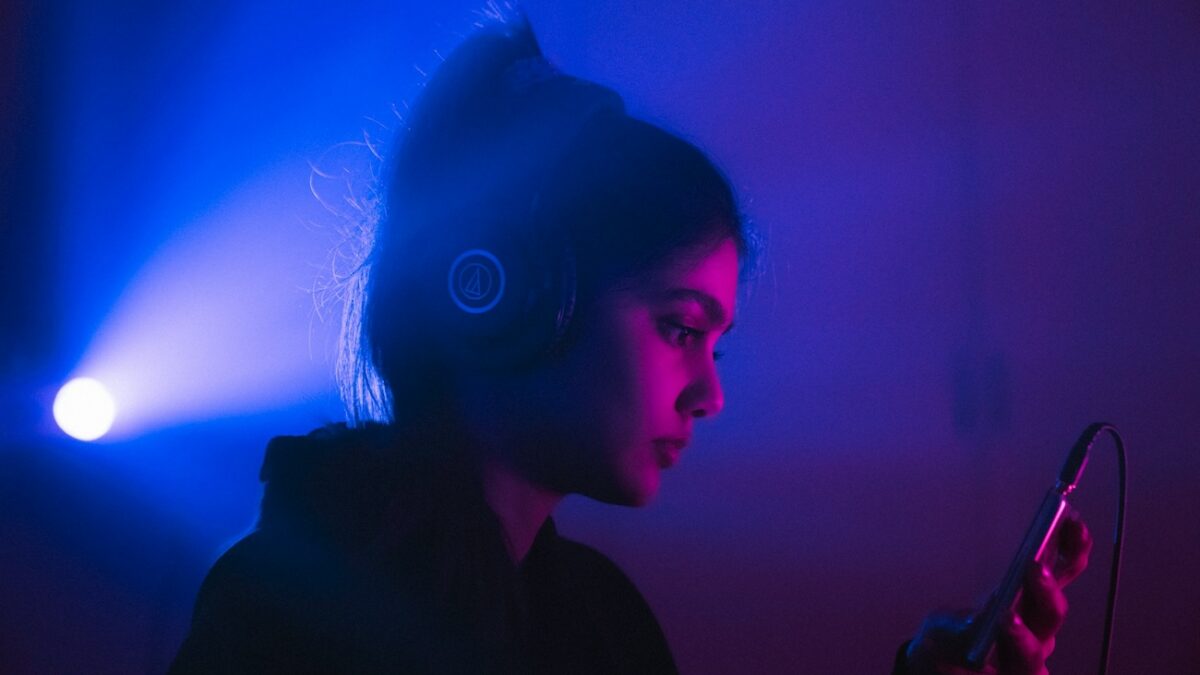
AI is making inroads into music. AI-generated country act Breaking Rust last year achieved No. 1 on Billboard’s Country Digital Song Sales chart with their song “Walk My Walk,” while other tracks have accumulated millions of streams. Short stories apparently entirely authored by bots are winning literary prizes. Though AI-generated music, actors, and performances are currently ineligible to win Grammys or Oscars, we are talking about entertainment. And when surveys show that north of 90 percent of respondents can’t reliably distinguish human-created music from its AI doppelganger, you know there are plenty of people thinking about the financial opportunities this new tech may afford.
Is AI capable of creating true, authentic beauty to satisfy the needs of the human person? It’s a question presumably keeping a lot of people up at night, not only those with a lot of money to lose but those who fear that their passion and purpose in life is about to be engulfed by bots. But however much AI may approximate and indeed compete with human artwork, it will always fail to create the kind of true beauty the human soul craves.
AI Art as Fast Food
In a recent op-ed, Washington Post columnist Megan McArdle argues that AI-created art is “not … terrible slop unfit for human consumption.” Rather, the problem with this content is that “it’s too good,” like a fast-food meal that tastes oh-so-good but is oh-so-bad for you.
“It is the literary equivalent of fast food: convenient, cheap, hyper-consistent and relentlessly optimized to tickle our pleasure centers,” she writes. It is curated to be readable in both its style and structure, she notes. “AI fiction tends to be smoother, tighter and psychologically simpler than its human-written counterparts, explicitly stating themes, constructing ‘single-track narratives with fewer loose ends’ and portraying fewer morally ambiguous characters.”
McArdle calls the effect of AI on art “intellectual monocropping” because it is tailored to be the same type of thing, communicating content in the same kind of way, ad infinitum. What AI fails to do, she argues, is offer us “wild ideas” that buck trends and provoke inspiration and innovation. It’s perhaps what one would expect from a right-leaning libertarian thinker. And it’s grossly inadequate.
Humans Get Bored
It’s absolutely true, as McArdle posits, that AI is “intellectual monocropping.” As I previously argued, AI operates within predefined parameters, executing programmed responses transcribed into binary code. It’s not spontaneous, and it doesn’t actually understand anything. It’s simply doing what it is programmed to do, and it possesses no emotion. It is never happy, sad, angry, hopeful, or even bored. It’s simply a really, really sophisticated calculator.
In one sense, even a lot of human art we create falls generally into an analogous, predefined category. Taylor Swift’s most popular songs follow the same programmatic musical method as the Beatles: verses, prechorus, chorus, more verses, prechorus, chorus, bridge, final chorus, almost always under four minutes (though Swift notoriously released a 10-minute song a few years ago). But rarely will you find eight- or 15-minute pop songs, precisely because there is an impatient human appetite for a catchy rhythm and beat that repeats itself several times and then comes to an end. Likewise, many television sitcoms, movies, and books follow a predictable, time-tested script aimed at appealing to the masses. There’s a reason there are more than 30 Marvel Cinematic Universe movies.
Yet, as even the producers of cinematic universes and musicians learn, there is also a limit to what the general public can stand. Stories that become too banal, too rote, too much of what came before inevitably reach an expiration date, and the public moves on. There’s a reason disco died and why it increasingly seems like it is time to retire the Star Wars or Game of Thrones brands. There’s only so much you can do with such narratives.
What Humans Really Want
As much as the entertainment (and literature) industries have figured out the formulas most likely to succeed at the box office and on the bestseller list, there is a deeper human appetite for the kind of art that appeals to a universal quality in our imagination and desire. It’s the reason novels and musical scores written hundreds of years ago and works of art produced half a millennium ago are still capable of speaking to us. Movies produced before our grandparents were born can still excite and inspire. Such art was not produced based on a 21st-century algorithm but via a human mind, guided by a human heart, who thought he or she had something important and perhaps even eternal to say about the human experience. The human artist, unlike AI, wants to be appreciated and understood.
Alternatively, consider your own experience of consuming the type of art that most inspires you and breathes life into your soul. Is it because that music, piece of art, or book was exciting and titillating on every page, or because it in some way transformed you, opened a new horizon, or helped you contemplate something with fresh eyes? Sure, I have my list of favorite popular bands and musicians. But if you play certain pieces by Beethoven or Chopin, I’ll weep because it not only communicates profound, unutterable beauties but also directs me to a transcendent reality I didn’t even realize I could possess.
This is why we not only want to consume great art but also want to know and understand the artist. Because we are humans, we want art produced by other humans; we yearn for connection and relationship. This is why it’s not just the art itself that sells but the biographies and interviews of those artists. We hope, in some inchoate way, that in learning about the artist, it will not only help us better understand the art but also deepen our own emotional connection to it. If, by divine providence or “aligning of the stars,” we happen to meet that artist … well.
After all, art is not only about entertainment. It’s about us — who we are, what we want, what we hope to be. It’s an exchange between the artist and the consumer, in which both hope to be understood and, ultimately, loved. This is why AI, even if it creates innumerable “flawless” three-minute pop songs or 300-page trashy romance novels, will never create the kind of beauty we need. We humans suffer and long, and we need art that communicates meaning and love from suffering and longing.
Hundreds of years from now, people will still read Mark Twain and listen to Bach. They won’t be reading books or listening to music created by bots.