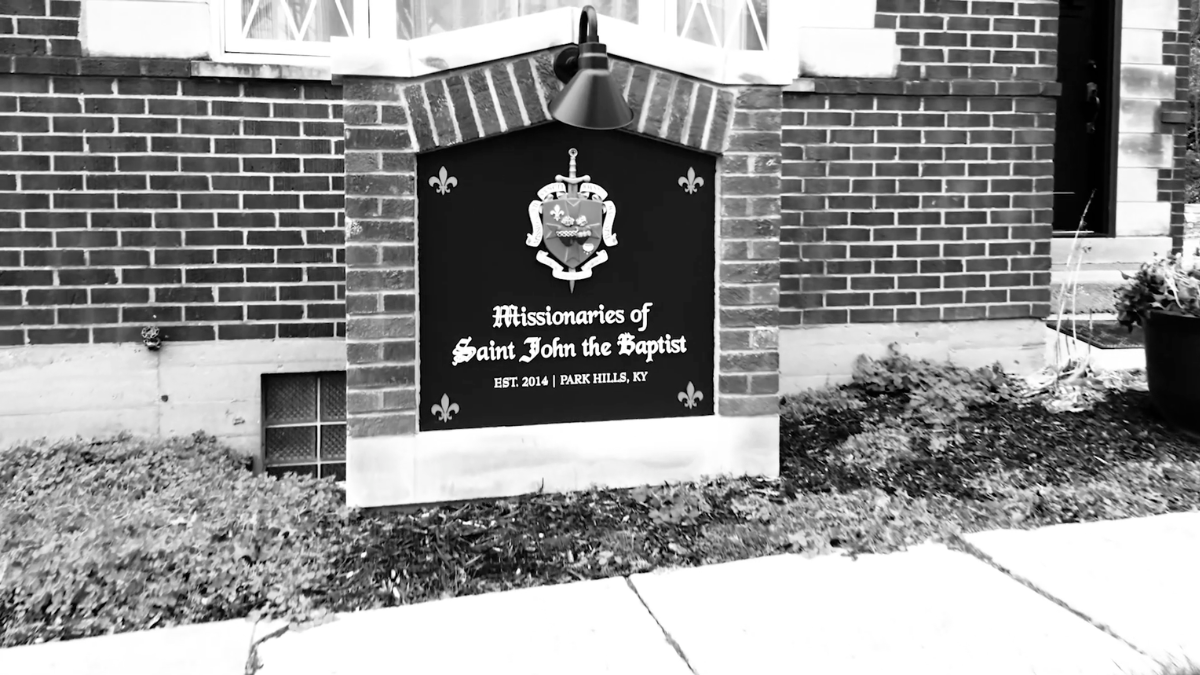

The Missionaries of St. John the Baptist, a Catholic religious community in Kentucky, had a simple and modest plan: to build a Marian grotto (a simple outdoor religious display with statutes where people can pray) on property already owned by the religious organization. The local zoning board approved the land use. This hardly seems like a controversial scenario warranting a petition to the U.S. Supreme Court, but a few neighbors objected and argued that building the grotto violated the local zoning code because the grotto was not being built next to an “arterial street” — essentially a highway.
The neighbors cited possible concerns about increased traffic and parking, but those objections seem questionable in the circumstances. The request was not for an amphitheater or a mega-church that would draw new followers, but merely for a grotto on the property.
When the neighbors appealed the zoning approval, the Kentucky Court of Appeals and the Kentucky Supreme Court sided with the neighbors and prohibited the religious organization from building its grotto. Beyond the factual issue that a grotto on a church property is unlikely to disturb anyone, there are several concerning legal implications flowing from the Kentucky Supreme Court decision.
The reality that the appeal of a complaining neighbor can overrule both the decision of a local zoning board and the right of a religious organization to use its own land for religious purposes is disturbing enough. But there is a particular religious freedom issue of national legal importance that is front and center in this case: The Kentucky Supreme Court rejected the religious organization’s Religious Land Use and Institutionalized Persons Act (RLUIPA) claim.
RLUIPA is a federal statute that Congress passed to ensure that, when land-use laws impose a substantial burden on religious exercise, those laws will be subject to strict scrutiny. RLUIPA exists precisely to prevent situations like that in Missionaries of St. John the Baptist. RLUIPA’s purpose is to prohibit “zoning and landmarking laws that substantially burden the religious exercise of churches or other religious assemblies or institutions absent the least restrictive means of furthering a compelling governmental interest.”
The statute seems clear enough in its purpose and effect. Yet the test adopted by the Kentucky Supreme Court (based on a precedent from a case called Livingston in the 6th Circuit) places an unreasonably high bar on what is considered a “substantial burden.” If a religious organization cannot show that the burden imposed by the land-use ordinance rises to the level of a “substantial burden,” then the protections of RLUIPA do not apply. The test articulated in Livingston and adopted by the Kentucky Supreme Court to determine when an action constitutes a “substantial burden” renders the crucial protection for religious land use in RLUIPA practically meaningless.
That is why the Missionaries of St. John the Baptist case is about more than this particular religious organization’s attempt to build a Marian grotto in Kentucky. Congress passed RLUIPA to ensure that religious organizations can use their property for religious purposes without being impeded by minute zoning ordinances and NIMBY neighbors. If courts use an analysis that effectively considers most zoning laws as a less-than-substantial burden on religious exercise, RLUIPA is almost completely gutted and religious organizations are left without the protection RLUIPA was meant to provide.
Under the Livingston test, courts will deny most RLUIPA challenges because the zoning laws are not coercing religious organizations to stop practicing their faith. Particularly troubling is that, in most cases, judges will not deem the burden “substantial” under the Livingston test if the religious organization could propose a smaller construction project or place the project somewhere else on its property.
But this way of reasoning flips RLUIPA on its head. The statute is meant to require the government not to interfere with religious uses of land. Instead, the Livingston test requires religious organizations to jump through many hoops to use their own property in a way that satisfies zoning boards and neighbors before courts will consider the burden substantial enough to warrant the application of religious freedom protections.
While the religious status of the plaintiffs in this case is fit for its own examination (the Missionaries of St. John the Baptist, a group that existed to serve those drawn to the Traditional Latin Mass, were suppressed by the bishop of Covington, Kentucky, in 2024), it is noteworthy that the organization’s status is irrelevant to the legal questions at issue here. RLUIPA in particular, and religious freedom protections in general, are not limited to religious organizations with certain ecclesiastical structures or approvals. Catholic parishes, nondenominational churches, and religious organizations unaffiliated with churches are all entitled to the land-use protections provided by RLUIPA and to religious freedom in America.
On a related note, there is an (understandable) growing concern that groups that do not fit the traditional American understanding of a religion will take advantage of religious freedom protections. Some of this could be dealt with, as I have written previously, if courts had the courage to declare that satanists and various atheistic groups are simply not religions under a proper interpretation of the law.
But what about Muslims? Will strengthening religious freedom protections under statutes like RLUIPA force communities to allow extremist Islamic centers and compounds to flourish? While an extensive treatment of this question goes beyond the scope of this article, this is something the religious freedom legal movement needs to address. Perhaps by scrutinizing the beliefs and practices of some of these groups, courts can conclude that the government has a compelling interest in preventing them from proliferating. After all, the government is indeed allowed to place substantial burdens on religious exercise if the government can show that it has a compelling interest in doing so. While it is important to ensure that expanded religious freedom protections are not taken advantage of for bad purposes, such hesitation should not prevent the necessary work of ensuring religion in America is protected.
Land-use cases, like many of the compliance and corporate governance issues I work on at Napa Legal, do not attract attention like the hot-button First Amendment and “nondiscrimination” cases that make the headlines. But the legal cases that appear to be boring and technical often have major consequences for religious freedom. If religious organizations lose their ability to use their land for religious purposes without unnecessary government interference, the ability of religion to function in the public square is severely harmed. For that reason, it is important for lawyers dedicated to the flourishing of religion in American life to get involved in “the boring stuff,” as we fondly call it at Napa Legal.
I was honored to work with the Manhattan Institute on a brief submitted to the U.S. Supreme Court recently, asking them to hear the Missionaries of St. John the Baptist case and fix the problem of a “substantial burden” test that guts RLUIPA of its power. If the high court hears this case and overrules the Kentucky Supreme Court, it can create a much-needed precedent, ensuring that religious organizations can use their property for religious purposes without being subject to restrictive and inappropriate land-use laws.
As America has become more secular in recent decades, there has been a wide variety of unacceptable intrusion by the government into the life of religious organizations. It is important that, from nondiscrimination laws to state compliance regulations to land-use ordinances, defenders of religion in America fight on every front.