
“I can’t breathe” became a rally cry for people everywhere in 2020 after the death of George Floyd. The words appeared on signs, murals, Instagram — you name it. Floyd’s death was framed by the corporate press not merely as a tragic event, but as a catalyst for a “reckoning” over race, policing, and systemic injustice — even if that “reckoning” included violent riots that damaged or destroyed the lives of huge numbers of people.
Less than six years later, those same words were spoken by 18-year-old Henry Nowak as he lay dying in Britain after being stabbed by a Sikh man. Video footage shows police responding to the scene and dismissing Nowak’s repeated statement that he had been stabbed. Police instead handcuffed him while ignoring his pleas that he could not breathe because the murderer falsely accused Nowak of being racist, which apparently is a higher priority for police than the dying teen.
With the George Floyd riots, the propaganda press treated them as an understandable “reckoning.” But amid rightful public outrage following Nowak’s murder, those same outlets are accusing the protesters and politicians who have spoken alongside protesters as “politicizing” or “hijacking” Nowak’s death.
According to The New York Times, Floyd’s death “spurred nationwide protests against police brutality and a reckoning over everything from public monuments to sports team names.” But when people protest egregious government behavior in the context of Nowak’s death, The Times framed it this way: “Murder Case in Which Police Handcuffed Victim Fuels Outrage in Britain.”
“The authorities in Britain are investigating police officers who handcuffed a student, Henry Nowak, while he was dying, in a case that [has] been increasingly politicized,” the subhead read.
The point is to cast these protests as though they are illegitimate and have no real purpose but to be used to advance right-wing causes, while Floyd’s death had legitimate purpose to usher in a “reckoning.”
The Guardian’s Rajeev Syal and Kim Willsher took a similar approach and headlined their piece “Europe’s far right exploit Henry Nowak murder in UK with populist rhetoric on race.”
Compare that to The Guardian’s treatment of Floyd. Following Floyd’s death, the outlet published articles like Lauren Aratani’s, who headlined her piece “George Floyd killing: what sparked the protests — and what has been the response?” She framed the violent riots merely as a “reckoning” and a “demand” for “justice and systemic change to end police brutality.”
CBC went further, with Chris Brown headlining his piece “How Britain’s far right hijacked the murder of Henry Nowak.” Brown argued that politicians raising concerns about anti-white racism and Britain’s handling of ethnic crime scandals “appear determined to trigger another battle over race regardless.”
This framing stood in stark contrast to how the outlet treated coverage of Floyd’s death and subsequent riots. CBC treated the case — before a trial — as a clear-cut case of police brutality that sparked worldwide conversations about racism and anti-black violence without accusing the protesters and rioters as “politicizing” Floyd’s death or exploiting it for partisan purposes.
“That video lit the fuse on a powder keg of anger and frustration across North America and around the world. It was for many a call to action.”
There was little if any discussion whether activists were “hijacking” and “exploiting” Floyd’s death — though they clearly were. The Black Lives Matter Global Network Foundation raked in more than $90 million amidst the riots. Leaders of the Black Lives Matter movement have since come under scrutiny for lavish purchases of multiple houses and allegedly defrauding donors. Not to mention the hundreds of rioters who took the opportunity to burn, loot, and commit other crime all in the name of George Floyd. Yet Floyd’s death became the justification for demands extending far being Minneapolis, from defunding police to instituting discriminatory corporate “diversity” programs, destroying monuments, and even suspending pandemic-related restrictions.
In cities across the country, the unrest caused widespread destruction, with riots causing more than $1 billion in property damage. Multiple people died, including retired St. Louis police captain David Dorn, who was murdered while trying to protect a friend’s business from looters.
Yet none of that prevented the propaganda press from describing the riots as merely a “reckoning” instead of a “hijacking” or “politicization.”
Notably, Floyd’s official cause of death was “cardiopulmonary arrest” that happened during “law enforcement subdual, restraint, and neck compression.” The Hennepin County Medical Examiner Dr. Andrew Baker noted Floyd had 11 ng/mL of fentanyl and 19 ng/mL of methamphetamine in his system at the time of his death. Baker judged these levels high enough to potentially cause death. Baker also testified that heart disease and fentanyl “contributed” to Floyd’s death and made him more vulnerable, though “Mr. Floyd’s use of fentanyl did not cause the subdual or neck restraint.”
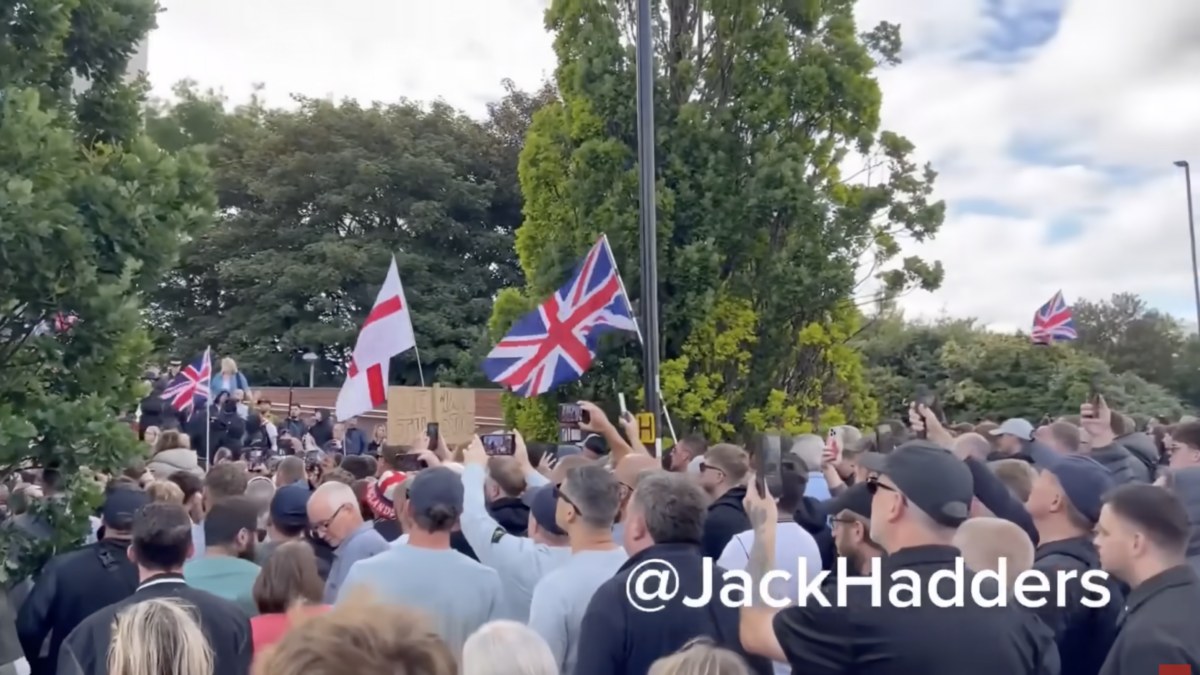
But now consider whats happening in Britain. The protests surrounding Nowak’s death are happening against a backdrop of longstanding frustration over two-tier policing and years of scandals involving Pakistani grooming gangs that authorities repeatedly ignored or downplayed. Yet the propaganda press frames the legitimate protests and conversations these government failures are spurring as having “hijacked” Nowak’s death and “politicized” it.
If the corporate media were to acknowledge that the outrage surrounding Nowak’s death stems from legitimate and systemic concerns about discriminatory policing and the failures of Britain’s political establishment, they would be forced to confront the realities they have spent years downplaying or ignoring, that is, that mass migration from Third World places like Pakistan have imported serious criminal problems. Or that police treat accusations of racism as a far greater offense than the violence committed against white victims precisely because of these global “reckonings” about “racism.” Instead they’re running with the narrative that noticing the U.K.’s failures and the egregious mishandling of Henry Nowak’s death is the real crime.
The difference in coverage is hard to ignore, and it’s impossible to excuse.