
The 2026 midterm elections have arrived, and with them, some of the biggest policy battles in the country. In addition to hotly contested races among candidates, many voters are being asked to weigh in on pivotal statewide ballot initiatives that will govern the future of their states.
While too numerous to list in one article, The Federalist has compiled the biggest measures on the 2026 ballot to help inform voters of what’s at stake this election season.
Abortion
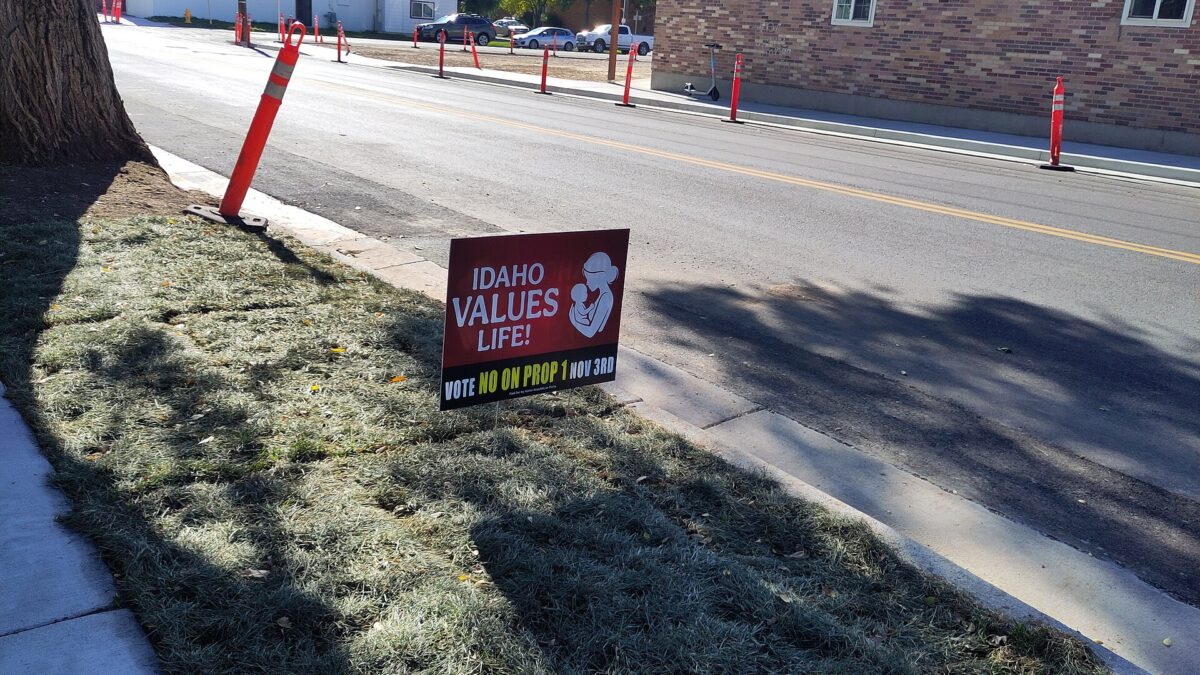
In Idaho, state law criminalizes abortion except in cases of documented rape, incest, or danger to a mother’s life. Proposition 1 seeks to create a vague “right to reproductive freedom and privacy” for “every person.” The ballot measure would redefine “medical emergency,” allow anyone — not just licensed health care providers — to perform abortions, and remove punishment for those who perform abortions. Opponents of Prop 1 warn that its expanded definition of fetal viability could “block lifesaving care” for babies born prematurely and open the door for “painful, late-term abortions.”
In Nevada, voters already supported a ballot question to enshrine unlimited abortion in their state constitution in 2024 after left-wing activists flooded their ballot measure battles with dark money. In accordance with state law, however, voters must reexamine and approve Question 6 again in 2026 for a “fundamental right to an abortion” to be adopted. Abortion in Nevada is currently permitted at any point of pregnancy as long as “the physician has reasonable cause to believe an abortion is necessary to preserve the life or health of the pregnant person.”
In Virginia, Constitutional Amendment Question 1 was pitched to commonwealth voters as a means to protect their freedom to make decisions about “prenatal care, childbirth, postpartum care, birth control, abortion, miscarriage management, and fertility care.” In reality, if passed, Question 1 enshrines underage abortions by unlicensed butchers, surrogacy, transgenderism, and unlimited abortion until birth in the state constitution.
As Jordan Sekulow, the executive director of the American Center for Law and Justice, recently noted, the Virginia ballot might claim that third-trimester restrictions “could apply unless the patient’s ‘health is at risk,'” but “the actual constitutional language specifically protects abortions that a physician determines are medically indicated to protect the woman’s ‘physical or mental health’ — an extremely broad standard.”
[READ: Amendments Would Put Surrogacy, Transgenderism, And Abortion Up To Birth In Virginia Constitution]
Meanwhile, Missouri voters will consider Amendment 3, which seeks to repeal the state’s recent pro-abortion constitutional amendment passed by voters. The first Amendment 3, a controversial and legally questionable “right to reproductive freedom,” narrowly passed in November 2024, 51.6 percent to 48.4 percent. Activists quickly weaponized the sweeping language to target parental consent protections for minors seeking to abort a baby, which requires parental permission or an explicit judicial override under Missouri law.
The 2026 election’s Amendment 3 asks Missourians to repeal the 2024 constitutional amendment. The text also clarifies exceptions for abortions and, in an effort to counter disinformation, confirms treatment for “miscarriages, ectopic pregnancies, and other medical emergencies” is not prohibited. Amendment 3 also “prohibits gender transition surgeries and the prescription of cross-sex hormones or puberty-blocking drugs to minors.”
Elections
In Alaska (Measure 3), Arizona (Proposition 144), Arkansas (Issue 1), Kansas, South Dakota (Amendment J), and West Virginia, voters will be asked to consider measures specifying that only qualified U.S. citizens may vote in their respective elections. The Arizona amendment also includes a requirement that voters show an approved form of ID to vote, a ban on foreign national money in elections, and a guaranteed right for voters to have their ballot tabulated at their voting location on Election Day.
Arizona is hardly the only state set to weigh a ballot initiative supportive of voter ID requirements, however.
In California, voters will consider Proposition 39, which would mandate that voters present a valid form of government-issued ID when voting in person or “the last four digits of a unique identifying number from government-issued identification that matches the one designated by the voter for their voter registration” when voting by mail. The measure also includes language specifying that election officials have a “duty” to maintain accurate voter rolls and that they must “use best efforts to verify citizenship attestations using government data, and shall annually report what percentage of each county’s voter rolls have been citizenship-verified.”
Other states with pro-voter ID measures on the 2026 ballot are Colorado (Amendment 84), Nevada (Question 7), North Carolina, and Ohio (Issue 3). (Much like their aforementioned abortion amendment, Nevada’s voter ID measure was passed by voters in 2024 but requires approval once again this year in order to be ratified.)
North Dakota (Measure 1) and South Dakota (Amendment L) will each have constitutional amendment proposals asking voters to reform their referendum practices. The initiatives seek to increase the threshold for amending their state constitutions by requiring that any proposed amendment receive support from at least 60 percent of voters as opposed to a simple majority.
Meanwhile, Alaska voters will also be voting on Measure 2, which seeks to repeal the state’s ranked-choice voting system for elections. In RCV, voters rank candidates in order of preference. If no candidate receives more than 50 percent of first-choice votes in the first round of voting, the last-place finisher is eliminated, and his votes are reallocated to the voter’s second-choice candidate. This process continues until one candidate receives a majority of votes.
Alaska voters attempted to repeal RCV in 2024 but failed to do so by fewer than 700 votes after out-of-state dark money flooded the state to defeat such efforts. The system was enacted in 2020 with support from allies of Sen. Lisa Murkowski, R-Alaska, who survived a 2022 primary challenge thanks to RCV. The system has now put the Last Frontier State’s 2026 Senate race and other state contests in play for Democrats.
Massachusetts is also asking voters to alter its primaries. If approved, Question 3 would lead to the adoption of a top two primary system for state elections, in which all candidates run on the same ticket and the top two vote-getters — regardless of party — advance to the general election. The proposal appears geared toward boxing Republican candidates out of general election contests for state races.
Redistricting
After the U.S. Supreme Court nuked states’ ability to engage in race-based redistricting earlier this year, several states moved to alter their congressional maps ahead of the 2026 midterms. Now, other states are asking voters to weigh in on redistricting matters that will affect future elections.
Colorado’s Amendment 86 would require that any mid-decade redistricting effort must first be approved by the Centennial State’s independent redistricting commission and the Colorado Supreme Court before it can take effect. It would also mandate that the public be given a chance to weigh in on the proposed plan and prohibit any map changes from “purposefully favoring one political party.” The amendment was proposed to counter a Democrat-backed redistricting measure that failed to make the 2026 ballot, according to local media.
In Maryland, voters will decide the fate of Question 3. The constitutional amendment aims to alter existing redistricting rules by saying that state constitutional requirements “for contiguity, compactness, substantially equal population, and consideration of natural and political subdivision boundaries apply only to state legislative districts, not congressional districts.” The measure would also remove any and all criteria for congressional redistricting proposals.
Question 3 is supported by Democrat Gov. Wes Moore and the state’s Democrat Party. If passed, the amendment would empower the Democrat-run General Assembly to redistrict the state’s lone Republican congressman out of office.
Lastly, Missouri voters will weigh Proposition A, which asks voters to pass the state’s 2025 congressional map. If approved, the new map would take the Show Me State from a six Republican-two Democrat map to a seven Republican-one Democrat map. The measure made it on the 2026 ballot following a contentious legal battle that made its way up to the U.S. Supreme Court, which blocked the 2025 map from being used in the midterms.
LGBT Madness, Public Health, and Women’s Sports
Vermont’s Proposal 4 seeks to enshrine special protections for LGBT-identifying individuals in the state constitution. The proposed amendment says that the state “shall not deny equal treatment under the law on account of a person’s race, ethnicity, sex, religion, disability, sexual orientation, gender identity, gender expression, or national origin.”
Proposal 4 critics have noted that the measure seemingly affords “different standards of equality” to so-called “disfavored groups.” Concerns have also been raised that the amendment could be used as a vehicle to target Christian Vermonters who hold biblical views of marriage and sex.
In Virginia, voters will consider Question 2, which seeks to repeal provisions in the state constitution recognizing that marriage is a union between a man and a woman and add language barring the state from denying marriage licenses to same-sex couples. The U.S. Supreme Court already ruled that so-called “same-sex marriage” is a constitutional guarantee under the 14th Amendment in its egregious Obergefell v. Hodges (2015) decision.
Arizona (Proposition 318), Colorado (Proposition 134), Nebraska (Measure 442), and Washington state (Initiative 638), on the other hand, will have initiatives on their respective ballots that aim to prevent trans-identifying men from competing in women’s sports. The Arizona measure goes a step further by prohibiting schools and athletic associations from letting a trans-identifying individual use a restroom, locker room, or other “private space” that differs from his or her sex.
Wisconsin voters will consider Question 2, which would bar the state “or a political subdivision of the state” from shuttering places of worship during a state of emergency — including during public health emergencies. The amendment seems geared at preventing a repeat of the abuses during the 2020 Covid outbreak, when government officials severely restricted church attendance while placing seemingly less strict rules on non-religious entities.
Immigration, Guns, and Crime
On the immigration front, Arizonans will vote on an initiative (Proposition 317) that would designate drug cartels as domestic terrorist organizations and require the state Department of Homeland Security to do “everything in its authority to address the threats posed by drug cartels.” Meanwhile, a Colorado measure (Amendment 81) would amend the Colorado Constitution to require the state to notify the federal government after charging an illegal alien or someone whose immigration status cannot be determined by law enforcement when the charge is for a violent crime or the individual has a prior felony conviction.
On gun policy, Arkansas voters will consider a constitutional amendment (Issue 2) that would recognize citizens’ right to keep and bear arms. Meanwhile, Bay Staters will consider Question 9, which asks Massachusetts voters to uphold several gun control restrictions passed by the Democrat-run legislature in 2024. Among the restrictions are an “assault weapons” ban and the creation of a registration system to track firearm ownership in the state.
Crime-related initiatives are also prevalent in some states.
Indiana’s Question 1 asks voters to amend the state constitution to deny bail to individuals charged with crimes in circumstances when “the proof is evident or the presumption strong” and when the state “proves by clear and convincing evidence” that that individual in question poses a threat to the community. Louisiana voters will consider a somewhat similar initiative (Amendment 3), which would amend the Louisiana Constitution to prohibit post-conviction bail for criminals convicted of aggravated assault against a minor.
In Tennessee, voters will decide Amendment 1. The constitutional amendment proposal would remove the right to bail for certain criminal offenses “when the proof is evident or the presumption great.” This includes “an act of terrorism,” “aggravated rape of a child,” “a capital offense,” and more.
Taxes and Labor
Many states will have tax-related initiatives on the ballot this fall. Given the sheer number, this article will describe a few of the most notable, along with a key labor-related measure.
In Florida, voters will consider a property tax proposal in the form of Amendment 3. The measure would “increase[] the homestead exemption, for all non-school taxes, to $150,000 in 2027 and $250,000 in 2028, and adjusts for inflation thereafter.” It also includes a mandate that the state legislature “prescribe a uniform procedure for counties and municipalities, for their respective levies, to increase the homestead exemption up to full assessed value, and allows special districts, subject to referendum approval, to do the same.”
Iowa’s Amendment 1 seeks to amend the state’s founding document to require a two-thirds vote of the Iowa legislature before any increase in the state’s income or corporate tax rate. This would apply to any bill that aims to create new income taxes as well.
Nearly 50 Virginia localities will have local referendums on whether to increase their respective sales taxes by 1 percent to subsidize school construction and renovation.
Vermont voters will consider a Democrat-backed collective bargaining initiative. If passed, Proposal 3 would amend the state constitution to recognize employees’ “right to organize or join a labor organization for the purpose of collectively bargaining with their employer through an exclusive representative of their choosing for the purpose of negotiating wages, hours, and working conditions and to protect their economic welfare and safety in the workplace.”
Former Vermont Republican Party Chair Rob Roper previously warned that the amendment “effectively strips, in key cases, one’s right to individually bargain on one’s own behalf.”
Education
Both Arizona (Proposition 142) and Wisconsin (Question 3) will have constitutional amendments on their respective ballots that seek to ban their state governments — including institutions of public education — from adopting race- and sex-favored preferences and policies. The Arizona initiative would further ban the state from mandating that employees undergo DEI training.
In Washington State, voters will consider Initiative 1. The measure seeks to reenact a previously passed initiative that gives parents the right “to review materials and student records [of their children], receive certain [parental] notifications, and opt students out of certain activities” in school. Backed by the Washington Moms for Liberty chapter, the measure would further repeal several changes to the law made by the state’s Democrat-run legislature dealing with so-called “anti-discrimination protection” and “harassment and bullying complaint procedures.”
Federalist Staff Writer Jordan Boyd contributed to this story.