
Spoilers.
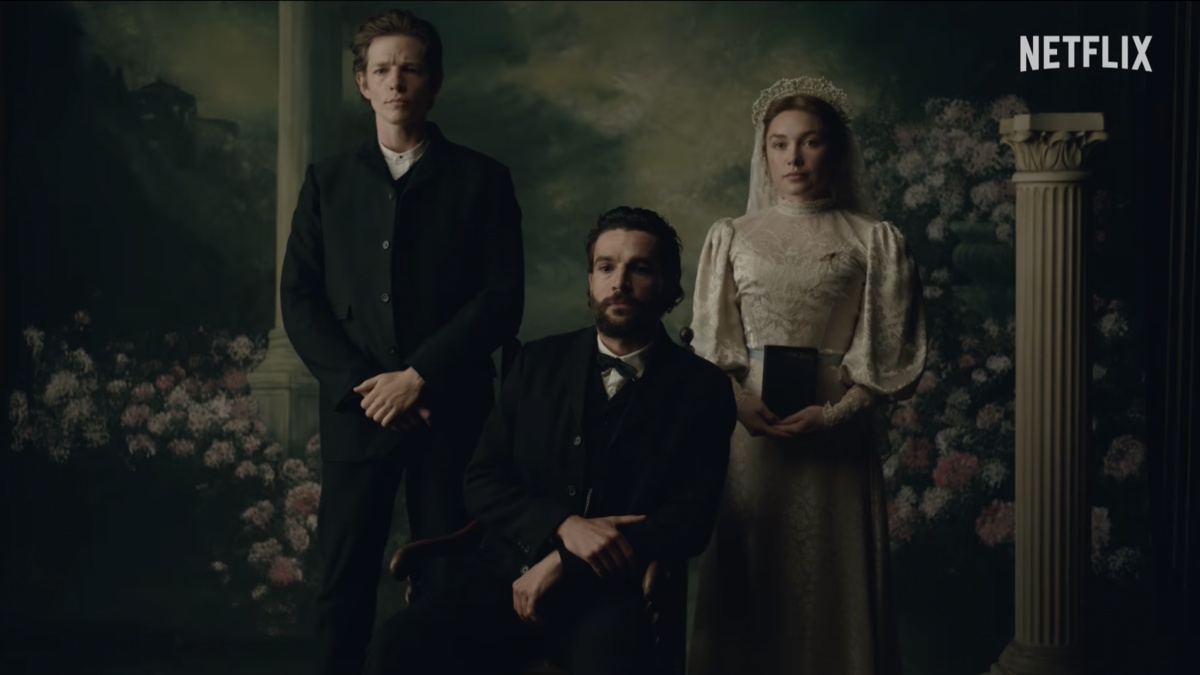
“There’s a part of you missing,” East of Eden’s hapless patriarch Adam Trask tells his estranged wife, Cathy, years after she abandoned their infant twins, shot her husband in the shoulder, and ran off to manage a brothel.
“You know about the ugliness in people,” he says. “But you — yes, that’s right — you don’t know about the rest … you don’t believe those men could have goodness and beauty in them. … I think you are only a part of a human.”
In like fashion, Zoe Kazan’s adaptation of the classic novel for Netflix is only a part of a story.
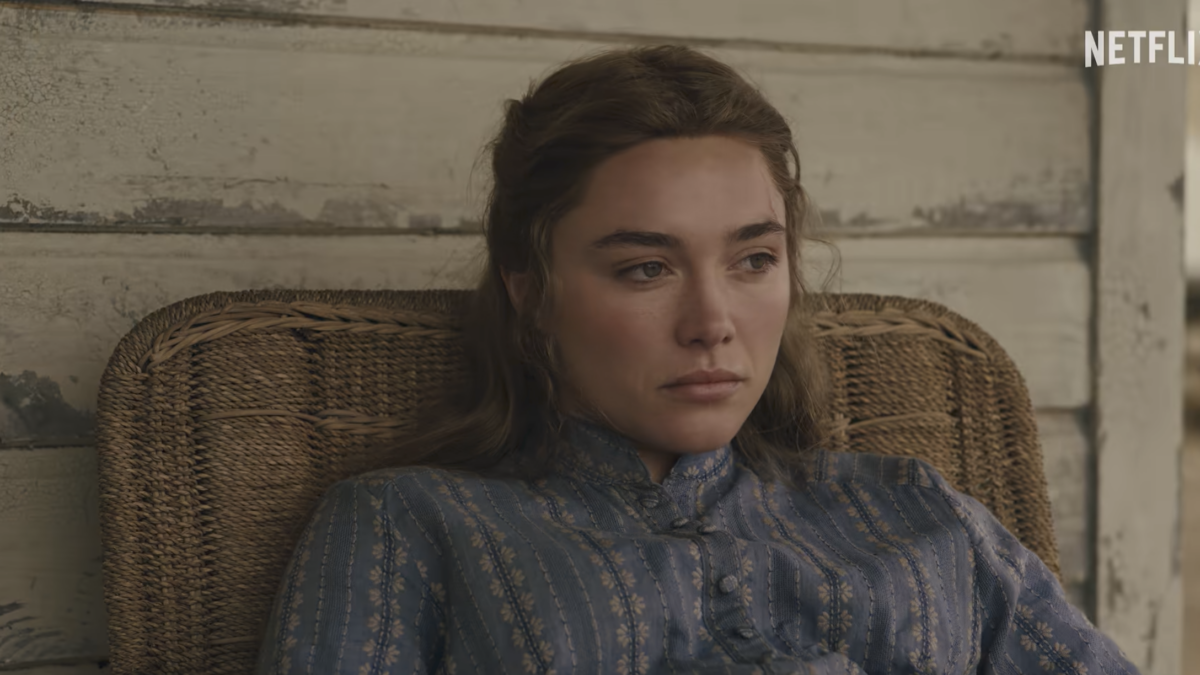
Kazan and Florence Pugh, who plays the role of executive producer as well as Cathy Trask, approached the story intent on drawing more attention — and more sympathy — to Cathy’s character. John Steinbeck’s Cathy is pure, conniving evil, contrasted with Adam, to whom evil is so foreign he cannot recognize it in his own wife. The late-arriving protagonist of the story is Adam’s son, Cal, representing the biblical Cain, faced with the presence of both good and evil in his heart and in his blood. If Cathy isn’t evil, the story doesn’t work.
As she indicated in interviews before the series’ release, Kazan changed Cathy’s backstory to help explain away her sinful choices. Pugh gave soundbites about how she hoped viewers would “sympathize and maybe fall in love with [Cathy] a little bit.” Fortunately for Steinbeck, the effort falls mostly flat. With a vaguely sinister air, Pugh is a perfect casting precisely because of her knack for making audiences despise and distrust her, alleged efforts to the contrary notwithstanding.
But the harder Kazan and Pugh try to humanize evil Cathy, the dimmer the story’s contrasting goodness becomes. As Cathy increases, her foils decrease. Sam Hamilton, the jovial Irishman whose presence in the Salinas Valley and in the Trasks’ broken home is a wellspring of warmth and wholeness, is banished to the role of minor side character. Cal’s twin Aron, written by Steinbeck as a radiant, golden-haired young man whose purity endears him to everyone, is reduced to a sallow and unlikeable prick. Lee, the Trasks’ loyal Chinese housekeeper who raises the boys in Adam’s emotional absence, has his rich and beloved character somewhat flattened by an added subplot about racism in turn-of-the-century California.
It’s hard to adapt Steinbeck to the screen because his most beautiful writing often appears in casual asides. Part of East of Eden’s charm is owed to the narrator’s tangents, such as the memory of his mother reluctantly suffering biplane stunts as a reward for selling war bonds — or anthropological observations on topics like the “inexorable logic of women, which is overwhelming even, or perhaps especially, when it is wrong.” The entire chapter devoted to the loves and tragedies of Sam’s children, Tom and Dessie, is more likely to move its reader to tears than any other part of the book.
Steinbeck pauses all over Eden to smell the flowers or take in the view, and those moments are mostly trimmed off to make the story work for a streaming audience. To make matters worse, the show suffers from the modern ailment of flat, gloomy color editing. (Steinbeck’s Salinas Valley deserves to be shot in Technicolor or not at all.) The result is a more lopsided, darker story than its source material.
And what Steinbeck intimates about Cathy’s sexual perversions, Pugh broadcasts. (In full journalistic disclosure, there are a handful of brief scenes I skipped, and I’d advise anyone to do the same. Pugh appears to have a disturbing obsession with exposing herself on screen in ways that are painfully useless for advancing the storyline.) In Steinbeck’s telling, Cathy’s sexual sin is central to her evil nature. But as proper feminists, Kazan and Pugh can no more hold that against her than her bloody attempt to abort her twin boys with a knitting needle. Instead, they awkwardly celebrate it: “There’s something really compelling about her insistence on her autonomy and selfishness, especially as a woman,” Kazan tells Time magazine.
The problem with Kazan’s East of Eden is that it tries to understand evil without first understanding goodness.
“Good can exist without evil; whereas evil cannot exist without good,” wrote Thomas Aquinas in the Summa Theologica. In the first chapters of Genesis, which inspired Steinbeck’s novel, perfect holiness, goodness, and beauty exist in the person of God and in His created paradise, predating the arrival of evil. No story about evil is worth telling unless it is also about good.
Kazan and Pugh plumb the depths of Cathy’s evil for misunderstandings and misogyny, but the story they come up with fails to compel because they aren’t interested in goodness — real, moving, inspiring goodness that reflects the only perfectly good One. The “autonomy” and “selfishness” they celebrate in Cathy, or the moral ambiguity they try to assign her, are poor substitutes.
Steinbeck’s East of Eden is gritty, sometimes grotesque, because it is a story about human nature. But it is also a beautiful story about God’s grace to man in offering him freedom from sin’s captivity and allowing him to reject his fallen, sinful nature, a freedom ultimately purchased by the blood of Christ. Kazan’s version only looks within man’s fallen nature for that freedom. In a tale as old as Eden, it comes up short.