

In Avatar: The Last Airbender, characters bend the elements of nature to their will. In modern Hollywood, studios prefer to bend races to fit their leftist ideology.
When The Legend of Aang: The Last Airbender, a sequel to the beloved 2005 series that’s set to release later this year, was announced several years ago, fans were initially overjoyed. This would be the first animated foray into the world of Avatar since 2012’s tepidly received Legend of Korra. Early expectations were that the original voice cast would return for this sequel series, preserving the amazing original performances.
Instead, the core cast was replaced, sidelining actors who remain active in the industry. It wasn’t pay disputes or scheduling conflicts responsible for the changes but a deliberate shift toward race-based casting standards.
During a Q&A session on social media site Reddit, the film’s casting director, Jenny Jue, claimed, “Since the original show was released, there’s been more emphasis in [voice acting] to match actors’ ethnic/racial background to the characters they’re portraying.”
The “emphasis” Jue is referring to is entirely constructed by loud, out-of-touch leftists with an axe to grind or something to gain from restricting white actors from getting parts. For instance, Korean-American voice actor SungWon Cho has been one of the most prominent advocates of race-restrictive casting. In a 2023 interview, Cho argued characters should be cast “authentically,” meaning actors should match the race of the roles they play.
Yet Cho’s standard apparently only applies to other people. Cho himself has voiced a wide range of non-Korean characters, including the Riddler in Batwheels, the Greek god Zeus in Apotheon, and the Norse character Ratatoskr in God of War Ragnarök.
Cho isn’t alone in his racist hypocrisy. TV and movies are constantly swapping white characters for nonwhite ones in the name of social justice.
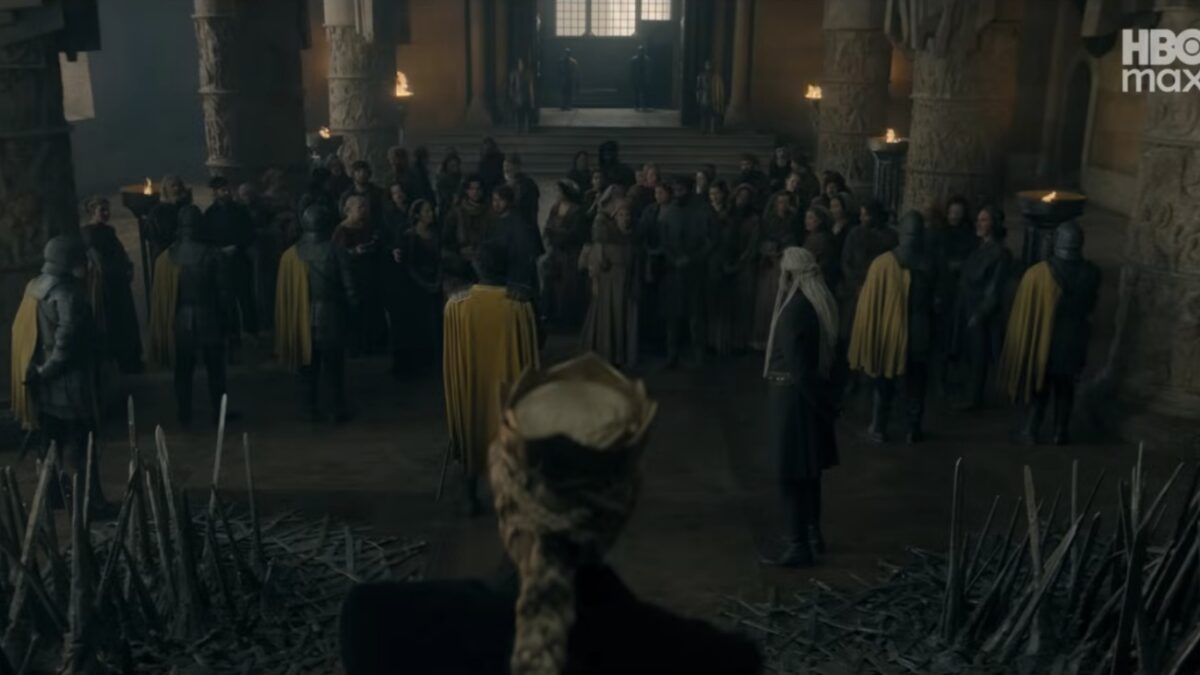
Consider the bonkers decision to cast black woman Caroline Henderson as a Viking warlord or Jordan Peters as a gay, black, disabled King Edward. Severus Snape may be explicitly described as white in Harry Potter, but that didn’t stop HBO from casting black actor Paapa Essiedu and causing a racial crisis.
In a flashback, Harry’s father, James, bullied Snape by hanging him from a tree, a moment meant to show James wasn’t as noble as Harry initially believed. With a black actor cast as Snape, that scene inevitably resembles a lynching.
Prior to this racial hysteria, fans didn’t care who played their favorite characters as long as they did a good job. Kratos, protagonist of the God of War series, has been voiced by black actors since 2005. Their performances were widely praised, and audiences accepted them without controversy.
Leftists argue that actors whose skin tone matches their characters make for better performances. But the evidence suggests such initiatives are merely a justification to hire unqualified people based solely on their complexion.
When Capcom released its long-anticipated remake of Resident Evil 4, many gamers noted a particularly bad voice acting performance for fan-favorite character Ada Wong. Portrayed as a femme fatale assassin in the initial game, the new Ada sounded wooden and flat, lacking much of the original’s dynamism.
It was eventually revealed that the original voice actress, a white woman named Sally Cahill, had been canned in favor of the Chinese-born Lily Gao. The decision to hire a new voice actress to play a well-known character in a major franchise came down to race. During a Twitch stream featuring the voice actors for the Resident Evil 4 remake, Gao said she landed the Ada role after the game’s producers asked her specifically to audition, claiming “they wanted to hire an Asian actress to play the part.”
That companies continue to endorse this racist casting system belies belief given that it’s unpopular with everyone but the most ardent leftists and the most cynical voice actors. In the aforementioned Reddit Q&A, Jue was eviscerated by users upset that their childhood heroes would not have the voices they were used to. “This was a very bad decision on their part and they’re going to regret it,” one user commented. “The vast majority of people don’t care about trying to fit the ‘right’ racial voice actors to their characters because none of these races are even real.”
It’s stranger still in the case of Avatar, given that Dante Basco, the original voice for fan-favorite Prince Zuko, is Asian, though maybe he was recast because he’s the wrong type of Asian? Zuko leads the Fire Nation, a state heavily inspired by imperial Japan. As Basco is Filipino, not Japanese, could it be that the producers simply wanted to be more “authentic”? After all, the push for precision in the Avatar world has extended to hysterically narrow definitions, including the decision to cast a blind Chinese woman as the blind Toph Beifong.
But no, the movie’s producers didn’t do that either. They cast Korean actor Steven Yeun to voice Zuko instead. Geographically closer to Japan, but still not quite!
Thus, the logic collapses under its own weight. A fictional world built on broad cultural inspiration is now subject to rigid identity rules restricting casting to increasingly narrow possibilities. Can a blonde truly embody a redhead’s struggles? How can an actor with brown eyes possibly understand the struggles of someone with baby blues?
Studios adopting these standards are responding to narrow ideological pressure elevating identity over performance to the detriment of their products. Established talent is sidelined, creative flexibility is reduced, and audiences are left with weaker performances in the name of a principle they never wanted.
No one wanted to see their favorite characters given worse performances by unseen actors who may better physically resemble them. As one X user put it, “Should’ve kept the original [voice actors] instead of giving in to DEI bullsh-t.”