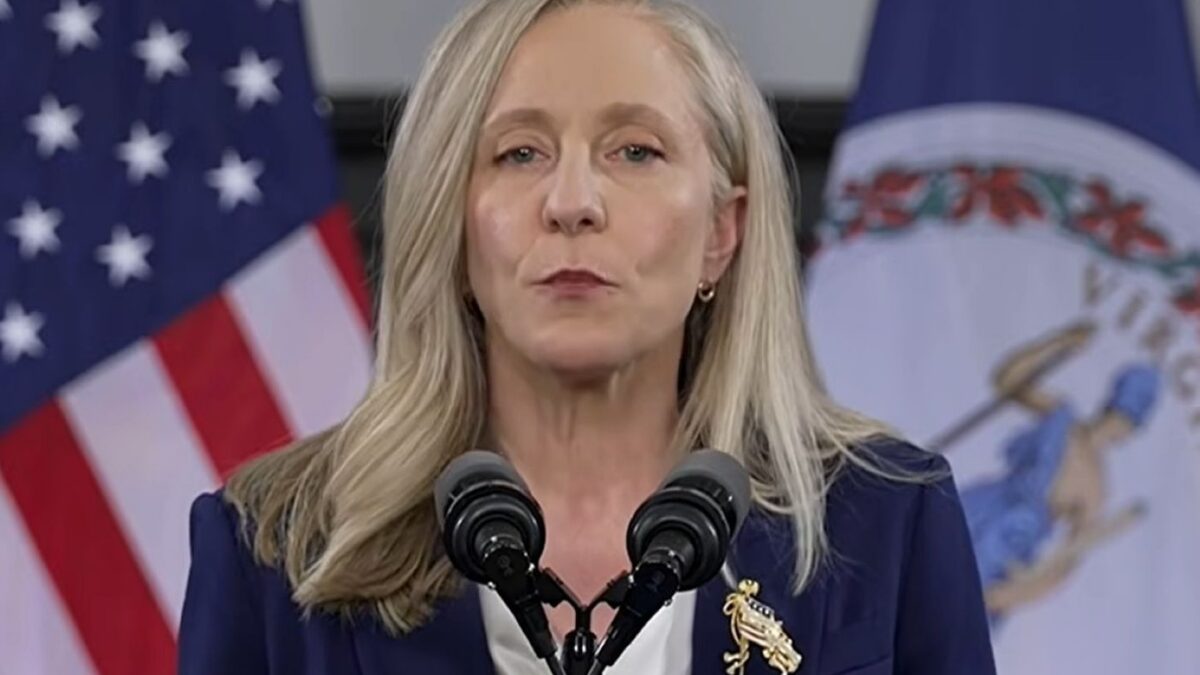

Multiple Second Amendment rights advocates are suing Virginia’s police superintendent after Gov. Abigail Spanberger, D-Va., signed into law legislation banning many semi-automatic firearms and standard-capacity magazines.
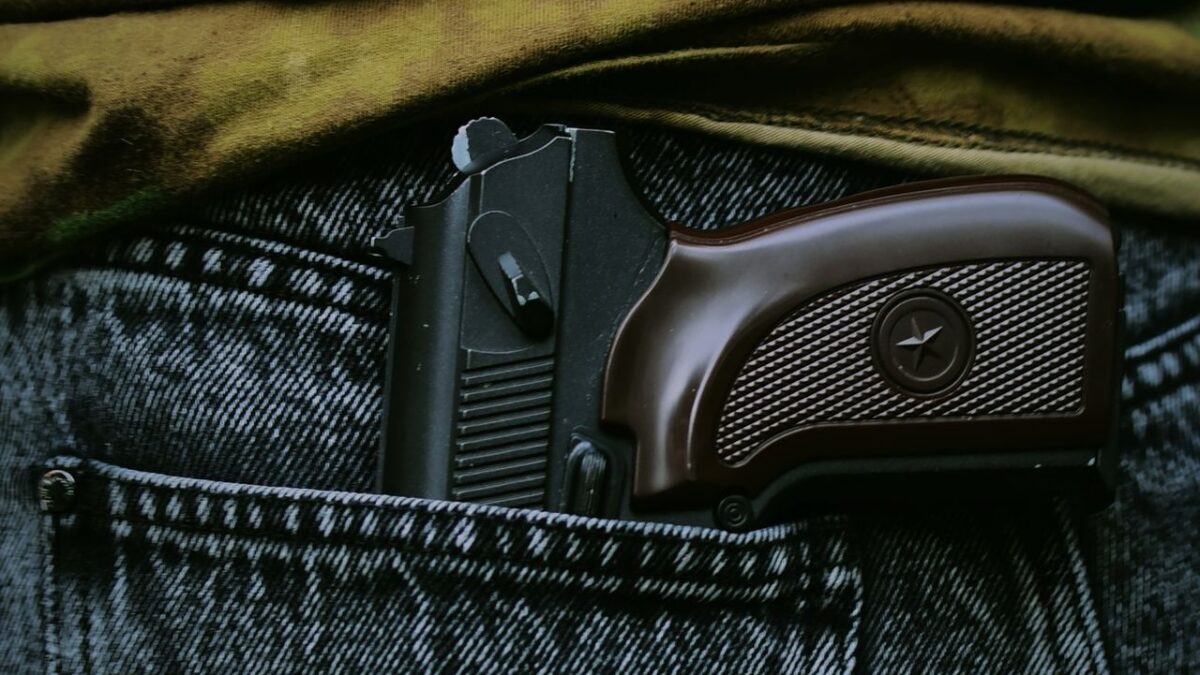
The new law, effective July 1, “criminalizes the purchase, sale, transfer, manufacture, and importation of a wide range of commonly owned semiautomatic handguns, shotguns, and rifles — including the AR-15, the most popular rifle in America,” said the National Rifle Association (NRA), one of the plaintiffs suing Virginia. It also “prohibits the purchase, barter, transfer, and importation” of any magazine that holds more than 15 rounds, the organization noted.
Democrat state Sen. Saddam Azlan Salim, a politician from Bangladesh who is a driving force behind efforts to strip constitutional rights away from Americans, authored the bill.
The NRA, Firearms Policy Coalition (FPC), the Second Amendment Foundation (SAF), and two NRA members filed a lawsuit in federal court challenging the law; the Virginia Citizens Defense League (VCDL) and Gun Owners of America (GOA) filed a lawsuit in a Virginia county court; multiple firearm retailers, gun ranges, and other organizations filed a lawsuit in state court, and U.S. Assistant Attorney General for Civil Rights Harmeet Dhillon promised the Department of Justice would file one as well.
All lawsuits name Jeffrey S. Katz, superintendent of the Virginia State Police, as the defendant. The NRA lawsuit also names Goochland County Commonwealth Attorney John L. Lumpkins Jr. and Sheriff Steven Creasey, along with Prince William County Commonwealth Attorney Amy Ashworth and Sheriff Glendell Hill. Justin McDonald and Anthony Groeneveld, plaintiffs in the NRA suit, are residents of Goochland and Prince William, respectively, and are also members of the NRA, FPC, and SAF.
The NRA lawsuit appeals to U.S. Supreme Court precedent in both New York State Rifle & Pistol Association, Inc. v. Bruen and District of Columbia v. Heller (as applied to the states through McDonald v. City of Chicago) to argue the gun and magazine bans are unconstitutional. “By prohibiting Plaintiffs from acquiring common semiautomatic firearms and ammunition magazines,” the suit argues, “Virginia has prevented them from ‘keeping and bearing Arms’ within the meaning of the Amendment’s text. As a result, ‘[t]o justify its regulation, the government … must demonstrate that the regulation is consistent with this Nation’s historical tradition of firearm regulation.’”
Because ownership of the kinds of firearms and magazines banned by the new bill is widespread in Virginia, the new legislation necessarily cannot meet the standards set by historical practice, which, Justice Samuel Alito wrote, requires that the banned weapon be “both dangerous and unusual,” according to the lawsuit (emphasis original).
John Commerford, the NRA Institute for Legislative Action (NRA-ILA) executive director, said his team had been at the capital in Richmond fighting against the legislation as it was being written, but that the bait-and-switch “moderate” Democrats pursued the ban anyway.
“We made it clear that this extreme anti-gun proposal, which bans the new purchase of commonly owned firearms and standard capacity magazines in the Commonwealth, is a blatant violation of Second Amendment rights and an affront to landmark Supreme Court cases,” Commerford said. “Instead of listening to these factual concerns from their constituents, progressive politicians sided with Michael Bloomberg and his gun-grabbing groups.”
It remains to be seen whether lower courts will follow the precedents set in Heller and Bruen or, if they do not, whether the U.S. Supreme Court will finally have the fortitude to take another Second Amendment case after years of lower courts waging war on their decisions protecting those rights.
As The Federalist reported, lower courts have simply refused to take Second Amendment jurisprudence seriously, to the point where they consistently defy Supreme Court rulings — and the high court refuses to step in to rein them in or reaffirm its precedent.
As Thomas wrote in a 2018 dissent, “Our continued refusal to hear Second Amendment cases only enables this kind of defiance. We have not heard argument in a Second Amendment case for nearly eight years. … If this case involved one of the Court’s more favored rights, I sincerely doubt we would have denied certiorari.”
“The right to keep and bear arms is apparently this Court’s constitutional orphan. And the lower courts seem to have gotten the message,” he added.
When another opportunity came up in 2025 with challenges to an AR-15 ban in Maryland and a magazine limit in Rhode Island, the court again refused to take the case. Only Thomas, Alito, and Justice Neil Gorsuch said they would have taken the case.
With semi-automatic gun bans and magazine caps popping up in more states, it will likely fall to the high court to stop the multiple-state assault on Second Amendment rights. In Virginia, one of the state cases could be the key to stopping the legislation.
As the VCDL suit notes, the Virginia Constitution has said “[t]hat a well regulated militia, composed of the body of the people, trained to arms, is the proper, natural, and safe defense of a free state” since 1776, and a 1971 amendment further clarified that “the right of the people to keep and bear arms shall not be infringed.”
“Virginians understood their 1971 amendments to Article I, Section 13 to codify no new rights, but rather simply to ensure, at minimum, interpretive parity with the federal Second Amendment,” the lawsuit states.
The VCDL suit references federal Second Amendment jurisprudence as instructive on Virginia constitutional rights, and notes some recent state cases in which U.S. Supreme Court opinions were cited.