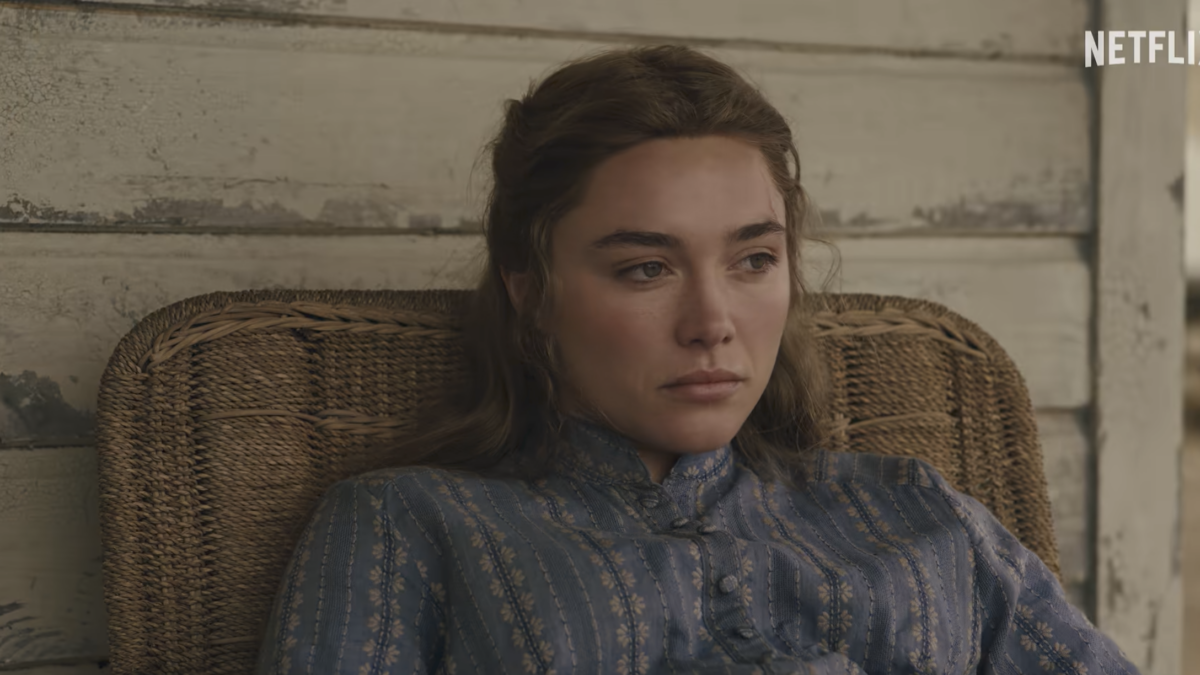

Hollywood wants you to “fall in love” with one of the most evil characters ever conceived by the human imagination.
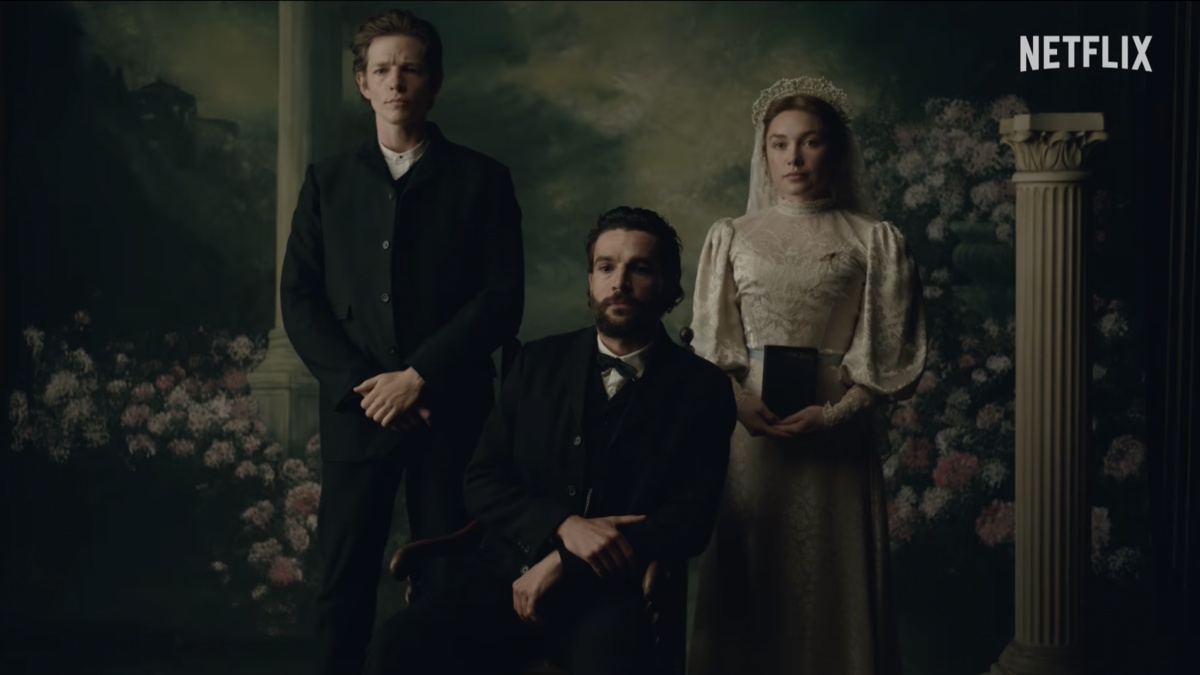
In a recent viral clip from an interview with The Atlantic, actress Florence Pugh sits in a gray-and-white collared dress against a dark backdrop, glaring intently at her interviewer as she describes her experience portraying the villainous Cathy Ames in Netflix’s upcoming East of Eden series. But “villainous” is not quite the name of Netflix’s game.
Writer Zoe Kazan, Pugh explains, “wasn’t interested in making [Cathy] just a monster. She was interested in understanding her.”
Fans of Steinbeck’s beloved novel were rightfully outraged.
“This new Hollywood trend of ‘every villain is sympathetic’ is the worst,” wrote one commenter.
“Did she even read the book?” asked another.
But to Pugh, Kazan’s reinterpretation of Steinbeck’s antagonist was “thrilling.” “It’s my job,” she added, “to try and get you guys to sympathize and maybe fall in love with [Cathy] a little bit.”
The video, which gained over 1.6 million views on X, raked in fewer than 400 likes. The message is clear: no one wants a sympathetic Cathy — and for good reason. Cathy is not supposed to be sympathetic. Cathy is supposed to be evil.
It’s true that Hollywood hasn’t had a phenomenal recent track record when it comes to book-to-movie adaptations. Emerald Fennell’s “Wuthering Heights” transformed Emily Brontë’s monumental Gothic novel into a bizarre BDSM fantasy, Nolan’s Odyssey left fans divided over the film’s portrayal of its eponymous hero (and some questionable casting choices), and absolutely no one asked for a Harry Potter remake on HBO. But Zoe Kazan’s East of Eden commits a far more egregious sin: it undermines the book’s understanding of good and evil.
At the start of the novel’s eighth chapter, our narrator — a fictional stand-in for Steinbeck himself — introduces Cathy in the following terms: “I believe there are monsters born in the world to human parents.” Cathy, he tells us, “was not like other people, never was from birth.” She was born with a “malformed soul.”
There is no question that Cathy is written to be vile and subhuman. “There was a time,” the narrator continues, “when a girl like Cathy would have been called possessed by the devil.” Indeed, in a letter to a family friend, Steinbeck revealed that Cathy is supposed to be “representative of Satan.” And while Cathy Ames is undoubtedly evil through and through, she’s more specifically defined by a particular dimension of evil — what Steinbeck calls “the most disturbing impulse humans have.”
Sex.
When Cathy is just 10 years old, her mother finds her in a carriage house with two teenage boys. She’s lying on the floor “naked to the waist” with her “skirts pulled up” and her wrists tied with a “heavy rope.” The boys insist that Cathy had paid them each to be there and that she had tied her hands herself. Cathy simply refuses to talk, feigning trauma.
We are not told whom to believe, but the implication, of course, is that 10-year-old Cathy has just framed the boys for rape.
It’s true that Cathy’s most unforgivable sin is perhaps the murder of her own parents, but her most characteristic sins, which give her “power over nearly anyone,” are unquestionably sexual in nature — and not just sexual but sexually sadistic.
There has been suspiciously little written about Cathy’s sexual perversions; in fact, a quick Google search for “Cathy Ames sadist” pulls up only a few TikTok videos and my own tweet from last week. One can surmise that contemporary readers are largely unfazed by this aspect of Cathy’s character because it’s become so normalized in our culture: we almost expect Cathy, a prostitute and brothel keeper, to assume the role of a dominatrix, and, indeed, when Cathy later takes over Faye’s brothel, she turns it into a sort of sadistic wasteland, where men bathe in their own blood drawn by “little knotted whips” and beg to be abused. When Faye later learns what Cathy does to her men, she bursts out screaming.
This is East of Eden’s primary manifestation of evil, and that is why the creators of the show simply cannot understand that Cathy Ames is not supposed to be “morally ambiguous” or even “sympathetic,” but purely and unequivocally evil: as a society, we are no longer disturbed by sexual deviance; having rebranded “prostitution” as “sex work” and “sexual sadism” as “kink,” Cathy’s evils are largely lost on us. It is no wonder, then, that Florence Pugh and Zoe Kazan want to portray Cathy sympathetically. In a culture that routinely celebrates “sex workers” as enlightened, liberated feminists, Cathy doesn’t seem all that bad.
But Steinbeck knew that evil lurks among us and can manifest in unexpected ways. Yet because our culture has become so uncomfortable with the idea of unadulterated evil, we are tempted to either paint every deviation from normalcy in a positive light or to excuse it outright through some sort of trauma. One can expect Netflix’s upcoming series to play up some of Cathy’s early “traumas,” portraying her later turn to evil as a natural response to the abuses she endured as a child, but those of us who have read Steinbeck’s masterpiece know that his message is the precise opposite: it doesn’t matter who you are or where you come from. You have the power to choose good over evil.
Cathy chooses evil. So, too, it seems, have the creators of the new Netflix series. But the reason that great literature stays with us today is that it carries a powerful message about how we ought to live our lives. East of Eden tells us that not all things are morally ambiguous — some things are just evil, and they ought not to be excused.
Netflix has already forgotten this message. The rest of us would do well to remember it.