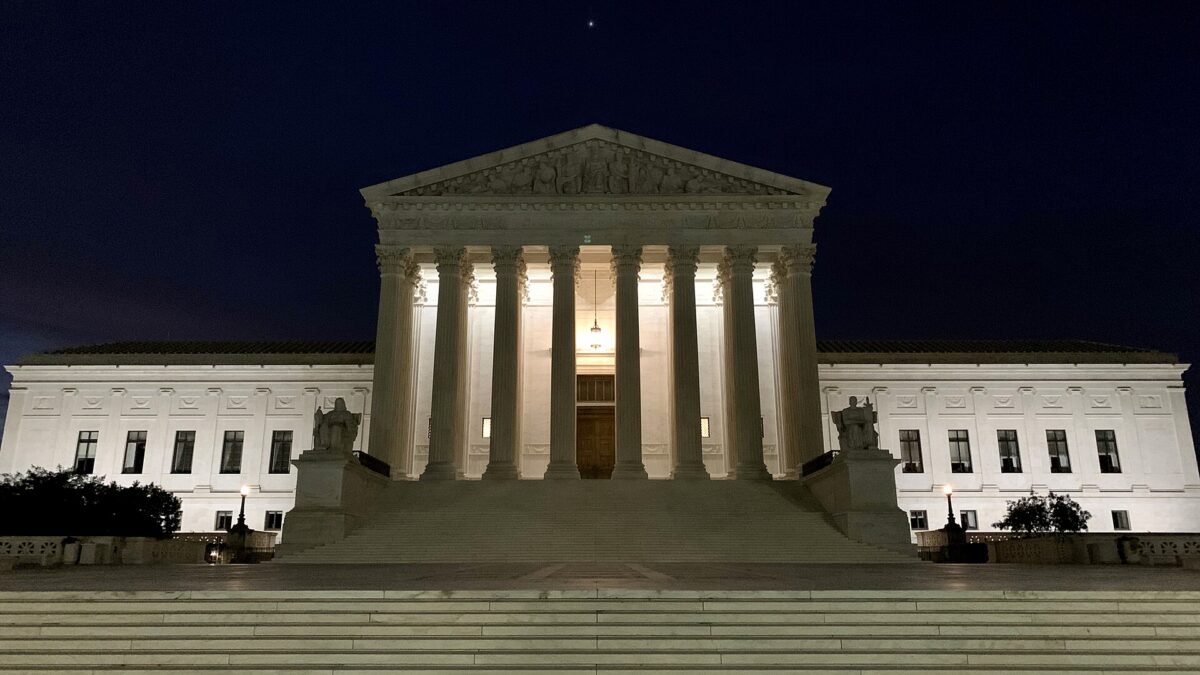
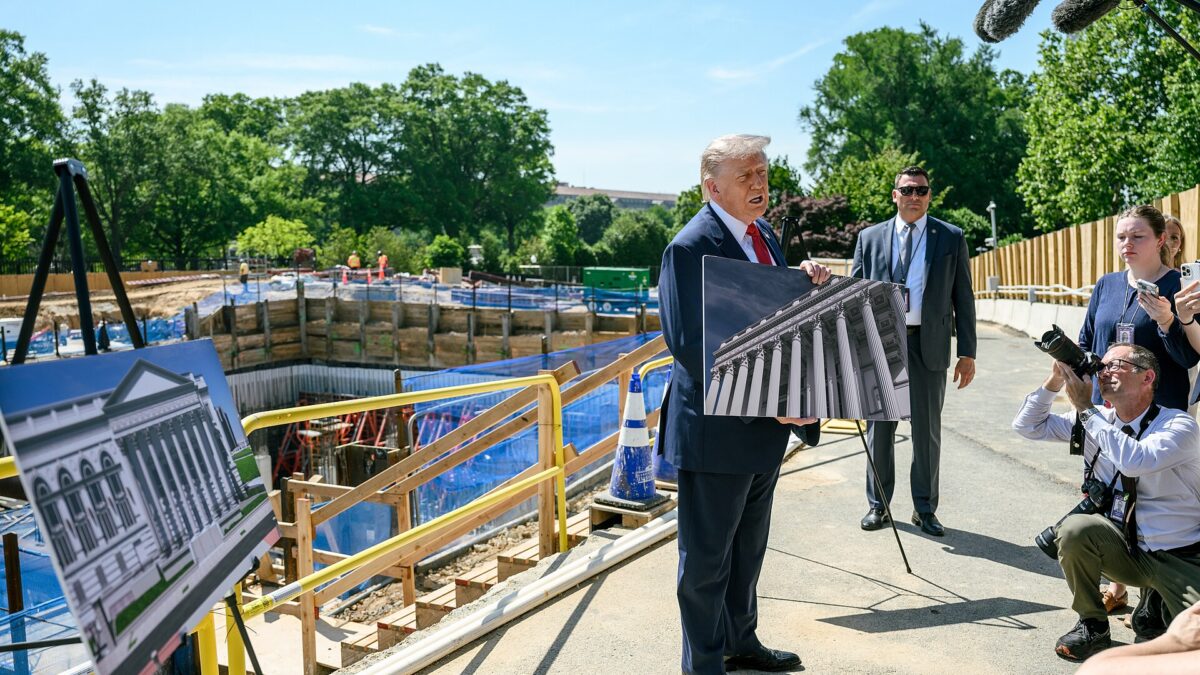

The full U.S. Supreme Court on Monday paused a lower court injunction that blocked construction of President Trump’s new White House ballroom. The ruling was 5-4, with Chief Justice John Roberts and the court’s three Democrat appointees in dissent.
In its per curiam opinion, the high court granted the Trump administration’s request to stay an injunction by D.C. District Court Senior Judge Richard Leon. Issued earlier this year, that order halted the White House’s above-ground construction on the privately funded ballroom, with the Bush 43 appointee arguing that the project lacked congressional approval.
A three-judge panel for the D.C. Circuit Court of Appeals declined (2-1) to lift the injunction earlier this month, prompting the Trump administration to appeal to the Supreme Court. Roberts issued an administrative stay on Leon’s injunction on Aug. 21 to give the full court more time to consider the parties’ filings.
In its ruling replacing Roberts’ stay, the Supreme Court found that the Trump administration “has established that it is likely to succeed on the merits of a significant legal question.” The majority further ruled that the government also showed that “it would likely suffer irreparable harm without a stay, and that the balance of equities tips in its favor.”
Turning to the merits, the high court ruled that the administration is likely to show that the challenger (the National Trust for Historic Preservation) “lacks standing to challenge the East Wing project.” The justices noted the absurdity of Trust member Alison Hoagland’s claims that “having to view the finished ballroom the government is constructing would cause her to suffer ‘injuries’ to her ‘aesthetic, cultural, and historical interests’ because she finds the ‘scale,’ ‘height,’ and ‘massing’ of the government’s design distasteful.”
“This Court has not found standing in circumstances like these before. To the contrary, we have repeatedly held that mere offense, disagreement, or distaste does not qualify as a concrete and particularized injury under Article III,” the majority ruled. “Nor is it clear what would remain of Article III’s concrete-and-particularized injury requirement if we were to extend our case law in the manner the Trust now suggests.”
When addressing the likely harms that the government would face if Leon’s injunction were permitted to stand, the high court observed that the Bush appointee “likely exceeded [his] Article III authority to enjoin the activities of a coordinate branch of government.” The majority further noted the national security implications raised by relevant government officials about the need for the project.
“Today, we do not pass upon the legality of the government’s East Wing project. We conclude only that, based on the submissions before us, the government is likely to prevail in showing that the Trust lacks Article III standing to challenge the project in federal court and that the remaining stay factors favor relief,” the court ruled.
Writing on behalf of the dissent, Roberts argued that the president’s White House ballroom construction “is likely unlawful.” Echoing the district court, he contended that the project likely requires congressional authorization.
“The White House is not just any building, and — when it comes to historic preservation — Hoagland is not just any person. In failing to appreciate as much, the Court misconceives the plaintiff’s injury, allowing the Executive’s likely infringement of the Legislature’s power of the purse and authority to regulate federal property in the District of Columbia to continue,” Roberts wrote. “Today’s decision is no victory for the separation of powers.”
According to Monday’s ruling, Leon’s order is “stayed pending the filing and disposition of the government’s petition for a writ of certiorari, if such writ is timely sought.” The Supreme Court’s stay will terminate if a petition from the administration to SCOTUS is denied by the high court or if SCOTUS agrees to consider the matter and issue a judgment on the merits of the case.