

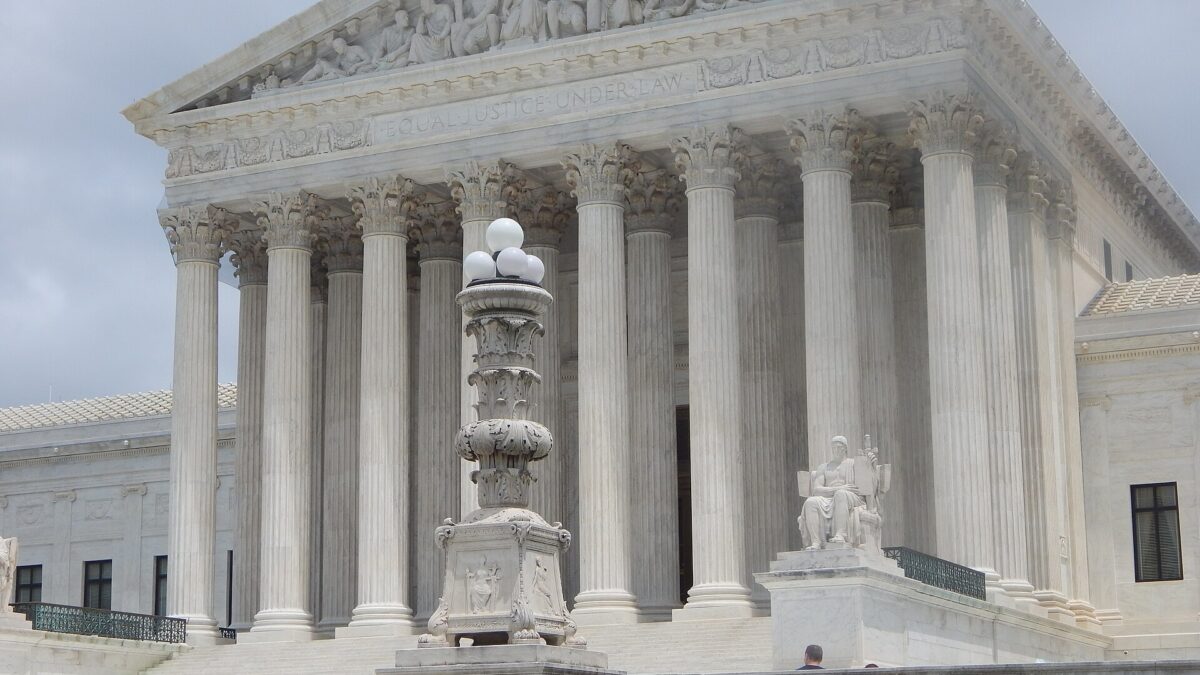
The Department of Justice asked the U.S. Supreme Court on Thursday to once again shut down a lower court blockade against a key part of its deportation policy.
In its emergency application for stay, the Trump administration requested that the justices pause a lower court order by Massachusetts-based District Judge Brian Murphy. The Biden appointee’s directive seeks to block the government’s deportation of illegal aliens to third countries (aka countries not of their national origin).
As noted by U.S. Solicitor General John Sauer, this is the “third time the government has been forced to seek emergency relief” from SCOTUS in this case. The first instance occurred last year, when the high court paused (6-3) Murphy’s preliminary injunction blocking third-country deportations.
Not to be outdone, Murphy issued a directive to the federal government hours later, claiming that his initial hold on the policy was not affected by the Supreme Court’s ruling. The administration subsequently asked the high court to clarify its order. This time, in a 7-2 decision, the justices affirmed that its ruling did, in fact, cover Murphy’s initial injunction.
Murphy’s insubordination and refusal to follow SCOTUS prompted a stinging rebuke from Justice Elena Kagan. In a statement concurring with the high court’s clarification, the Obama appointee noted that while she disagreed with the Supreme Court’s initial decision to block Murphy’s injunction, she does “not see how a district court can compel compliance with an order that this Court has stayed.”
Murphy would go on to issue a final judgement blocking third-country deportations in February. While the 1st Circuit Court of Appeals initially stayed that ruling a month later, the appellate court released a series of decisions over the past week effectively permitting the Biden appointee’s blockade against the administration to resume.
In its application to SCOTUS, the Trump administration argued that Murphy’s latest order “rests on the same fundamentally flawed legal premises as the previous rulings, and the nominal new grounds that the lower courts added to try to buttress those prior decisions are even weaker than those that failed to sustain the originals.” It further added that “the equities that supported this Court’s intervention (twice) have, if anything, only grown stronger in favor of the government’s continued enforcement of the challenged policy.”
“A stay,” the administration wrote, “is thus once again warranted.”
Justice Ketanji Brown Jackson — who oversees emergency applications from the 1st Circuit — has ordered respondents in the case to file a response to the government’s request by 4 p.m. on Monday.






_(55357575387).jpg)