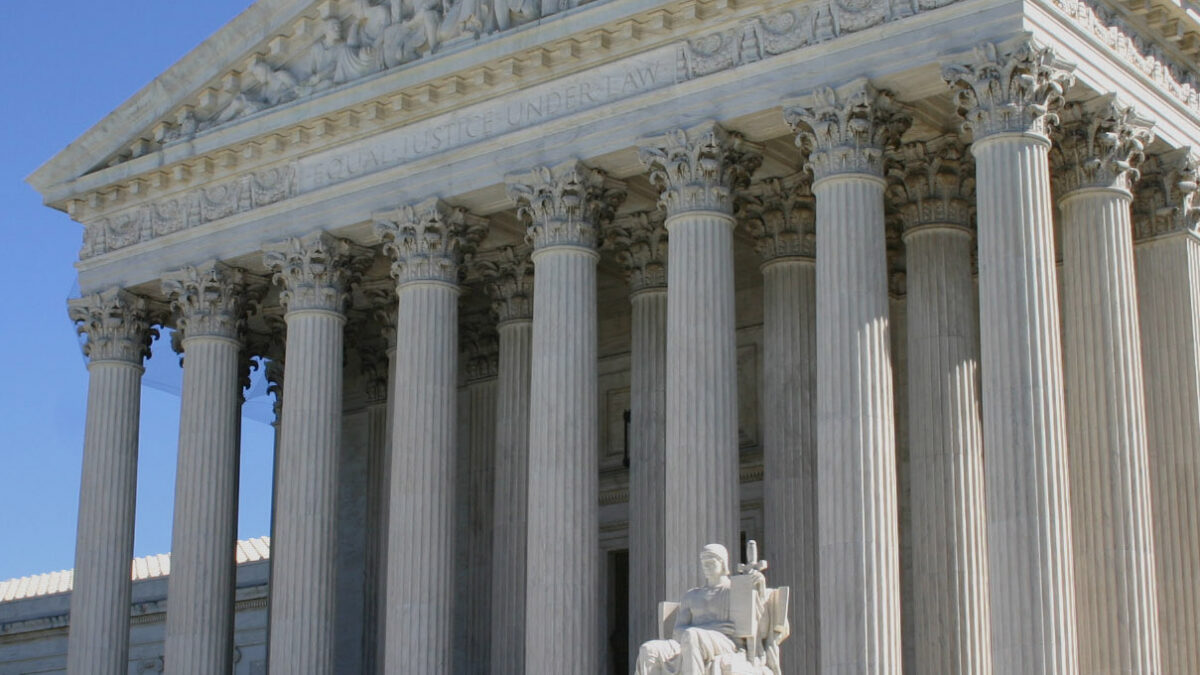

New York Times v. Sullivan (1964), once revered as a landmark First Amendment ruling, has become controversial in recent years. Leading political figures on the American right, such as President Donald Trump and Florida Gov. Ron DeSantis, have lamented its influence on our public discourse. Leading jurists, such as Supreme Court Justices Clarence Thomas and Neil Gorsuch, have called into question its constitutional legitimacy.
This is a welcome development. The Sullivan opinion and its famous “actual malice” doctrine never deserved their celebrated status. They are fruit of the Supreme Court’s most activist era, during which the justices routinely substituted their own policy preferences for the original meaning of the Constitution.
Traditionally, all Americans could defend their reputations through libel law when falsehoods damaged them publicly. The Sullivan court changed this by introducing a two-tier system of libel law. Its “actual malice” standard applies only to public figures, requiring them to prove not only that defamatory claims were false, but that those who published them either knew they were false or recklessly disregarded the truth. In practice, this standard is extraordinarily difficult to meet, which is why public figures almost never prevail in libel suits, even when devastating accusations prove untrue.
In charting this new course, the court departed markedly from the understanding of libel and the freedom of the press held by those who wrote and ratified the First Amendment. Where the modern court says that libel cases involving public figures raise a First Amendment problem, the founders held that libel was simply outside the scope of the freedom of the press and therefore unprotected by that vital constitutional principle. The founders’ understanding of libel included nothing like the contemporary “actual malice” standard. Instead, for them the plaintiff would rightly prevail if the published charges were false and harmful to reputation.
Sullivan Court’s Doctrine Has Proven Harmful
The present majority of the Supreme Court has shown an admirable willingness to correct earlier instances of judicial activism and return our constitutional law to traditional standards rooted in the original meaning of the Constitution. It would be fitting for them to carry this good work further and revisit the doctrine of New York Times v. Sullivan. The justices will be understandably reluctant to do so, however, because of the Sullivan case’s status as a longstanding precedent. For them, such precedent should not be reversed merely because it was wrong in the first place, but only if the error has also proven harmful.
The Sullivan Court’s doctrine, however, has proven very harmful.
One of the most alarming aspects of contemporary American politics is our growing culture of assassination. Attempts at political violence are becoming more frequent, and public expressions of sympathy for or approval of such acts are growing more common as well.
A 2025 PBS News/NPR/Marist survey found that nearly 30 percent of Americans believe violence may be necessary to “get the country back on track,” while a Harvard youth poll found that nearly 40 percent of young Americans believe political violence can be justified in certain circumstances. This should alarm us all in an era of growing political hatred, dehumanization, and increasingly open calls for violence against ideological opponents.
Culture of Defamation and Assassination
Donald Trump was nearly killed twice while running for president in 2024. Late in that same year, insurance executive Brian Thompson was shot to death as an act of political protest. Last year, Charlie Kirk was publicly assassinated while peacefully speaking to a crowd. Most recently, a gunman tried to storm the White House Correspondents’ Association (WHCA) dinner with the aim of shooting the president and others in attendance.
Each of these acts of violence has called forth a legion of ghoulish cheerleaders. In the wake of the attacks on Trump and Kirk, social media was flooded with cries of approval. Just this week, left-wing journalists in New York City publicly made light of Thompson’s death.
This growing tendency toward violence is fueled by another diseased part of our political culture: our culture of defamation, which has also been growing in recent years. Americans are less likely to debate the merits of political ideas and public policies. Instead, they increasingly attack one another’s character and accuse each other of the most egregious crimes in order to win political battles.
It should come as no surprise that a culture of defamation would foster a culture of assassination. Widespread defamation leads many Americans to believe that their leaders are hopelessly corrupt or irredeemably evil. Is it any surprise that the relentless popularization of such beliefs would drive some of the more unhinged and reckless among us to violence?
This connection between defamation and assassination was made evident recently in the manifesto of the alleged WHCA shooter. He justified his actions by claiming that President Trump is “a pedophile, rapist, and traitor.” In truth, Trump has never been convicted of any of these heinous crimes. He has, however, been accused of them repeatedly by his political enemies and their enablers in the partisan press.
This culture of defamation — and the culture of assassination arising from it — are the poisonous fruit of the Supreme Court’s constitutional error in New York Times v. Sullivan, which enables defamation by weakening the wholesome legal restraints that once kept it in check. This is more than sufficient harm for the contemporary court to revisit and correct Sullivan. A free society cannot survive indefinitely if public life becomes a contest of reckless defamation, moral hysteria, and political demonization. The peace of our society and the stability of our republic may depend on restoring the legal and cultural restraints that once kept those impulses in check.