

IVF is on the rise, and that’s a problem for the pro-life movement.
The problem is that pro-lifers know that human life begins at conception, but the IVF industry intentionally destroys human embryos in vast quantities — yet IVF is very popular, including among those who describe themselves as pro-life. Even as the American birthrate plummets, more babies are being born through IVF, with the most recent release of data showing the number of IVF babies surpassing 100,00 in a single year.
This has established a pervasive dissonance. Many Christian churches proclaim from the pulpit that human embryos are fully human, but nonetheless seem untroubled when members, and even leaders, use IVF according to the industry-standard embryo-destroying protocols. They just prefer not to talk about the contradiction.
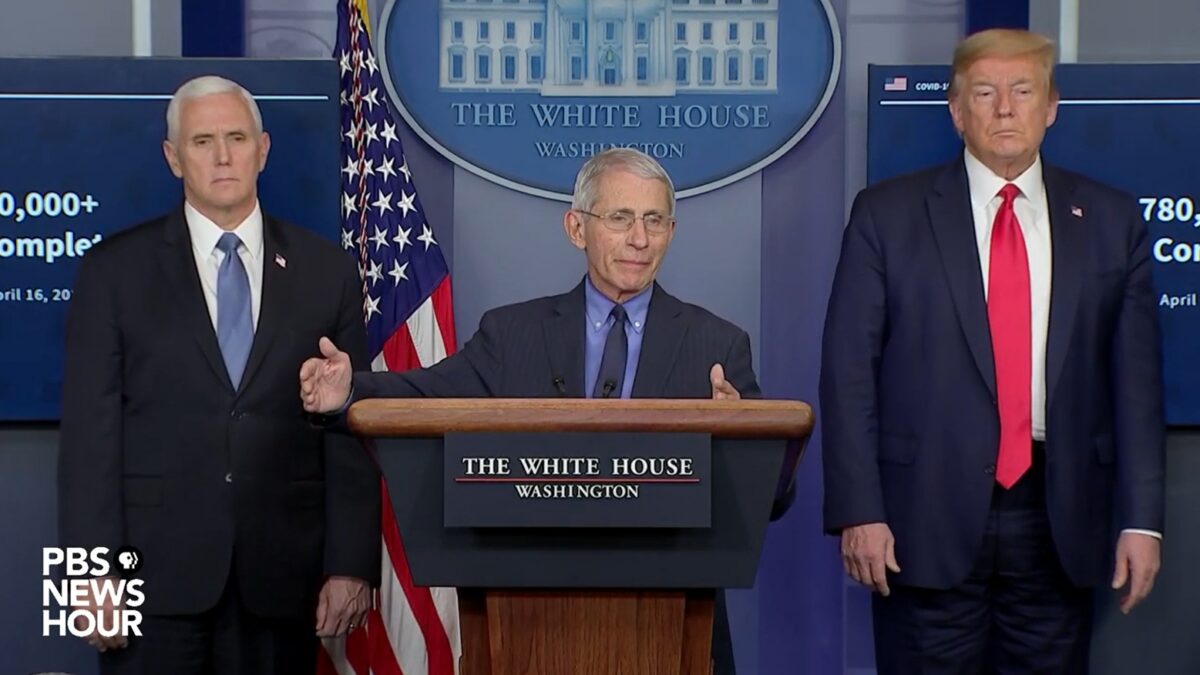
Thus, many people, not having thought about the issue much, do not realize that there is a conflict between the pro-life commitment to treating human embryos as human persons and what the IVF industry does. For instance, when President Trump unveiled his pro-IVF fertility policy, reporter Emily Jashinsky asked what his message was to those with “religious objections to IVF.” He replied, “I think this is very pro-life. … You can’t get more pro-life than this.” The apparent reasoning is simple: IVF helps people have babies and pro-lifers love babies. But the pro-life position is about protecting human life, not just helping people to have babies when they want them.
And protecting human life from conception is incompatible with how IVF is usually practiced. This is why IVF advocates are against recognizing human embryos as human persons. For example, Resolve (the National Infertility and Family Building Association) highlights the group’s opposition to laws that recognize that human life begins at conception.
In contrast, a few Christians have promoted the idea of an “ethical IVF” that treats every human embryo as a precious human life, and therefore avoids the casual destruction of embryos that is routine in the rest of the IVF industry. This is laudable insofar as it disavows the killing of human embryos, though it does not address other objections to IVF (for example, that it is dehumanizing to make people in laboratories).
But the IVF industry is determined to refuse all ethical constraint. The American Society for Reproductive Medicine (ASRM), the IVF industry trade group, has even complained that “ethical IVF” is “often used as a political tool to justify limiting standard practices like genetic testing or embryo creation.” ASRM concluded that though “ethical considerations are vital, they should not override the autonomy of individuals seeking to build families through proven medical treatments.” Of course, prioritizing client “autonomy” negates any “ethical considerations.” No wonder the IVF industry has embraced everything from eugenics and designer babies to selling American-born babies by the dozens or even hundreds to rich Chinese citizens.
Similarly, when IVF industry spokesman Sean Tipton was asked about whether proposed federal subsidies should cover “screening for sex selection of embryos,” he replied that, “We don’t think the government needs to be in the business of limiting patients’ choices regarding their medical care.” Which is to say that the IVF industry wants taxpayer dollars to be spent on private sector eugenics as parents try to “optimize” their designer babies, from sex to eye color to IQ.
This “optimization” means creating lots of extra embryos, genetically screening them, and then discarding the rejects. Or freezing the extras, but that is just a slow-motion way of discarding them. And though embryo adoption is possible, at current rates it would take 600 years just to try to adopt all the currently frozen embryos. We do not know the upper limit of how long an embryo can survive in cryopreservation, but it probably isn’t hundreds of years. And, of course, the IVF industry is still producing embryos far faster than they are being adopted.
There have even been ugly fights in the embryo adoption world, induced by, and further revealing, the conflict between treating human embryos as products and seeing them as persons. In a New York Times series on IVF and embryos, Anna Sussman noted that “several people in the embryo adoption world told me that personhood for embryos would make their work harder, not easier.” So? The purpose is protecting nascent human lives, not catering to doctors.
This illustrates how the tension between the IVF industry’s view of embryos as products and the pro-life conviction that life begins at conception often leads to absurd, convoluted reasoning. People who claim to want to save frozen human embryos (because they are individual human lives) end up denying the personhood of those embryos because acknowledging it would complicate matters. Another example of intellectual contortions came after the Southern Baptists passed a resolution in 2024 urging caution in the use of IVF, and emphasizing the need to respect the lives of human embryos, Baptist pastor Jeremiah Johnston, an associate pastor for the enormous Prestonwood Baptist congregation, responded with an op-ed denying the humanity of IVF embryos.
Johnston claimed that “An embryo is not synonymous with a child. … Only when an embryo successfully attaches in a mother’s womb does a child begin its beautiful journey to soon living an independent life. I say this as a pro-life individual who believes every life is sacred and precious.” This is biologically illiterate. Embryos, however conceived, grow and develop for days before they are ready to implant — indeed, it is this growth that makes it possible for IVF practitioners to test and grade embryos. Johnston’s argument ignores this, and would preclude condemning the IVF industry’s embrace of eugenics and its mass destruction of human embryos that don’t make the grade.
Johnston’s assertions also have theological implications, as they suggest that the incarnation did not occur until the embryonic Jesus implanted in Mary’s womb — a theologically fraught claim. Of course, from biology to theology, Johnston’s arguments were motivated not by scripture or reason, but by the conflict between his supposed pro-life convictions and the way he and his wife had used IVF. He could not proclaim that life begins at conception without condemning himself. And the rest of his church, from fellow leaders to the newest member, cannot consistently profess that truth without appearing to attack him. Christian acceptance of the life-destroying practices that are standard within the IVF industry undermines the church’s pro-life witness.
This is a difficult subject. Many of those who have used IVF in these ways did so from the broken-hearted longing and sorrow of infertility, and often without really knowing how the IVF industry operates, and how casually it creates and discards “excess” human embryos. And criticisms of IVF and the IVF industry can feel like attacks not only on the parents who have used them, but also on the children conceived through them. This is not true; each IVF baby is a precious human person made in the image of God — but so are all the IVF embryos that are thrown away or stuck in frozen stasis.
These truths cut against the grain of a culture in which IVF is popular and little value is placed on early human life, whether in the womb or in the petri dish. Nonetheless, as Christians we are called to proclaim the truth that human life begins at conception, no matter how inconvenient or unpopular it may be.