
All blacks apparently vote the same. It doesn’t matter if they’re rich or poor, educated or unschooled, urban or rural — if they’re black, their voting patterns are only defined by their blackness. At least that’s what they were saying in Louisiana, until the latest U.S. Supreme Court decision pulled the curtain down on “majority-minority” gerrymandering.
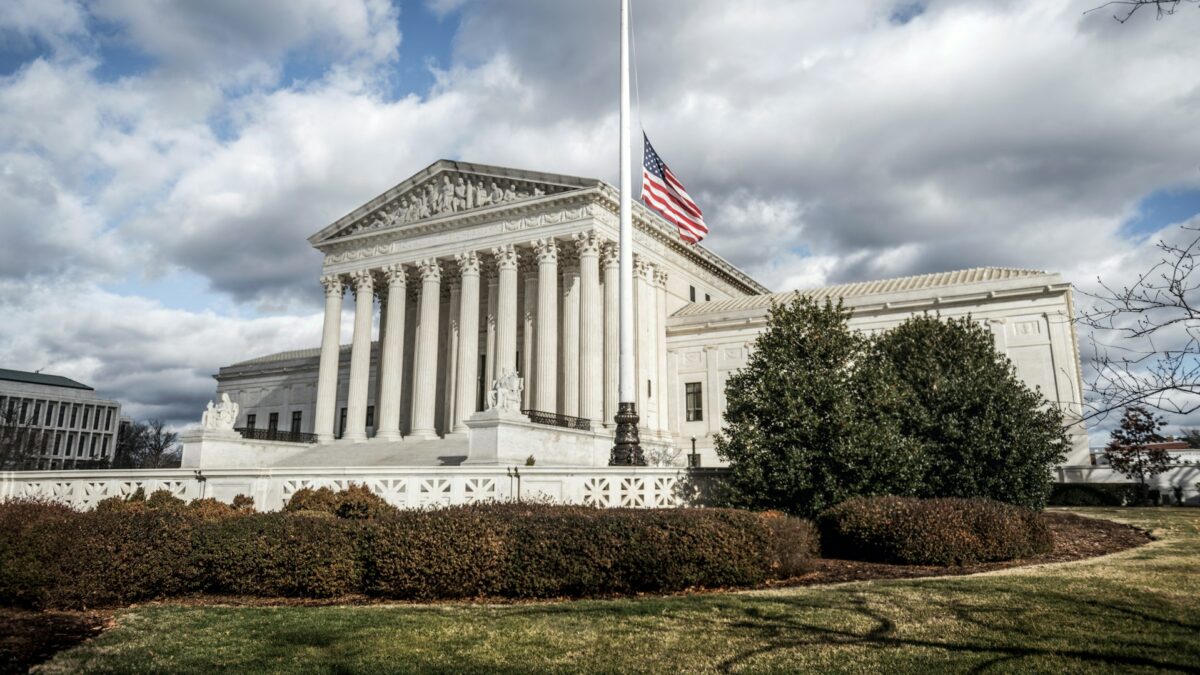
In a clear 6-3 ruling this week, the Supreme Court declared Louisiana’s SB8 map — which intentionally created a second majority-black congressional district — an unconstitutional racial gerrymander. Justice Alito’s majority opinion, joined by the court’s conservatives and with a strong concurrence from Justice Thomas (joined by Justice Gorsuch), held that Section 2 of the Voting Rights Act did not require the state to draw that extra district. Without such a requirement, there was no compelling interest to justify making race the predominant factor in map-drawing. The lower court’s decision striking the map was affirmed.
This decision directly attacks the racist stereotyping that has infected redistricting for too long. For decades, mapmakers have operated on the crude assumption that black voters (and Latino voters) form a monolithic bloc whose political preferences are dictated first and foremost, if not solely, by skin color. They have treated minority communities as predictable voting machines rather than as individuals with diverse views shaped by education, income, values, faith, and personal experience.
Louisiana’s mapmakers did exactly that: They sorted people into districts based on racial headcounts to engineer “majority-minority” outcomes, presuming that black voters would think and vote as a uniform group. Joe Biden even publicly chastised blacks as not being black if they didn’t vote Democrat.
That is the opposite of equality. It revives the very racial sorting the 14th Amendment’s equal protection clause was written to stop. The Constitution demands that the government treat every person as an individual, not as a racial category. Yet Section 2 of the Voting Rights Act, as twisted in practice, has been used to mandate race-conscious districting that elevates group identity over individual dignity. It assumes black voters are interchangeable and that their interests can only be protected by carving out safe racial enclaves. This isn’t protecting voting rights; it’s enforcing a soft form of racial separatism dressed up as so-called social justice.
The Supreme Court rightly rejected that approach. By ruling that the VRA does not compel states to create additional majority-minority districts when race predominates without strict justification, the justices dismantled the legal machinery that turned racial stereotypes into map-drawing mandates. They refused to let the law be manipulated to enforce the fiction that all members of a racial group share identical political interests. As Justice Thomas has long argued, and as the majority reinforced this week, the Constitution is colorblind. It prohibits the government from dividing citizens by race to achieve predetermined electoral results.
Critics will claim this decision weakens minority representation. That misses the point. True voting rights are secured by enforcing the law equally for every citizen, not by creating racial preferences that assume nonwhite voters cannot succeed without government-engineered districts. Black Americans, like all Americans, are not defined by their skin color. Their voices deserve to be heard through fair, race-neutral processes that respect community interests, socioeconomic realities, and natural coalitions, not through racial quotas in mapmaking.
This ruling builds on the court’s earlier decisions limiting race-based remedies, from affirmative action to other areas of law. It sends a clear message: Temporary fixes born of past discrimination cannot become permanent tools for racial engineering. The Voting Rights Act’s original purpose — to prevent actual disenfranchisement — remains vital. But it must be applied without turning the law into a vehicle for the very racial divisions it was meant to overcome.
Louisiana’s case exposed the flaw at the heart of “majority-minority” gerrymandering: It relies on the offensive premise that skin color predicts political behavior better than anything else. The Supreme Court has now said no. States should draw districts based on neutral criteria — compactness, communities of interest, traditional boundaries, and respect for political subdivisions. Let voters of all backgrounds form coalitions organically. Let candidates compete for support across racial lines. Self-government strengthens when it treats citizens as equals under the law, not as members of competing racial tribes.
The curtain has been pulled back on the stereotype-driven manipulation of redistricting. This week’s decision reaffirms that the Constitution’s promise of equality means one standard for all — no racial exceptions, no preferred classes, and no government-sanctioned assumption that black voters (or any other voters) are defined solely by their skin color. It is a victory for constitutional colorblindness and a step toward healing the divisions that identity politics has deepened for far too long.