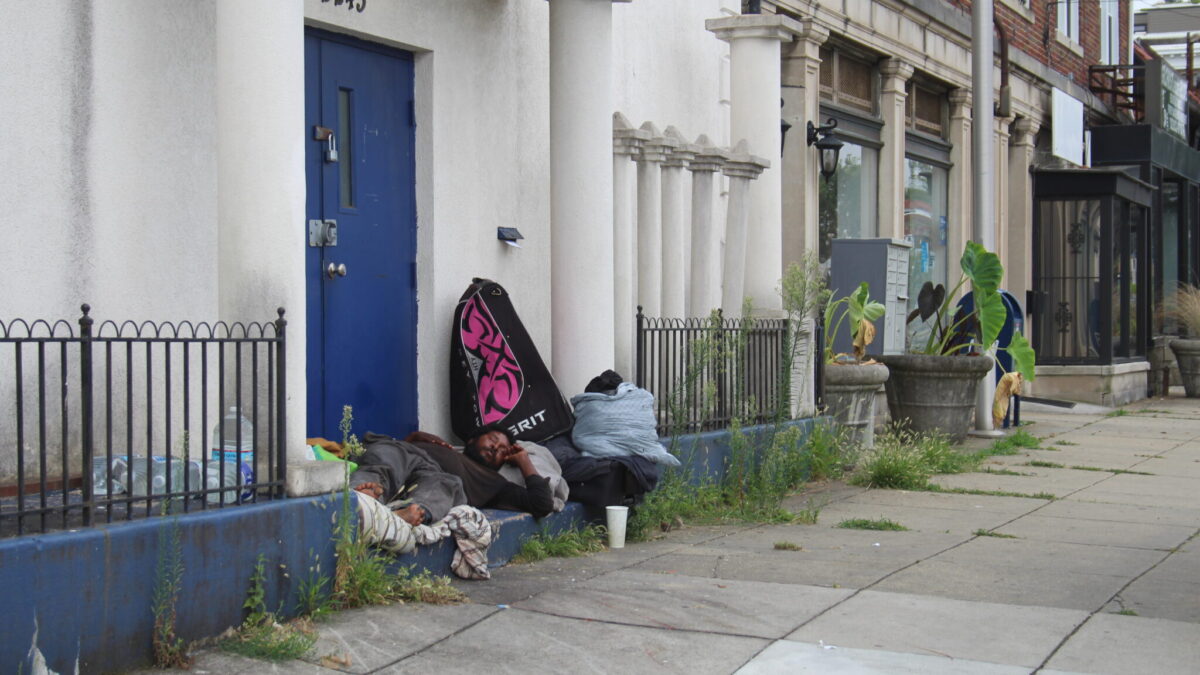

DoorDash is more popular than ever, but not because young people are lazy. In many of America’s major cities, walking to the grocery store or local fast food joint often means encountering homelessness, drug addiction, and threats of violence.
“A burrito only costs $20 when you buy it on Door Dash because you’re too lazy to walk over to Chipotle or Taco Bell,” Marc Thiessen posted to X. But with criminals on the streets, it may be self-preservation — not laziness — that’s causing people to use delivery services.
I’m a college student living in Washington, D.C. for the summer, and I have never used food delivery services more than I have in the past 3 months. I knew the costs of delivery were high, but the costs of walking alone to Target were much higher.
Outside the local Target near me in D.C. is a large group of homeless people, who often shout at customers as they walk by. Other times they’re slouched over, clearly overdosing and in need of help. But as far as anyone can tell, no help ever comes, even when police officers are present.
Perceived neighborhood safety affects whether people are willing to walk, which is often necessary to go to a restaurant, fast food place, or grocery store in major cities.
“I’d much rather pay a $10 premium to stay in my own home than walk the city at night to try to get Taco Bell,” a 23-year-old living in Alexandria, Virginia, told The Federalist. “It would be a different story if I had a car, but so many women are reliant on walking and public transport in cities.”
A 21-year-old interning in D.C. this summer told The Federalist that he also orders from DoorDash to avoid unsafe situations. “I know it’s more expensive, but I’d rather pay a little extra for peace of mind. Getting on the Metro at night just for food is costly in its own right.” He added that he doesn’t order food delivery at all when he’s home in Missouri: “I’m happy to make the trip to the store because I know I’ll be safe in my town.”
In many major cities, violent criminals often get let off the hook for their behavior, making the streets even more unsafe. Police in Charlotte, N.C. arrested 32-year-old Di-Quan Schafar Hunt Thursday for assaulting a woman walking down the sidewalk. Hunt had an extensive criminal record of more than 20 prior charges, including assault on a female and assault with a deadly weapon. Yet, due to the failures of the judicial system, this man was on the street and able to carry out his violent attack.
Decarlos Brown, Jr., who murdered 23-year-old Ukrainian refugee Iryna Zarustka last August, was a “homeless felon with at least 14 prior arrests,” including assault. After he committed the murder, U.S. District Judge Kenneth Bell deemed him “incompetent to stand trial,” which delays the trial for months while he’s in a mental facility.
When people like Hunt and Brown are on the streets, and when law enforcement refuses to enforce the laws on the books, having food delivered seems like a comparatively better option.
Every time a woman spends extra money to have food delivered to her door, she is paying to avoid the consequences of harmful government policies. By keeping the streets unsafe and riddled with crime, governments have imposed a “safety tax” on residents. Rather than blame young people for paying that tax, fix the problems that made it necessary.