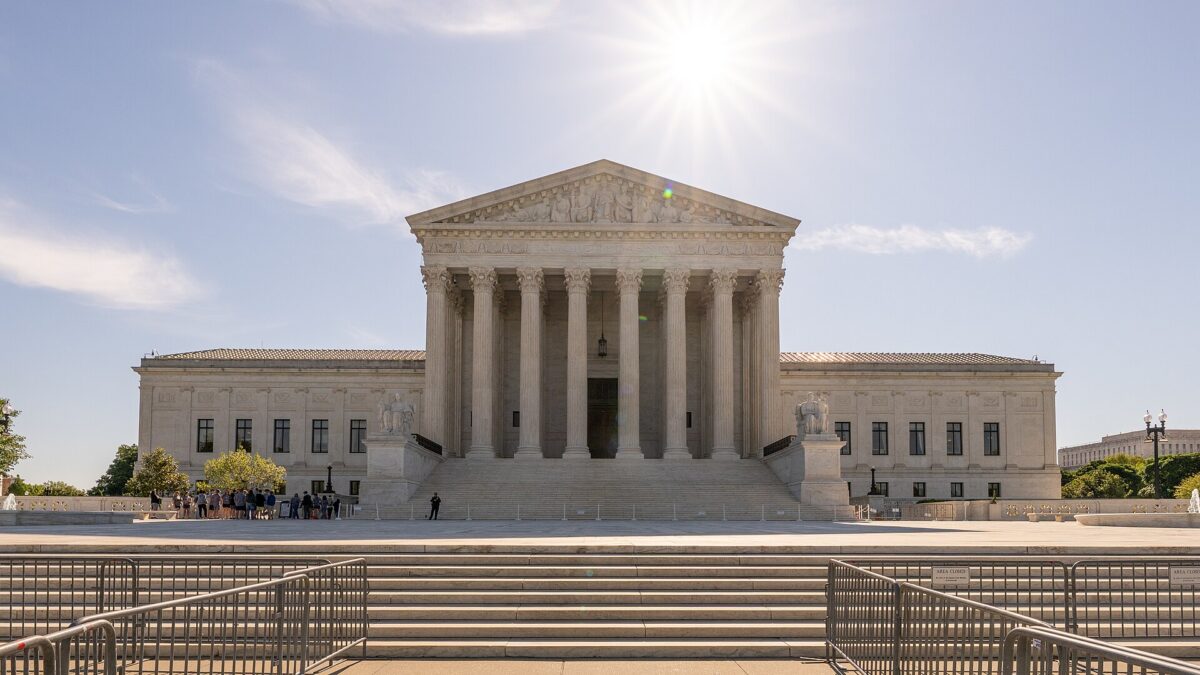

There are Supreme Court decisions that faithfully interpret the Constitution, even when reasonable people disagree about the outcome. And then there are decisions in which the justices appear to begin with the outcome they want and only afterward search for constitutional language to justify it. The Supreme Court’s decision in Trump v. Barbara belongs firmly in the latter category.
The case centered on one sentence of the 14th Amendment: “All persons born or naturalized in the United States, and subject to the jurisdiction thereof, are citizens of the United States and of the State wherein they reside.”
The court interpreted this language to constitutionally guarantee citizenship to virtually every child born on American soil, including the children of illegal aliens and temporary visitors who come to the United States solely to give birth.
Justice Samuel Alito captured the consequences better than anyone else in his dissent:
As interpreted by the Court today, the Fourteenth Amendment confers citizenship on virtually everyone who happens to be born in this country, including the children of “birth tourists,” women who come here solely for the purpose of giving birth to a child and then promptly return home.
A Chinese woman can board a flight from China, spend a few weeks in the Northern Mariana Islands, give birth, return home, and her child acquires an American passport as a constitutional right. The practice has become so widespread that, by some estimates, well over a million Chinese nationals have acquired American citizenship through this mechanism.
And after Trump v. Barbara, Congress cannot simply vote to change it. Nor can the American people. Five justices have placed the issue beyond the reach of ordinary democratic government and elevated it into constitutional doctrine.
Echoes of Roe
For conservatives, the irony is almost unbearable. This opinion represents exactly the sort of judicial behavior they spent half a century condemning in Roe v. Wade. The objection to Roe was never simply abortion. It was that the court manufactured constitutional law from its own policy preferences, transforming a disputed political question into an immutable constitutional command without the constitutional text actually requiring it.
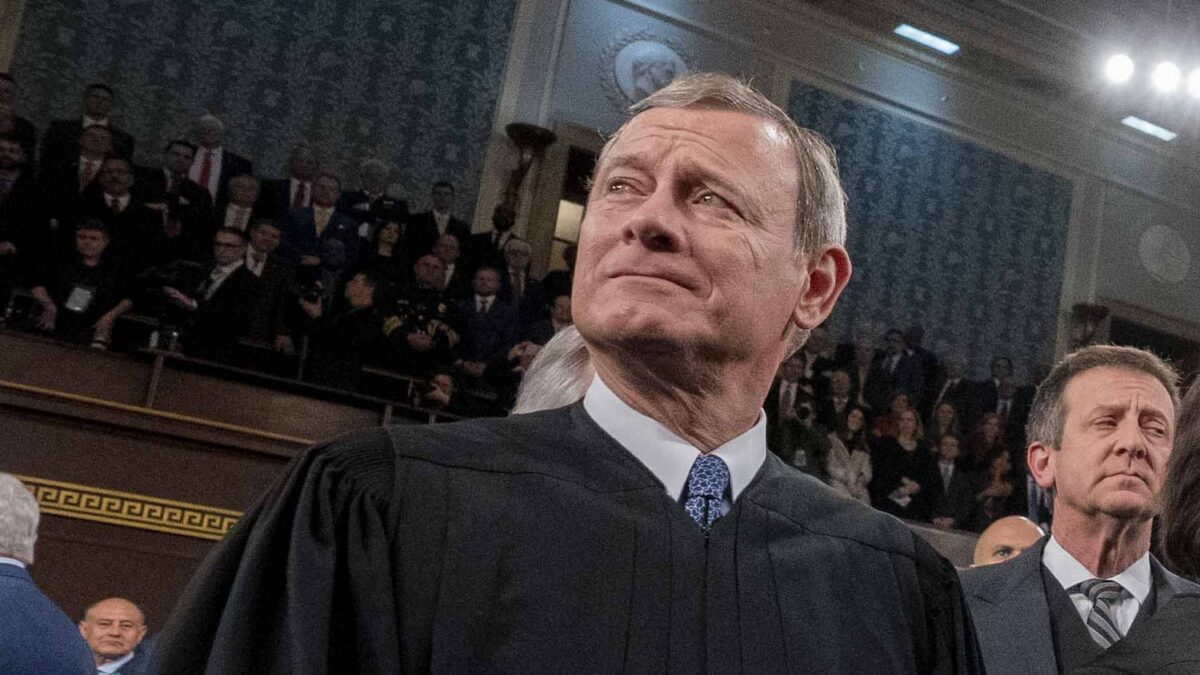
Chief Justice Roberts, joined by the three liberal justices as well as Amy Coney Barrett, has now done much the same thing for birthplace citizenship. Whether history ultimately concludes that this opinion reflected policy preferences, ideology, or simply another manifestation of Trump Derangement Syndrome, one thing is unmistakable: The majority did not faithfully interpret the 14th Amendment.
The truly astonishing aspect of the decision is that the court managed to get wrong what should have been the easiest constitutional question in the entire case.
There are serious debates surrounding the phrase “subject to the jurisdiction thereof.” Constitutional scholars have argued for generations over whether it requires complete political allegiance, obedience to American law while physically present, or lawful permanent residence. Reasonable people can disagree about those questions. One can make serious constitutional arguments both for and against extending birthplace citizenship to categories such as illegal aliens or lawful permanent residents, because the phrase “subject to the jurisdiction thereof” is capable of more than one plausible interpretation.
Those are difficult questions. Birth tourism is not. Unlike the debate over illegal immigration, there are no comparably serious competing arguments when the parents are nothing more than temporary visitors who enter the United States for a few weeks, give birth, and immediately return home. The constitutional text simply does not support treating a tourist as a resident.
The Forgotten Requirement of Residence
In fact, birth tourism is the one factual scenario that ought to unite every honest interpreter of the 14th Amendment. Part of the reason is that, with so much focus on the words “subject to the jurisdiction thereof,” almost nobody has paid attention to another part of the same sentence. The citizenship clause does not simply identify who becomes a citizen of the United States. It also provides that such persons become citizens “of the State wherein they reside.”
Residence is a well-defined concept in American law. A child born during a brief stay by parents who never intended to settle in the United States, who return home days later, and whose family never establishes any residence here does not reside in a state. That is not what residence means. Yet Roberts ignores that language altogether.
In contrast, Justice Clarence Thomas treats the case as what it actually is: one of the most consequential constitutional disputes ever to reach the Supreme Court. American citizenship is one of the world’s greatest privileges, something billions of people would gladly claim if they could. Before handing it out like candy, the court ought to conduct a serious analysis of the constitutional text that governs it.
Thomas’ dissent is roughly three times the length of the majority opinion because he does not merely announce conclusions. He reconstructs the historical record step by step, examining the debates surrounding the Civil Rights Act of 1866 and the 14th Amendment, analyzing 19th-century legal authorities, and testing the majority’s conclusions against the historical understanding of citizenship, jurisdiction, residence, and allegiance.
Among the historical examples Thomas discusses is the case of Mary Deveraux, an Irish immigrant who arrived in New York in 1889 and gave birth a day after reaching American shores. Because, at the time of the birth, Deveraux hadn’t yet been “lawfully admitted” into the United States, it was concluded that her American-born child did not acquire United States citizenship. Thomas’ point is not that this single episode resolves the constitutional question by itself. It is that in the decades following its adoption, the 14th Amendment plainly did not treat mere birth on American soil as sufficient for acquiring American citizenship. His point is that constitutional interpretation requires engaging both the constitutional text and the historical evidence rather than assuming the answer from the outset.
The contrast between the two opinions is striking. Roberts writes largely in broad doctrinal assertions, moving quickly from premise to conclusion. Thomas builds his argument brick by brick.
The American Indian Contradiction
But Thomas’ most devastating point concerns something much simpler. It is so straightforward that anyone can understand it, and once you see it, the majority’s opinion simply collapses under its own logic. The problem is that Roberts’ opinion cannot explain the 14th Amendment’s treatment of American Indians, nor can it reconcile a system that denied them citizenship with one that now extends it to Chinese birth tourists.
For decades after the 14th Amendment was ratified, Native Americans born within the territorial United States were not considered citizens under the citizenship clause. Congress ultimately had to enact separate legislation granting them citizenship because the 14th Amendment itself had not done so. That history is beyond dispute.
The majority attempts to reconcile this by arguing that members of Indian tribes belonged to “alien and sovereign” nations and therefore were not fully subject to the jurisdiction of the United States. Thomas then asks the obvious question the majority cannot answer. As he writes:
It is difficult to understand why China, for example, would be less alien or less sovereign than the Cherokee Nations. It is also difficult to understand why tribal Indians would be less entitled to American citizenship if born on non-Indian land within the United States than children of birth tourists who immediately returned to China.
It is an extraordinarily powerful point. If belonging to an alien and sovereign nation excluded Native Americans from automatic citizenship, why does the same principle not apply to a Chinese tourist?
China is every bit as alien and every bit as sovereign as the Cherokee Nation was understood to be in the 19th century. A Chinese birth tourist remains a Chinese citizen, owes allegiance to China, intends to return to China, and usually leaves the United States almost immediately after giving birth.
If tribal Indians could be excluded because their political allegiance remained with another sovereign, it is impossible to explain why temporary visitors from China are somehow more completely within the jurisdiction contemplated by the 14th Amendment.
That contradiction lies at the heart of the majority opinion. Roberts never resolves it because it cannot be resolved.
A people whose ancestors had lived on this continent for centuries, who were born on American soil and knew no other homeland, were excluded from automatic citizenship under the original understanding of the 14th Amendment. Yet under Roberts’ interpretation, a Chinese national can fly from Beijing to Saipan, remain for a few weeks, give birth, fly home, and her child acquires an unconditional constitutional entitlement to American citizenship.
American Indians did not qualify, while Chinese birth tourists do. If the majority has an answer to that contradiction, it never tells us what it is.
A Constitutional Fix That May Never Come
Unfortunately, there is no easy fix. A few obvious policy changes, such as eliminating visa-free access that facilitates birth tourism into the Northern Mariana Islands, might reduce the practice around the margins. But they cannot solve the constitutional problem the court has now created.
A constitutional amendment is theoretically possible but practically unattainable. It would require approval by two-thirds of both houses of Congress, followed by ratification by 38 state legislatures. That is extraordinarily unlikely.
The more realistic path resembles the one that ultimately overturned Roe v. Wade. Congress could enact legislation specifying that birthplace citizenship does not extend to categories such as birth tourists, illegal aliens, and other temporary visitors. That statute would almost certainly be challenged immediately, requiring the Supreme Court to confront the constitutional question directly.
Indeed, such a case would present a stronger vehicle than Trump v. Barbara itself. Roberts was reviewing an executive order, an exercise of presidential authority that courts naturally scrutinize more skeptically because it lacks the democratic legitimacy of an act of Congress. A statute enacted by Congress would present the issue in a fundamentally different posture, forcing the court to decide not whether a president exceeded his authority but whether Congress itself correctly interpreted the 14th Amendment.
That does not mean such a law would prevail before the current court. A majority consisting of the three liberal justices, Chief Justice John Roberts, and Justice Amy Coney Barrett has now committed itself to an expansive reading of the citizenship clause. Until the composition of the court changes, there is little reason to expect a different outcome.
Unlike Roe, however, this decision rests on the narrowest possible majority: five to four. That means a future court could revisit the issue far sooner than the half-century it took to overturn Roe. If Congress presents the court with the right case, and if a future majority adopts a more historically grounded understanding of the 14th Amendment, Trump v. Barbara may ultimately come to be remembered not as the final word on birthplace citizenship but as another constitutional detour waiting to be corrected.