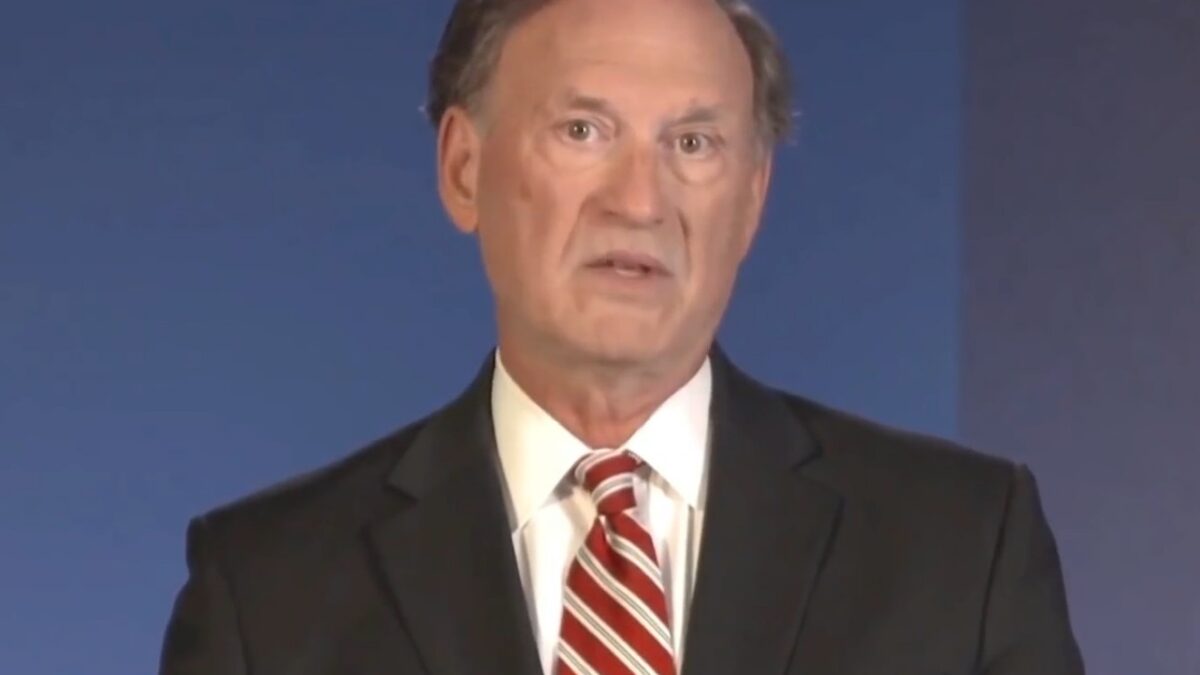

Supreme Court Justice Samuel Alito has authored numerous high-impact majority opinions this term, but the Supreme Court’s ill-advised decision allowing mail-in ballots to be counted days after Election Day gave him the opportunity to nuke that premise from orbit in a dissent.
Monday’s 5-4 decision, in which Chief Justice John Roberts and Justice Amy Coney Barrett joined the three liberals on the court, allowed Mississippi to continue counting ballots received after the federally defined Election Day, offering little by way of defining what an “election” actually is.
Alito took the opportunity to inform the Court’s majority what the term “election” actually means in law, and explain how their decision undermines election integrity and the perceptions that U.S. elections are free and fair.
Election Day Means Election Day
Plain and simple: “Federal law designates ‘the Tuesday next after the first Monday in November’ as ‘election day,’ 3 U. S. C. §21, and provides that elections for federal office must be held on that date,” Alito wrote. There is not much getting around that, but the majority rejected federal statute, history, and precedent to determine that ballots can trickle in and be counted well after Election Day.
The act of voting is a member of the electorate both choosing his preferred candidates and that vote being submitted to the custody of an election official. That means a ballot needs to be in the hands of an election official before the polls are closed in order for someone to have actually “voted” — and statute is unambiguous as to when that is.
“The Court … concludes that the election-day statutes merely require that each individual cast a vote on or before election day. But if that is all that the election-day statutes require, there is no sense in which the electorate as a whole can be seen as making its choice on election day,” Alito wrote. “Rather, the electorate’s choice would be made piecemeal over an extended period prior to election day, and that prospect is blatantly contrary to what the election-day statutes demand.”
Mail-In Ballots Appear Fraudulent Because They’re The Most Fraudulent
Alito quoted Justice Brett Kavanaugh noting that “when ‘thousands of absentee ballots flow in after election day and potentially flip the result of an election,’ ‘charges of a rigged election can explode.'”
But he also went further, explaining how numerous sources have shown how “allowing absentee ballots to pour in over the days and weeks after election day, by which point preliminary election returns are being publicly reported, creates greater opportunity for fraud and risks further undermining the public’s confidence in election integrity.”
The entire chain of custody that maintains any semblance of election integrity is necessarily broken down with absentee voting. It is difficult for officials to verify who has requested and completed a ballot and there is a “greater opportunity for voter manipulation,” he wrote, stating that the Court’s decision “compounds these vulnerabilities.”
Alito also cited the 2005 bipartisan election integrity committee helmed by former President Jimmy Carter and former Secretary of State James Baker as one of multiple sources to find that “absentee voting was ‘the largest source of potential voter fraud’ in American elections.”
Finding Late Ballots Is How Lyndon Johnson Stole His Senate Election
Alito laid out a not-so-hypothetical scenario where a presidential election was hanging on the results of a single state, and that the post-Election Day vote showed one candidate with a large lead. If that state allowed ballots to be counted well after Election Day, and suddenly saw over the course of the next days and weeks a diminishing lead, it could ultimately lead to a flip.
Finding votes somewhere would be the name of the game in an election like that, just as it was in President Lyndon Johnson’s 1948 election to the U.S. Senate, which was the defining moment that made his political career, as Alito pointed out in a footnote:
An acclaimed biography of former President Lyndon Johnson detailed how the Senate campaign that propelled his political career was marred by late-arriving votes that changed the outcome of the race. In 1948, Johnson eked out a razor-thin victory over his primary opponent in a runoff, all but guaranteeing that he would win the general election in Texas. Johnson’s victory was made possible through the election-flipping addition of 202 votes to the tally several days after polls had closed. Two hundred of those late-arriving votes were cast for Johnson, who won the race by just 87 votes. In the decades since, weighty evidence has come to light casting serious doubt on those votes’ legitimacy.
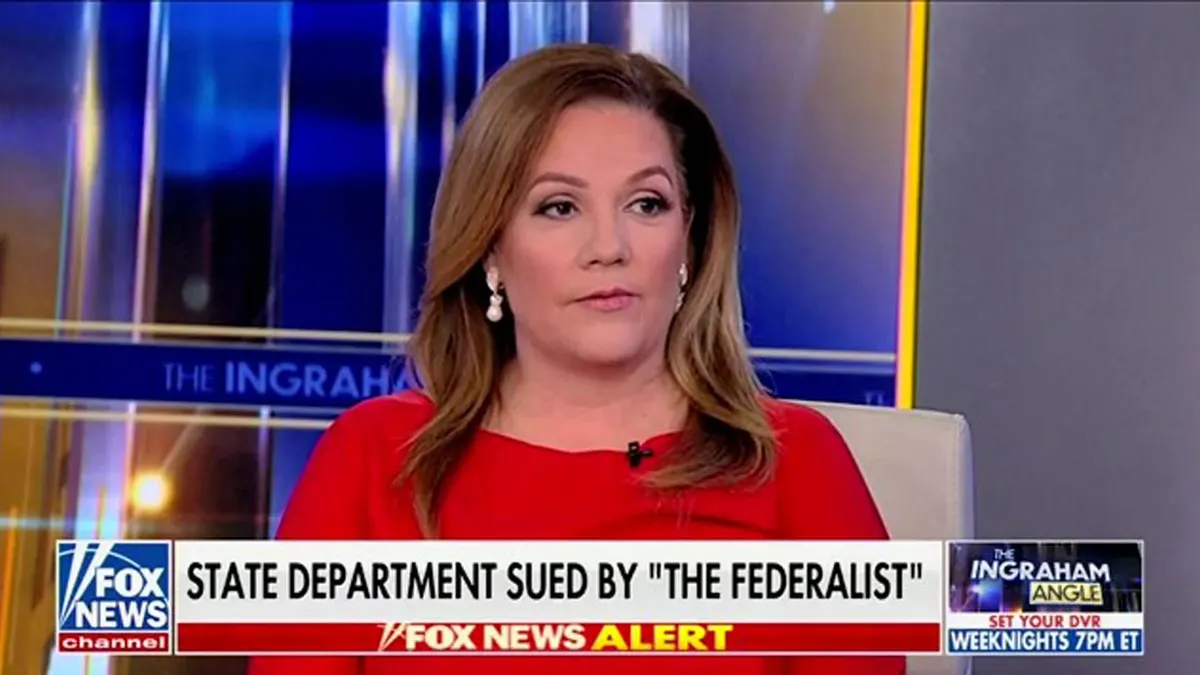
There are more modern examples of a similar phenomenon as well. The 2008 election of former Sen. Al Franken, a Democrat from Minnesota who secured a filibuster-proof majority in the Senate for President Barack Obama’s first years in office. As The Federalist’s Editor-In-Chief Mollie Hemingway pointed out in Rigged: How the Media, Big Tech, and the Democrats Seized Our Elections, what looked like an Election Day win for Republican incumbent Sen. Norm Coleman slowly turned to a loss after Democrat election fixer Marc Elias got ahold of the ballot counting.
In 2024, the North Carolina Supreme Court election likewise saw about 10,000 ballots trickle in over the course of weeks to flip the Election Day results.
‘Pandora’s Box’
In addition to the direct concerns to elections coming from the Court’s decision, Alito provided a litany of questions and concerns the decision would create, but does not attempt to answer:
Not only is today’s decision inconsistent with statutory text, legal context, historical practice, and precedent; it also threatens to produce lamentable consequences. The majority’s holding spawns a slurry of troubling election-law questions and risks further undermining Americans’ confidence in election integrity.
The majority holds that a State complies with the federal election-day statutes if it requires that ballots are postmarked by election day and received within five days after. But this ostensibly simple holding obfuscates the many unsettling questions that the majority’s position entails. For instance, do the federal election-day statutes impose any ballot-receipt deadlines? Mississippi counts absentee ballots that arrive up to five days after the federal election day, but nothing in the majority opinion turns on that 5-day duration. Indeed, some States will count mail-in ballots that arrive as late as 21 days after election day. If the “election” is complete when voters fill out their ballots and send them on their way, may States eliminate ballot-receipt deadlines entirely? It appears that the only federal backstops for ballot receipt are the date when newly elected Representatives and Senators must report for their swearing in and the date when Presidential electors must cast their votes.
Next, would it suffice under federal law if a State authorized voters to tender their ballots to any third party by election day? Mississippi counts late-arriving absentee ballots only if they are sent using the Postal Service or a common carrier. But nothing in the election-day statutes gives those entities special treatment. Could a State therefore count late-arriving ballots if they are delivered by some other intermediary? How about a relative of the voter? A helpful neighbor? An Uber driver who agrees to serve as a courier? A “ballot harvester” affiliated with a political party or interest group?
May States use something other than a ballot’s postmark to determine when someone voted? Mississippi requires that an absentee ballot be postmarked on or before election day, but other States do not. Do those States’ laws comply with the election-day statutes? What happens if a voter deposits a ballot in a U. S. mailbox on election day after the last mail pickup for the day?
What happens if a courier offers a recall service? The majority’s rule apparently rests on the notion that a voter has made a “final selection of an officeholder” once the voter tenders a ballot to the party who will deliver it. But the Postal Service allows its customers to recall mail mid-transit, as do many private parcel services. Given that fact, is a voter’s “selection” truly “final” when he or she puts a ballot in the mailbox? The majority dodges this question, offering the passing suggestion that Mississippi’s statute would be preempted only insofar as it allows voters to recall their ballots. May the Fifth Circuit hold as much on remand? Must state law expressly prohibit voters from using recall services? Do the Postal Service’s or FedEx’s mail-recall policies violate the election-day statutes as applied to absentee ballots?
For state legislatures trying to understand what the election-day statutes allow, the majority’s decision opens Pandora’s box.