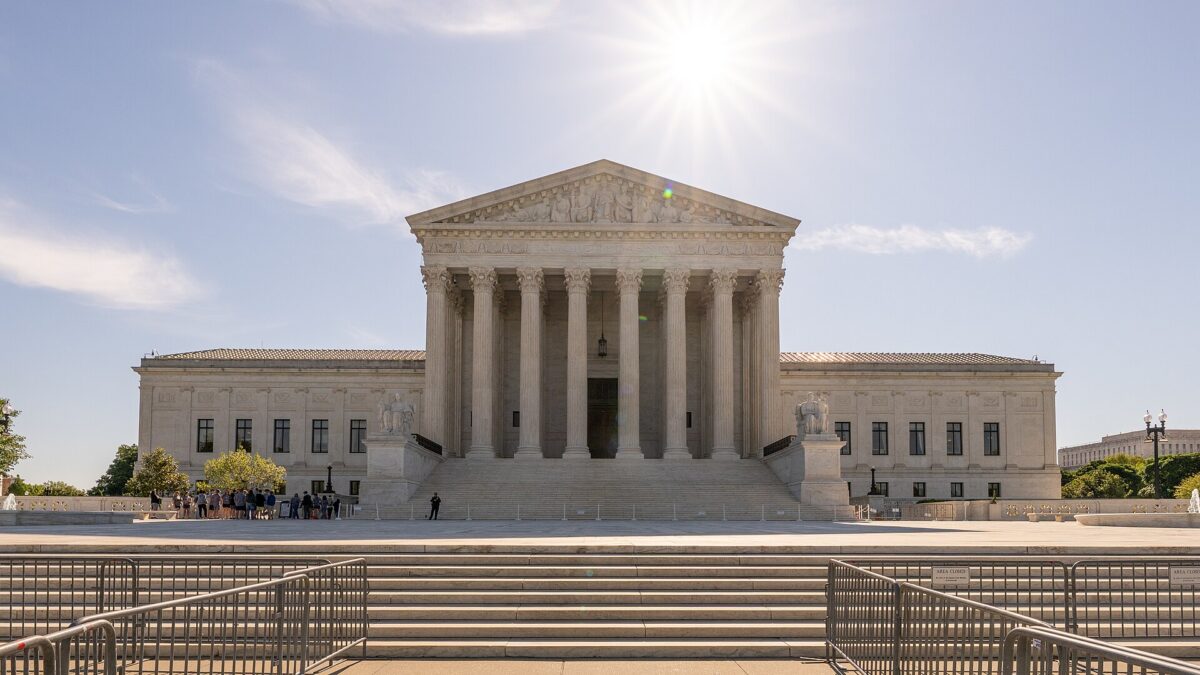

In a blow to the integrity of U.S. elections, the Supreme Court upheld state laws permitting election officials to accept postmarked ballots after Election Day on Monday. The ruling was 5-4, with Chief Justice John Roberts and Justice Amy Coney Barrett joining the court’s liberal justices in the majority.
The dispute in Watson v. RNC dates back to 2024, when the Republican National Committee (RNC) and the Mississippi GOP filed a lawsuit against a Mississippi election law governing late-arriving ballots. The plaintiffs alleged that the law authorizing mail-in ballots that are postmarked by Election Day to be accepted up to five days after the day of the election violates existing federal laws establishing an Election Day for federal contests.
The practice recently came under magnified scrutiny during California’s recent (and chaotic) primary elections. The Golden State accepts postmarked ballots up to a week after Election Day.
Writing for the majority, Barrett ruled that the federal “election-day statutes require the electorate’s choice to be made on election day,” and that this “occurs so long as election day is the deadline for individuals to vote — as it is in Mississippi.” She further argued that these federal laws do not, however, “set a deadline for ballot receipt, so they do not prevent Mississippi from counting ballots postmarked before election day yet received afterward.”
“The Framers recognized the difficulty of crafting election laws ‘applicable to every probable change in the situation of the country.’ … So instead of constitutionalizing election law, they decided that ‘a discretionary power over elections’ needed to be lodged ‘somewhere,’” Barrett wrote. “Suffice it to say, that power was not lodged in this Court. The election-day statutes say nothing about ballot receipt, and we cannot add to the words Congress chose.”
Writing for the dissent, Justice Samuel Alito argued that “[i]f ballots received after election day are added to the set of ballots that dictate the election’s outcome, the electorate’s choice does not occur on election day, and the federal election-day statutes are violated.” Mississippi and other states’ acceptance of late-arriving ballots, he wrote, “effectively postpones the date on which the electorate’s choice is made, and federal law precludes that postponement.”
“Today’s decision is inconsistent with the terms of the election-day statutes, contemporary election-law principles, two centuries of historical practice, and the case law on the question presented,” Alito wrote. “It opens up and fails to resolve a host of questions for state election officials and courts. And it creates a serious risk of further undermining public confidence in our elections and our system of self-government. I therefore respectfully dissent.”
The court’s decision reverses the 5th Circuit Court of Appeals’ ruling on the matter and remands it back to the lower judiciary for further proceedings consistent with the majority opinion.