
The Trump administration’s finding that some 250,000 noncitizens reside on the voter rolls of just four states — California, Nevada, New Jersey, and Pennsylvania — represents a clear and present danger to the integrity of our elections. Revelations from Democrat Gov. Mikie Sherrill of a purported Garden State “glitch” accounting for 6,600 noncitizen registered voters, hundreds of whom illegally cast ballots, further confirm the danger and vindicate the administration’s vigorous effort to obtain and review every state’s voter records to identify ineligible voters and compel states to remove them.
But the revelations also ought to turn America’s attention to a related threat: the counting of noncitizens in the Census, which distorts congressional apportionment and the allocation of Electoral College votes for presidential elections. The threat is one the administration may be preparing to confront head-on.
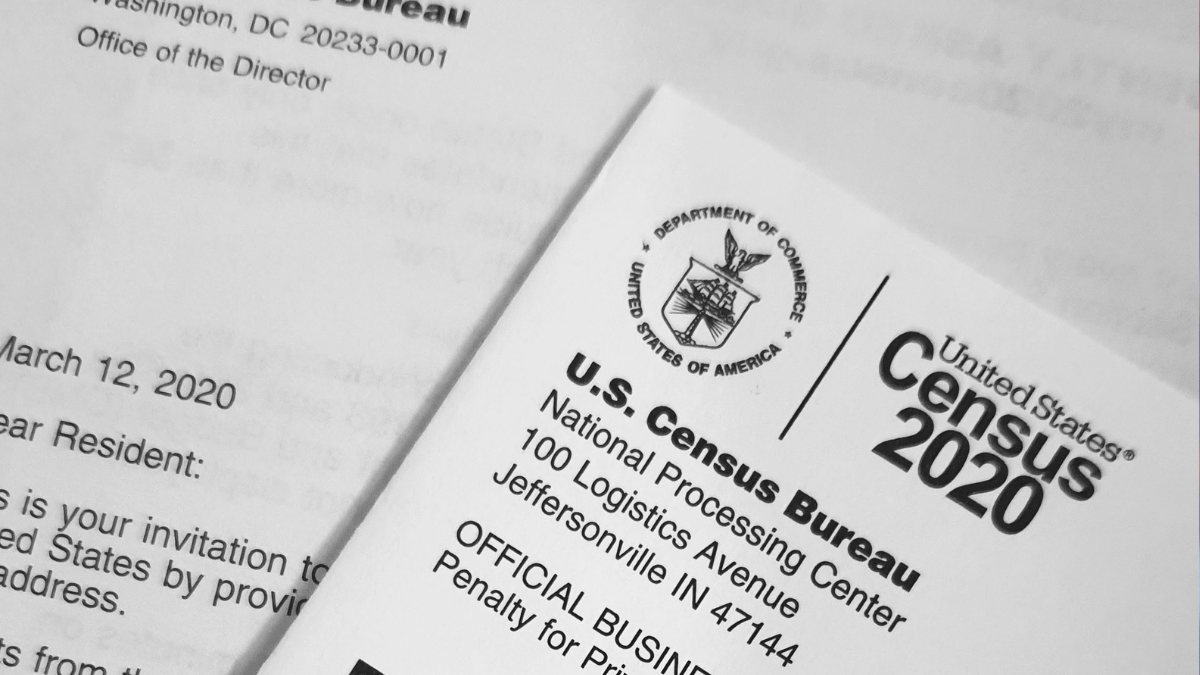
At the end of June, the Census Bureau proposed a rule for addressing this threat. The Office of Management and Budget Review rule titled “Decennial Census of the Population of Americans; Proposed Residence Criteria and Proposed Regulations for Demographic Questions” has neither been published nor finalized. But we got a hint as to what it might entail based on the administration’s correspondence with the plaintiffs in a case brought by the state of Missouri. The Show Me State, like the states of Louisiana, Kansas, Ohio, and West Virginia in separate litigation, has challenged the Census Bureau’s Residence Criteria rule. The rule governed the 2020 Census, codifying the counting of all people where they usually reside — including illegal aliens and temporary visa holders.
Among other things, the plaintiffs have called on the courts to hold unlawful and set aside that Residence Criteria rule. In response, the Trump administration, in calling for a stay of Missouri’s case, asserted that the new proposed rule “encompasses various policy positions for the 2030 Census” and “is expected to bear directly on the issues presented in this case” — alluding to the issue of illegal aliens’ inclusion in the Census.
Continued inclusion of noncitizens in the Census would mean that millions of illegal aliens and temporary visa holders would continue to distort Americans’ political representation by skewing the allocation of House seats and presidential electors, along with the distribution of trillions of dollars in federal funds. Even if the states purge every illegal alien from the voter rolls tomorrow, this foreign interference, which directly affects the voting power and political power of every single American, will persist absent executive action.
The counting of noncitizens in the constitutional enumeration and apportionment process, like the entry of noncitizens on the voter rolls, is a consequence of mass illegal immigration and cynical political moves designed to incorporate said migrants into America and normalize their presence in advance of mass amnesty. Such moves have ranged from sanctuary policies to efforts to obstruct and eliminate immigration enforcement altogether.
They also include gifting noncitizens a variety of benefits, from food stamps to health care to the right to vote in local elections. Illegal aliens ended up on the voter rolls, and thereby able to cast ballots in New Jersey, as a direct result of the extension of another such benefit: driver’s licenses. The process of obtaining a driver’s license is inextricably linked to voter registration since the passage of the 1993 federal “Motor Voter” law. From at least the Carter administration onward, as the illegal alien population surged, presidents have likewise intentionally granted them and other noncitizens an undue benefit: power over our entire system of government, starting with the political map, through inclusion in the Census.
The Constitution’s enumeration clause, amended by Section 2 of the 14th Amendment, calls for the apportioning of House seats “among the several states according to their respective numbers, counting the whole number of persons in each state, excluding Indians not taxed.” By law, every 10 years the Census Bureau carries out the population count, the Commerce secretary provides the apportionment figures to the president, and the president transmits the apportionment figures with the associated allocation of House seats by state to Congress.
By practice, as detailed in a lawsuit brought by the State of Missouri and other plaintiffs challenging this policy, the Carter administration explicitly sought to include such aliens in the population count for 1980 — deeming it a constitutional imperative to do so. Among other things, the Carter administration created a bilingual questionnaire, launched a PR campaign to drive up response rates and assure respondents of confidentiality, and even “convinced the Immigration and Naturalization Service to curtail its law enforcement activities around census day,” according to President Ronald Reagan’s second Census Bureau director.
The practice would persist in future administrations until Trump I, when the president took executive action aimed at identifying the illegal alien population in the Census and excluding it from the apportionment base.
Litigants would challenge these efforts all the way up to the Supreme Court — which ended up declining to rule on the merits of the case. In doing so, it declined to say whether “the whole number of persons in each state” must or may include all peoples irrespective of immigration status, and whether the president had the authority to modify the apportionment base accordingly. Nor did the Supreme Court take up the argument that the Constitution is for the American political community, and that those who are not party to that compact or the American political community have no right to affect the distribution of House seats — and by extension the relative weight of Americans’ votes.
Ultimately, the Trump administration ran out of time. The Biden administration rescinded its policies and apportioned House seats using figures that included the illegal alien and temporary visa holder populations. As a consequence, analysis presented by Missouri indicates that it, Ohio, West Virginia, Pennsylvania, and Michigan were robbed of one House seat each, while California was apportioned three more seats than it should have received, and New York and Texas one seat apiece. This is to say nothing on the effect of intrastate redistricting, which is generally based on the illegal alien-inclusive population figures tabulated by the Census Bureau.
Now, the Trump administration may be reprising the fight to ensure that the political map represents only Americans — and to deny the open borders crowd the disproportionate political power it has accrued primarily in blue jurisdictions through welcoming and harboring illegal aliens en masse.
As reported in RealClearInvestigations last year, the first hint of this willingness to fight may have come when White House Deputy Chief of Staff for Policy Stephen Miller stated that the administration was determined “to clean up the census and make sure that illegal aliens are not counted.”
Last August, President Trump seemed to suggest his administration was devising plans to exclude illegal aliens from the apportionment base, declaring on Truth Social that “People who are in our Country illegally WILL NOT BE COUNTED IN THE CENSUS.”
Then, as detailed in The Federalist in February, the Trump Census Bureau indicated its intent to include a citizenship question in census testing in advance of the 2030 survey — a query that could be used to separate citizens from noncitizens in apportionment. The test that the Census Bureau employed was simply to use the long-form survey that the bureau regularly issues to smaller samples of the populace. Yet the administration’s decision to do so in connection with 2030 Census testing sparked outrage — just as it did when the first administration tried to reinstate the citizenship question on the 2020 Census. The second Trump administration was unbowed, proceeding with plans, and issuing a perfunctory response in official documentation to the adversarial public comments it received.
The Trump administration should push forward and finalize a rule excluding noncitizens from the Census, taking all necessary action to ensure that to the greatest extent possible, the next Census — which its successor will ultimately oversee — is carried out to benefit the American people. That starts with ensuring that the apportionment base, which exists to distribute Americans’ political power via the allocation of their representatives, only includes Americans.