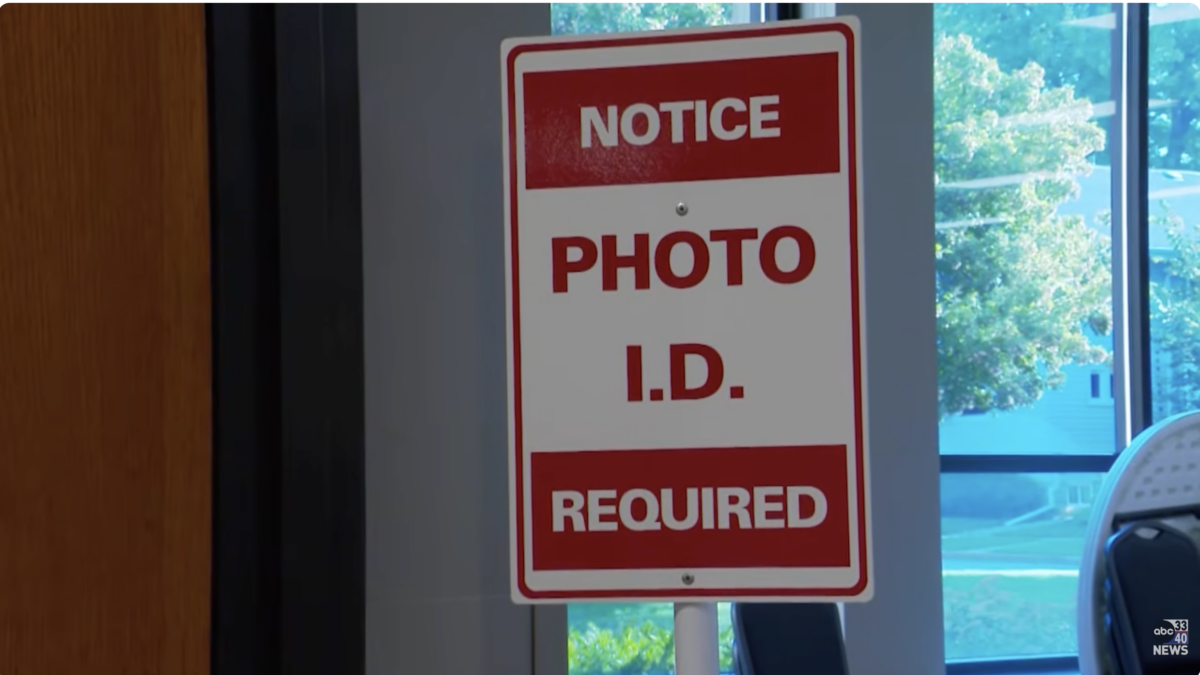

It’s now up to Ohio voters to decide whether a three-year-old photo identification law will be an enshrined amendment to the Buckeye State constitution — an amendment President Donald Trump vehemently endorsed this week.
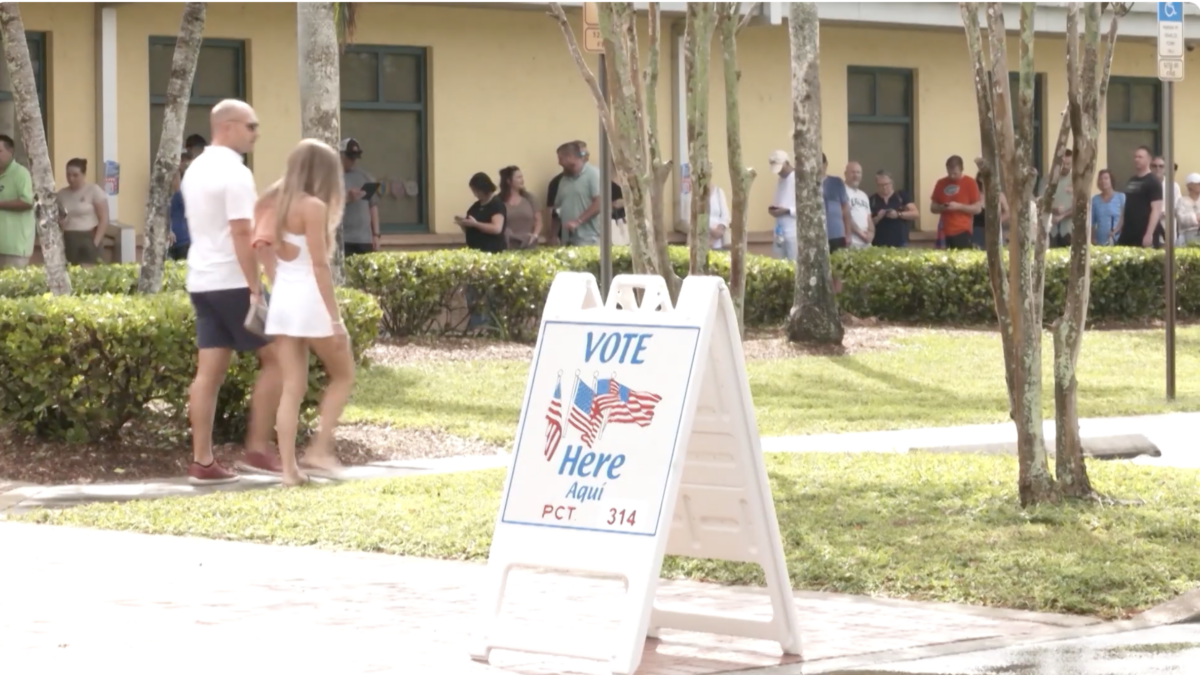
Ready to skip off to summer recess, The Republican-controlled House on Wednesday night passed a joint resolution that sends constitutional amendment question to voters in November. A recent poll showed broad support for amending the state constitution to lock in the law that requires voters show photo ID at the polls. The measure easily passed the Senate last week.
Ohio Senate President Rob McColley told reporters at the time that he expects overwhelming support for the amendment because it’s “the type of protection that voters want to see in the system.”
“This will be, if not the strongest, one of the strongest election integrity, voter identification, photo identification measures,” McColley told reporters after Wednesday’s vote in the House.
But some conservatives have warned that the proposed amendment and the passage of an accompanying bill is less about protection and more about political performance.
“This whole thing was just done ass backwards,” a frustrated Marcell Strbich, a former Ohio Secretary of State candidate and election integrity activist, told The Federalist in a phone interview Wednesday.
Senate Resolution 10 does deliver constitutional protection. The amendment, if approved, would require another referendum to undo it.
But the resolution doesn’t cover photo ID for those voting by mail, something some Ohio Republicans have fought for. Current law does not include the same voter verification requirements for absentee ballots.
It’s a glaring loophole, resolution critics assert.
“When you mail in your ballot, you should have to have some type of form of ID. Unfortunately, I don’t see that here, and that raises major concerns for me,” Ohio state Sen. Al Cutrona, R-Canfield told the Parkersburg News and Sentinel. “I think this is creating a loophole within our own constitution if this is indeed passed.”
‘Keep Cheating’
In an attempt to placate lawmakers who argue the resolution didn’t go far enough, Republican leadership shoved an amendment into House Bill 472 that would require those voting by mail to provide two forms of identification, including an electronic signature, a live capture image of their face, or a photo copy of their photo ID. Voters would send the information through a state portal. The original bill proposed waiving personal identification fees for homeless people.
But conservative critics say the amended bill includes myriad carveouts that would water down the intent of the election integrity protections. Individuals who claim to be sick, disabled, or can’t figure out how to electronically send their photo ID are exempt. Other exemptions include Ohio voters residing overseas or in the military, those who cite religious reasons for objecting to being photographed, or those in jail facing misdemeanor charges. Anyone who faces what the bill describes as a “material obstacle” is exempt, Cleveland.com reported.
“If I’m the Democrats I’m thinking, ‘If this is the worst these guys could do, we’re going to go ahead and keep cheating,” Strbich said, adding that the bill will only incentivize more individuals voting by mail.
Democrats and left-leaning “voter rights” groups, per usual, insist the proposed amendment and accompanying bill will disenfranchise Ohio voters.
“Obviously this is done to stop people from voting,” Democrat state Sen. Bill DeMora said in a Senate floor speech, as reported by Cleveland.com.
‘I Will Be Watching’
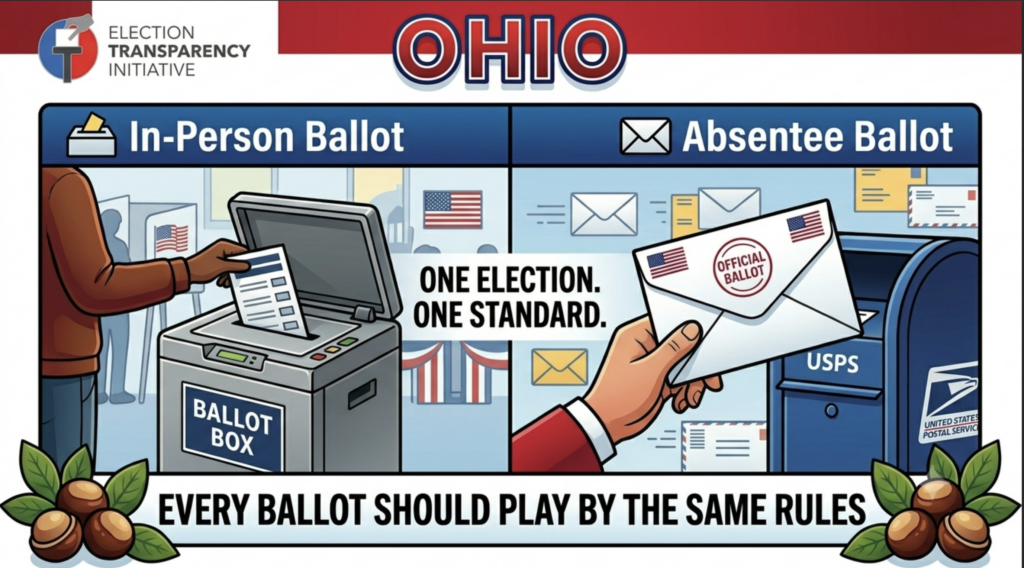
National players have weighed in on the voter verification proposals, including the Election Transparency Initiative. ETI supports the constitutional amendment, but it has urged lawmakers to hold the same standards for absentee voting. Ken Cuccinelli, National Chairman of the watchdog organization, said Ohio’s photo ID laws should be consistent.
“If voter ID belongs in Ohio’s Constitution, it should apply to every ballot — not just the ones cast in person,” Cuccinelli, former Virginia attorney general, said in a press release ahead of Wednesday’s vote. “Election integrity doesn’t stop at the mailbox. Ohio has made tremendous progress, but absentee voting should be held to the same standards that apply at the polling place.”
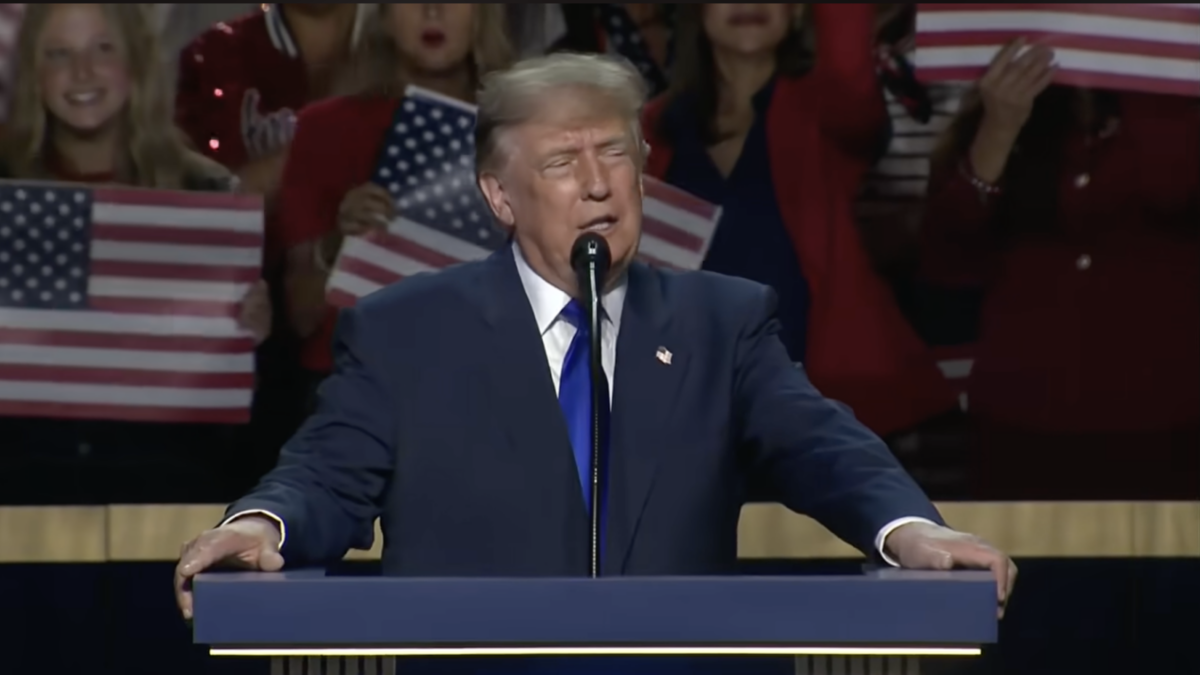
Republican lawmakers moved the proposals through under the watchful eye of President Trump, who has lit a fire under the GOP-controlled Congress and state legislatures to bolster election security. In a Truth Social post earlier this week, Trump congratulated Ohio’s Senate Republicans for passing the resolution and blasted Democrats for trying to stop it.
The president urged House members to “PASS THIS NOW” so that the “Great People of Ohio can vote to enshrine VOTER I.D. in the State Constitution.”
“I will be watching, and am strongly supportive of this Resolution,” Trump wrote, upping the pressure.
It would appear the amendment is on a smooth path to passage.
As The Federalist reported earlier this week, a recent Honest Elections Project Action poll found 86 percent of likely Ohio voters surveyed believe that photo ID should be required to vote at the polls. And the poll found 76 percent of respondents would vote for a constitutional amendment requiring voters to show photo ID — 54 percent strongly in favor.
If approved, the constitutional amendment will lock in the basic photo ID requirements. But critics say the language leaves much to be desired.
Gov. Mike DeWine still must decide whether he’s going to sign the clean-up photo ID bill that critics say makes a bigger mess of a “backwards” process. Strbich sees the process as more performance from Republicans who want the show of a big election integrity victory.
“Now they’re going to say they have a bill to require photo ID for all ballots. They’re not wrong,” he said. But all of the exemptions in the bill and the failure of the legislature to write photo ID requirements for absentee ballots into the resolution “leaves a lot of legal loopholes,” he added.