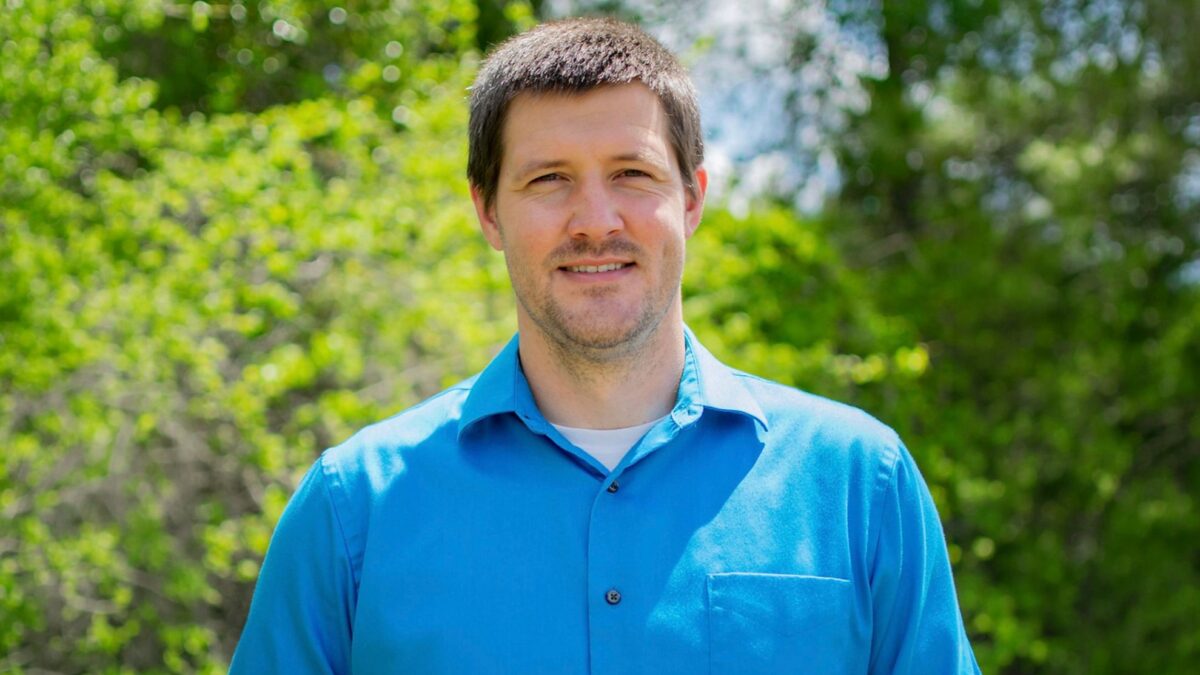

Gady Youmans, a pastor who runs a Christian learning center in Georgia, believes Vidalia City Schools violated his First Amendment rights when they cut ties with his ministry over a Facebook post.
In September 2025, the Vidalia City Board of Education proposed a property tax hike, which Youmans criticized in a few now-deleted Facebook posts. Citing the Facebook posts as evidence of his “misalignment” with the school board, the superintendent told Youmans they would be ending their partnership with his released-time education program called Sweet Onion Christian Learning Center.
Youmans had no idea that his program, which has served hundreds of students in the area as a non-profit religious ministry, had been under investigation by the school for months. This prompted Youmans to partner with Alliance Defending Freedom to sue Vidalia City Schools for violating his First Amendment rights.
“If I had done something wrong, I wanted to seek reconciliation,” Youmans told The Federalist. “But I just realized as I started to get [legal help], wow, this wasn’t just a mistake. This wasn’t just a wrong decision. I didn’t realize how constitutionally protected my ministry and the work I do actually was.”
Gady Youmans is an ordained Southern Baptist pastor at Word of Life Baptist Church in Vidalia, Georgia, with a wife and three kids at home. On weekdays, he runs a released-time education program which offers free, optional religious classes for students in the Vidalia school system.
Early in his career, Youmans was a chaplain for a public school football team, a substitute teacher, and was heavily involved with Fellowship of Christian Athletes. He started his current ministry in 2013, inspired by a missionary couple who introduced him to the concept of a released-time education program, which allows students to sign out of school and go off campus for religious or vocational instruction. The Sweet Onion Christian Learning Center has offered elective classes in religion, financial literacy, psychology, and comparative religion.
“I realized if I could get the Bible in public schools in a community where, unless you have private school tuition, you’re not getting a Christian education, then I’d be able to extend the ministry of the Church into the public school system in a legal way,” Youmans said.
His ministry was interrupted in February 2026, when he received an email from Superintendent Sandy Reid informing him that the school was canceling his ministry’s connection with Vidalia Schools. The school took Sweet Onion’s classes off of their course offerings, putting the center at risk of losing all their private funding and ending many students’ only access to religious education.
Reid claimed that the school board took offense to his Facebook posts, which justified barring their students from access to free religious education, according to the ADF. She also admitted that a teacher who made the same posts would not have been fired.
“It was a gut punch,” Youmans said. “Realizing a ministry that has built up and ministered to hundreds of students in the community over the years, and to their families by proxy, was just over. As I found out why it was happening, it was even worse.”
According to the ADF, one of Youmans’ controversial Facebook posts shared publicly available data which showed that the 20 highest-paid school district employees made a combined $2.2 million in 2024, which backed up another post suggesting the district cut excess administrative positions to save money rather than raising taxes.
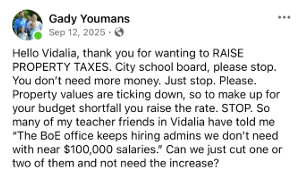
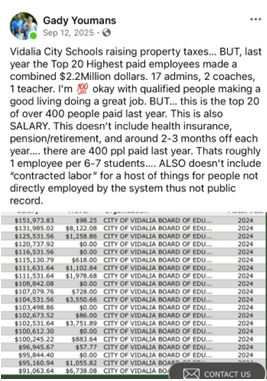
Reid used those posts to justify an investigation into Youmans’ learning center, which only revealed one usable incident. One parent had removed their child from one of Youmans’ classes because it did not exclusively use the King James Version of the Bible. The superintendent used this incident to suggest that multiple parents had “expressed concerns about the course content,” because the Sweet Onion did not teach students about the Bible in a “neutral or well-balanced manner.” Reid declined a request for comment due to the pending litigation.
Aside from the exaggerated number of complaints, the First Amendment protects private released-education programs from any obligation to teach the Bible in any particular manner, according to the ADF.
When the school district ended their relationship with Sweet Onion, Youmans was put in contact with the ADF by a friend in the legal system, and the ADF explained to Youmans that he had a legitimate free speech case.
“When I did find out that it was based on my personal social media posts as a citizen in the community, I was even more floored,” Youmans said. “As a pastor and teacher my entire career, I kind of operate on the assumption that I can teach my religious beliefs from conviction without fear of a government entity stopping my career.”
The ADF filed a lawsuit against the Vidalia City Schools on May 8, 2026, seeking relief for Sweet Onion Christian Learning Center under the First and Fourteenth Amendments and the Georgia Religious Freedom Restoration Act. According to ADF Legal Counsel Logan Spena, there are two core legal principles that the school system violated.
“The first is viewpoint discrimination against somebody’s speech,” Spena told The Federalist. “The government can’t punish citizens like Reverend Youmans for expressing a personal political view on social media. Also, it can’t retaliate against him by canceling even a voluntary program.”
Spena noted that Youmans’ program is protected by the precedent of a Supreme Court case called Perry v Sindermann, which protects at-will employees of government programs “if the reason the government took action against them was their constitutionally protected activity.”
While the school board can terminate a relationship with a private organization for a legitimate purpose, they cannot do so because of viewpoint-based speech, as in the case of Gady Youmans. His case is another example of government censorship of critical voices, and the decision will impact a community’s free choice to receive religious instruction.
“The reason I’m passionate about this is that I’m a pastor, I’m a teacher, and if you don’t have freedom of speech, you don’t really have freedom of religion,” Youmans said. “If we don’t stand up for our freedoms at home, then when does it stop? If we just let it go, we’ll never stay free.”