
In a recent meeting with the European Parliament’s Intergroup on Demography, Pope Leo XIV was highly critical of trends leading “to a time of drastic sterility.” The Holy Father warned that “we are not infrequently faced with the contradictory claims of purportedly family-friendly policies, which simultaneously promote discrimination against motherhood, exalt abortion as a right, and undermine the very foundation of the desire to start a family.”
Despite decades of fighting this “drastic sterility,” Catholics on both sides of the Atlantic haven’t been able to course correct on the issue of abortion. The reasons for this continued failure, which seem so elusive, might actually be hiding in plain sight.
Decades ago, the idea was hatched to infiltrate the intellectual space of feminism and flood it with a “pro-life feminism” (also called “new feminism”). The subversive effort, organizers believed, would gradually sway women away from the pro-abortion feminism and naturally draw them into the pro-life ranks, thereby replacing the culture of death with the culture of life.
Through this plan, pro-life feminism became the default way to fight abortion through scholars, books, conferences, public policy influence, nonprofit organizations, and academic programs. But what has the effect been on abortion?
This vision of flipping pro-aborts into pro-lifers hasn’t been realized. Although some feminists have had a change of heart, the grand vision of “a pro-life feminism” not only hasn’t worked — as seen in the numerous pro-life losses since the fall of Roe — but has deeply damaged the pro-life movement. Here are five reasons pro-life feminism has not only failed but also had catastrophic consequences on the church and wider culture.
1. Misunderstanding Feminism
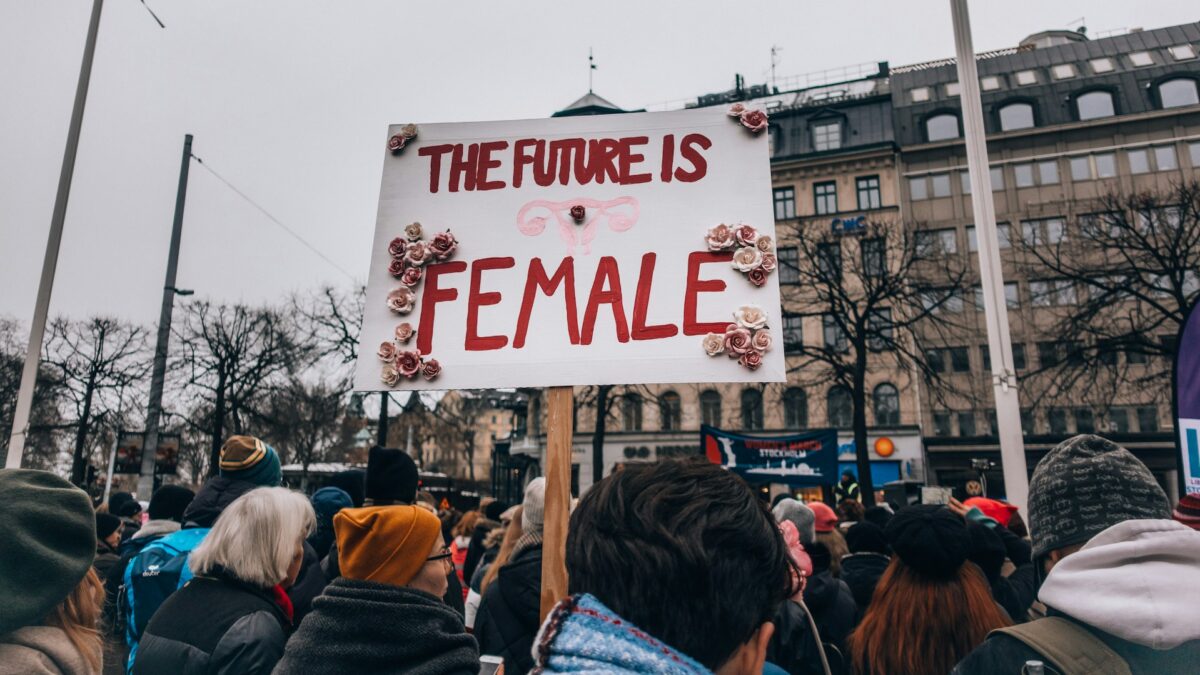
The first problem is that pro-life feminism accepted the saccharine and utterly false claim that feminism is “just about helping women” or simply about human rights. The reality is much more bitter. Feminism, from its 18th-century roots to today, has been about condemning men (Smash the patriarchy!) while simultaneously insisting that women become like men. With a few exceptions, most contemporary pro-life feminists fail to understand the disordered human anthropology upon which the “old” movement was built. As a result, by promoting feminism, they — wittingly or not — promote ideas designed specifically to undermine the Christian anthropology grounded in Genesis.
Pro-life feminists have further blurred these philosophical differences of anthropology by “canonizing” women such as Susan B. Anthony, Mary Wollstonecraft, and even Ruth Bader Ginsburg as models for Catholic women. But it was Wollstonecraft, as the grandmother of feminism, who enshrined this disordered anthropology from the start through her egalitarian vision, hatred of the Catholic Church, and Unitarian belief that men, including Jesus Christ, were obstacles to women’s potential. (See chapter 8 of my book Something Wicked.)
Feminism is built upon two principal vices: the condemnation of men, whom Genesis tells us are made in God’s image and likeness, and the promotion of envy to prod women to become like the very men for whom they feel profound contempt. It is, in essence, an envy-driven Marxism for women, which means it is inherently sterile. This sterility can never provide the cornerstone of faith and family necessary to build a truly pro-life culture. It shouldn’t be surprising, then, that we have continued to see the family disintegrate and the Catholic faith marginalized, particularly among women.
2. Distorting Women’s Human Nature
Pro-life feminists failed to take seriously the role of human nature specific to women. One father recently explained to me that he is applauded when he tells people he is raising his sons to be good husbands and dads, but when he adds that he is raising his daughters to be good mothers and wives, he gets only crickets.
Motherhood and the home have been denigrated because feminism has deemed them obstacles rather than a means to a woman realizing her potential. (Think of Betty Friedan’s description of the housewife as imprisoned in a “comfortable concentration camp.”) Yet no society can ever flourish without wives and mothers.
It has also become more and more obvious that women can’t flourish without marriage and motherhood either, as evidenced by the mental health crisis, loneliness, and related plights of substance abuse and suicide among women. As Edith Stein said, “The world doesn’t need what women have, it needs what women are.” We need the maternal heart and soul of women to be open to caring for children and building solid homes to raise them into healthy adulthood.
3. Sowing Confusion Among Catholic Women
The third problem of pro-life feminism is the deep confusion it has sown among the faithful. Young men have been coming back to the church in earnest, outpacing young women, who are now considered the least religious of all age groups. And in what might be a historically unprecedented change, more young men than women now report their faith being important to them.
Why are the men coming and not the women? And why are fewer women attending Mass? Because feminism has mired women in deep confusion about what is good, true, and beautiful about faith and sacrifice. This muddled ideological vision promoted by many within the church hasn’t added clarity to a pro-life culture that values motherhood and fatherhood.
Even women and ministries inside the church embrace a tepid understanding of what the church teaches on the complementary but essential differences between men and women. Feminism’s long war with the patriarchy has left a mark. This brings us to the next, not unrelated problem of abortion and contraception in the church.
4. Undermining Fertility
As Pope Leo XIV reported, we do live in a time of “drastic sterility.” Birth rates have plummeted below replacement levels because Western women are not having children. Officially, the Catholic Church, more than any other organization, has always held that birth control and abortion are both grave moral evils, while offering a beautiful counter vision of human sexuality, seen particularly in Pope John Paul II’s Theology of the Body.
Rather than spreading this vital news, however, the confusion sown by feminism’s promotion of sexual promiscuity and the fear men have of speaking against feminism, especially when influential Catholic women are speaking in favor of it, has caused many church leaders to hide these teachings “under a bushel basket.” The result? Catholic women abort and contracept at roughly the same levels as the rest of the culture, with fertility rates parallel to national trends.
But imagine if the roughly 60 million Catholics in the United States stopped contracepting and aborting. Not only would our pews be filled, but the vocations crisis would likely come to a screeching halt, and the wider culture would see clearly the goods to be had by living according to church teaching (such as very low divorce rates).
Sadly, rather than shouting this good news from the rooftops, Catholic leaders have punted, trying to correct the birth dearth problem through immigration. This shortsighted answer still doesn’t address the root issue, as new immigrants (except for some Muslims) eventually take on the cultural mores of their adopted country and abort and contracept right along with everyone else.
5. Fueling Abortion
The central oversight of pro-life feminists is that feminism is the fuel of abortion. Certainly, abortion has existed from time immemorial, but it gained traction in our era principally through the wedge feminism drove between women and their own children with the assertion that children are not a source of happiness but an obstacle to it.
Feminism is the source of the idea that abortion is necessary for women to be equal to men, now enshrined in our laws, medicine, and popular culture. Simply trying to lop off the abortion piece of feminism, while leaving the ideology intact, can never successfully bring healing, restoration, and reconciliation to our culture. Just adding the “pro-life” modifier to feminism has not and never can change feminism, which is the real source of the problem. The notion of a pro-life feminism is like trying to drive a car with one foot on the brake and the other on the gas; each is working at odds with the other. The pro-life movement can never attain the goal of truly protecting the vulnerable until it sheds feminist ideology.
The Catholic Church has at its fingertips all the necessary pieces to restore our culture. This vision, to which the wider culture is also waking up, is one where children don’t have to be aborted to fit into ideological models of happiness, women’s dignity can be upheld and honored, and men can use their gifts to protect and provide for the most vulnerable. Feminism throws a wrench into all of this.
It is well past time to scuttle establishment feminism and work with women’s human nature instead of against it. Imagine letting men and women be who God created them to be: fathers and mothers, working together, with their children’s dignity and value restored and treasured. That’s a pro-life vision that has real potential for success.