
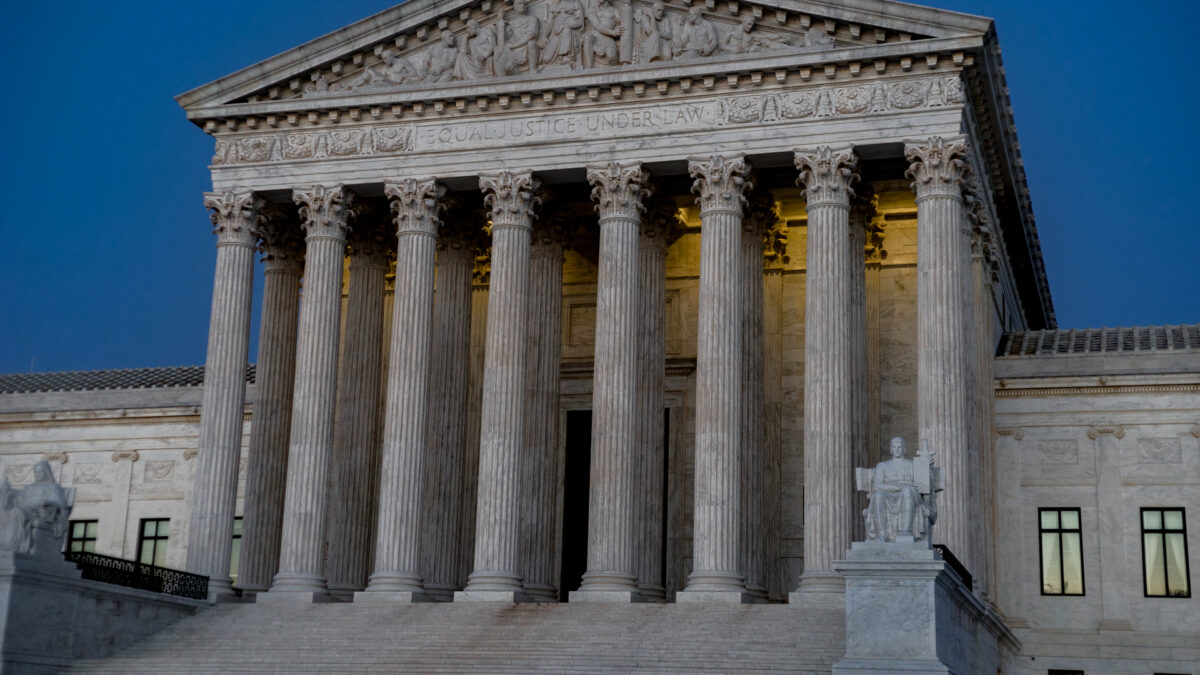
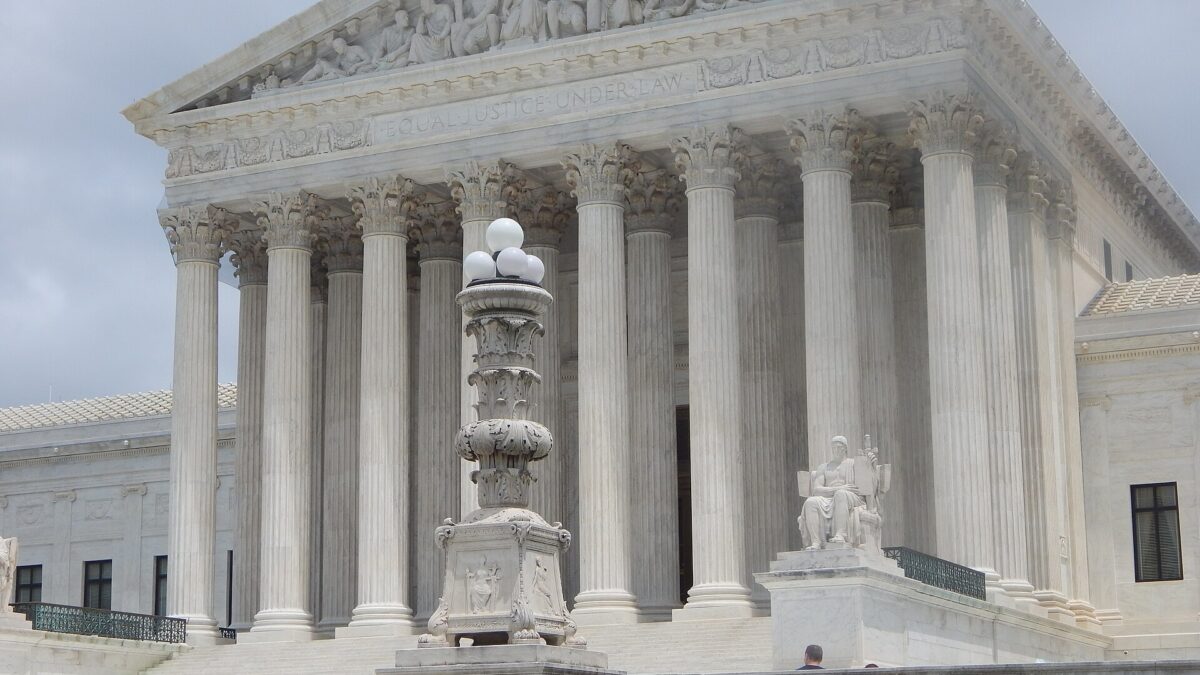
The U.S. Supreme Court temporarily paused a lower court decision on Monday that blocked a federal rule allowing harmful abortion drugs to be shipped by mail.
In his order, Associate Justice Samuel Alito entered an administrative stay (“pause”) of a Friday ruling by the 5th Circuit Court of Appeals. That unanimous decision by a three-judge panel momentarily blocked a Biden-era rule promulgated by the Food and Drug Administration that authorized the dangerous abortion drug mifepristone “to be mailed to women without so much as an in-person doctor appointment,” as The Federalist’s Elle Purnell reported.
Alito’s order came in response to an emergency application filed by Danco Laboratories LLC that sought to temporarily pause the 5th Circuit’s decision. The mifepristone distributor also asked the high court to take up and hear arguments in the case before its summer recess.
Alito’s administrative stay is designed to give parties time to brief the full court on the matter, and as such, will remain in place until 5 p.m. on May 11. Louisiana — which challenged the Biden-era rule — has been instructed to file its response no later than 5 p.m. on Thursday, according to the order.
As described by Purnell, “Mifepristone is the primary drug in the regimen that euthanizes a baby in utero and expels it from a mother’s body.” While “federal safety guardrails” requiring a doctor’s in-person examination before prescription were enacted upon the drug’s FDA approval in 2000, the Biden administration ended such protections in 2023, “allowing abortion pills to be trafficked through the mail without any in-person safeguards.”
The decision prompted the state of Louisiana to file a lawsuit challenging the new policy in 2025. It argued that, as summarized by the 5th Circuit, the FDA’s “justifications for remotely dispensing mifepristone were based on flawed or nonexistent data” and “documented how the new regulation had resulted in numerous illegal abortions in Louisiana and in Louisiana paying thousands in Medicaid bills for women harmed by mifepristone.”
Given these arguments, the Pelican State requested a stay of the rule while litigation in the case continued.
Writing for a unanimous panel granting the state’s request, Judge Kyle Duncan concluded that “the balance of equities and public interest weigh in Louisiana’s favor.”
“We have now three times found that the agency’s progressive relaxation of mifepristone’s guardrails likely lacked a basis in data and scientific literature,” Duncan wrote. “FDA itself now concedes the regulations were marred by ‘procedural deficits’ and a ‘lack of adequate consideration.’ The public interest is not served by perpetuating a medical practice whose safety the agency admits was inadequately studied. Indeed, the public interest demands the opposite.”
“Accordingly, IT IS ORDERED that the motion to stay the 2023 REMS under 5 U.S.C. § 705 pending appeal is GRANTED,” he added.
Responding to the Supreme Court’s pause of the ruling, Louisiana Attorney General Liz Murrill emphasized in a statement that the stay is “temporary.” She further expressed confidence that “life and the law will win in the end.”
“Big abortion pharma claims they need an emergency stay because they will lose massive amounts of money if they can’t kill more babies quickly and efficiently by mail without medical oversight,” Murrill said.
Despite its significant documented harms and President Trump’s pro-life pledge on the 2024 campaign trail, the Trump administration has seemingly slow-walked establishing effective safeguards on the abortion drug. The administration’s stance on the issue has generated blowback from pro-life groups and could potentially dampen Republican voter enthusiasm ahead of the 2026 midterms, as The Federalist’s Jordan Boyd reported.









.jpg)