
The Trump administration’s negotiations with Iran do not include any pathway for the country to obtain a nuclear weapon, nor will any potential deal give Iran “billions of dollars” in no-strings-attached handouts, a senior administration official said Sunday, despite some Republican warmongers claiming otherwise.
The senior official said that there will be zero resources to Iranians unless and until they give up highly enriched uranium, stating, “no dust, no dollars.”
When reports about a deal with the Iranians came out last week, some hardline Republicans like Sens. Lindsey Graham, R-S.C., and Ted Cruz, R-Texas, who appear uninterested in seeing an end to the conflict, quickly took to social media to countersignal the deal.
“I am deeply concerned about what we are hearing about an Iran ‘deal,’ being pushed by some voices in the administration,” Cruz said. “If the result of all that [military action] is to be an Iranian regime — still run by Islamists who chant ‘death to America’ — now receiving billions of dollars, being able to enrich uranium & develop nuclear weapons, and having effective control over the Strait of Hormuz, then that outcome would be a disastrous mistake.”
“If a deal is struck to end the Iranian conflict because it is believed that the Strait of Hormuz cannot be protected from Iranian terrorism and Iran still possesses the capability to destroy major Gulf oil infrastructure, then Iran will be perceived as being a dominate [sic] force requiring a diplomatic solution,” Graham said. “This combination of Iran being perceived as having the ability to terrorize the Strait in perpetuity and the ability [to] inflict massive damage to Gulf oil infrastructure is a major shift of the balance of power in the region and over time will be a nightmare for Israel.”
Responding to the comments, the senior official said, “No one actually knows what’s in the deal, except for those of us who have been negotiating it,” adding that the real deal is “the exact opposite” of what Cruz said.
The Deal
The deal includes a two-step process: In the first step, the Iranians open the Strait of Hormuz, allowing energy to flow, and in turn the Americans would lift the blockade, all of which would “give the world economy some breathing room.” The first step would also require Iran to commit to giving up its highly enriched uranium.
Once that commitment is made, step two involves hammering out the mechanism by which Iran would give up the nuclear stockpile over the course of a timed negotiation period. The official suggested that the period could be 30 days.
However, one of the biggest sticking points of the deal — and one of the most significant details Cruz and Graham get wrong — is that there will be no money or resources changing hands until Iran actually does give up the nuclear material.
“We’re structuring this in such a way where they make commitments on the enriched stockpile, but they don’t get a dime unless they deliver on their commitments,” the official stated, adding that the structure allows the U.S. to verify Iran’s compliance without being fleeced by the Iranians.
The official said that the deal, if successful, will “lower costs for Americans” and “calm world energy markets” while ensuring that “Iranians cannot have a nuclear weapon over the long term.” The official added that “we’re not there yet,” noting how long it takes to get a response from Iranian leadership. The leadership has “agreed in principle” to the framework, though there is still some “haggling” over the language.
It will likely take several days for a deal to actually be finalized and signed.
Responding to some Republicans who want to escalate in Iran and whose mindset is “you can’t stop until the regime tips over,” the senior official said that the Trump administration actually considers what is in the interests of the American people in any action taken, along with the risks involved with any action, as opposed to committing to an outcome no matter the cost.
While further military action is not off the table, the official said, “the question is whether you can get something that is worth the cost,” and this is a judgment the president must make. He added that, for Graham and others who want to escalate, the “instinct is always that the cost is worth the benefit,” which is not the president’s approach.
If the deal is successful, Americans could see some financial relief — such as oil and natural gas prices dropping — “immediately,” while costs of products like fertilizer could take slightly longer to drop.
What Changed?
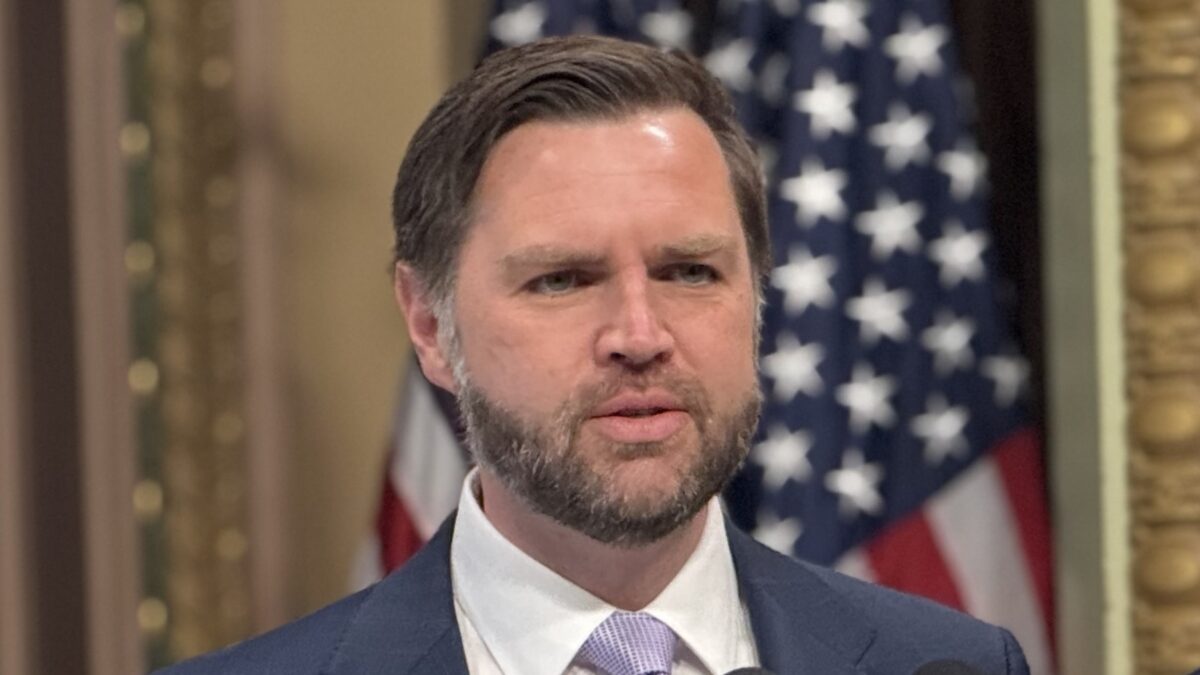
Negotiations with Iran have been on a bumpy ride since military action there has calmed, and Vice President J.D. Vance said a central aim of the negotiations is to avoid a nuclear arms race in the region. However, despite the ebbs and flows in Iranians’ willingness to negotiate, the senior official said there have been some major changes both in the political reality in Iran and their posture toward negotiations that make this deal more likely than it has been in the past.
Politically, the members of the regime are “radically different today than they were two months ago,” the official stated, noting that there are still “some hardliners” but that much more pragmatic and practical people have been elevated in their governmental structure.
Those pragmatic people are “ascendant” in their system but not “in control by any means,” the official said, adding that the “worst guys have been eliminated” and that “we see the moderates in their system asserting themselves in a way that we haven’t seen in the past.”
When asked if the administration is concerned about the safety of Iranian negotiators, given Israeli killings of negotiators in the past, the official said “we feel extremely confident that the Israelis are not going to take an action without a sign-off of the United States,” adding that if Iranians do not make a deal, “all bets are off.”
A telling change in the Iranian negotiators’ posture is how they are willing to talk about getting rid of the nuclear stockpile in “a way they never have before.” Despite the Iranians being “cagey about how they talk publicly,” especially because their “red line has always been enrichment,” the official said behind closed doors, “they have acknowledged that is something they will have to give on.”
Regional Implications
Outside bilateral negotiations with the Iranians, the Middle East is broadly unifying to “apply pressure to the Iranian system,” the official stated. Despite tenuous relationships between some countries in the Arab world, the “unified” front of Arab allies in the region has the potential to “rebuild the [Persian] Gulf in a way that can invite world investment that can export capital as opposed to exporting terrorism, and it can be an anchor of the world energy economy.”
“That matters less for us, because we’re a net energy exporter, but it would be very good for the global economy, and frankly, for American influence, if our closest allies controlled that sort of energy region, and they were actually working together under American influence,” the official stated.