

Florida Gov. Ron DeSantis signed legislation on Monday that redistricts the state’s congressional map to be more favorable to Republicans.
“Signed, Sealed, and Delivered,” the governor announced on X with an attached photo of the new map.
According to Florida Politics, the new map — which takes effect immediately — could potentially net Republicans an additional four seats during the upcoming 2026 midterm elections. Under the now-former map, Republicans hold 20 U.S. House seats, while Democrats hold eight.
The new map “leaves four Democratic U.S. Representatives in Florida — U.S. Reps. Kathy Castor, Jared Moskowitz, Darren Soto and Debbie Wasserman Schultz — with districts that now lean Republican based on the last presidential election results,” according to the outlet.
The Florida House (83-28) and Senate (21-17) passed the new map last Wednesday.
DeSantis first announced plans in January to call the state legislature into an April special session to partake in mid-decade redistricting. The goal, according to the governor, was “to ensure that Florida’s congressional maps accurately reflect the population of our state and to comply with an upcoming U.S. Supreme Court ruling.”
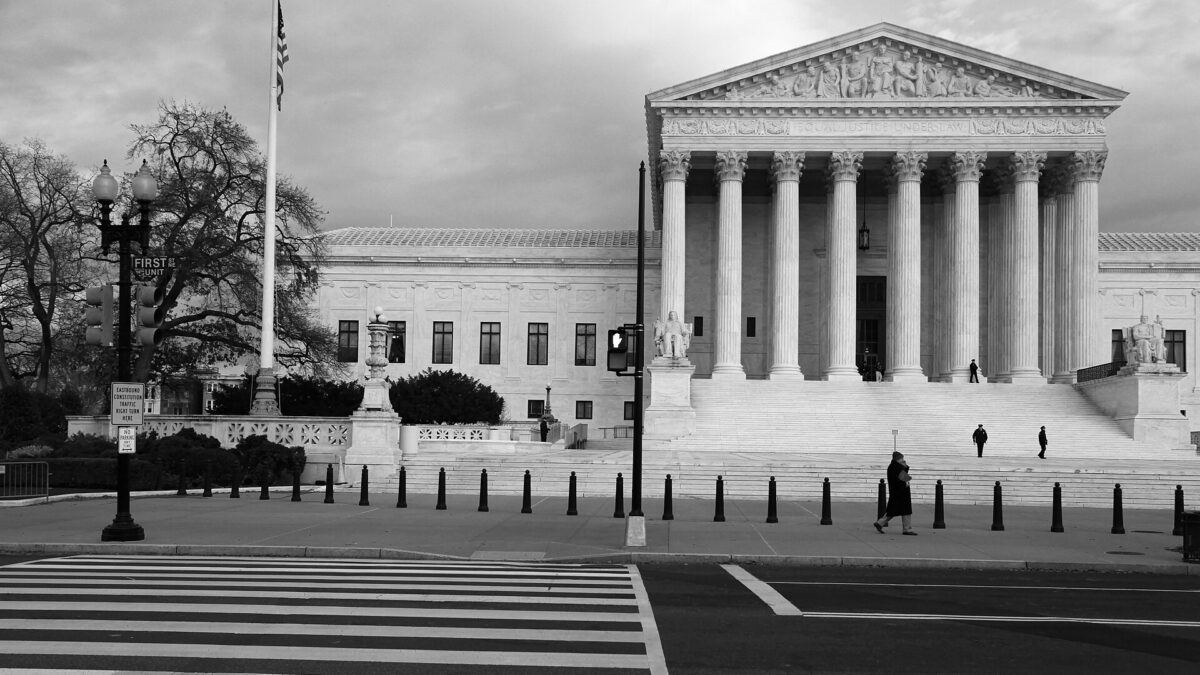
The ruling in question was handed down by the high court last week amid the legislature’s consideration of DeSantis’ proposed map. Known as Louisiana v. Callais, the 6-3 decision by Justice Samuel Alito kneecapped states’ ability to use race in the redistricting process, a seemingly unlawful policy long favored by Democrats to maintain majority-minority districts that favor their party.
“Section 2 of the Voting Rights Act of 1965 … was designed to enforce the Constitution — not collide with it. Unfortunately, lower courts have sometimes applied this Court’s §2 precedents in a way that forces States to engage in the very race-based discrimination that the Constitution forbids,” Alito wrote.
In an April 29 tweet responding to Callais‘ release, DeSantis said the court’s decision “implicates a district in FL — the legal infirmities of which have been corrected in the newly-drawn (and soon to be enacted) map.” The governor subsequently posted a photo of the district at issue the following day, adding, “We said it was not constitutional under the upcoming Callais decision and now we’ve been vindicated with the publication of the Supreme Court’s opinion.”
The new Florida map looks to offset potential Democrat gains in Virginia, where a slim majority of voters recently approved a leftist-backed amendment allowing the commonwealth’s Democrat-run General Assembly to gerrymander the state in their party’s favor. The Virginia Supreme Court is currently considering the legality of the measure, which — if approved by the court — would take the Old Dominion from a six Democrat-five Republican congressional map to a 10 Democrat-one Republican map.
Other states that have altered their congressional maps ahead of the 2026 midterms include California, Missouri, North Carolina, and Texas. Alabama, Louisiana, Mississippi, South Carolina, and Tennessee are also considering whether to do so in light of the Supreme Court’s Callais decision.






.jpg)