
Watch how they did it, because the old technique just slammed into a wall.
The sports section at the New York Times, which carries the painfully twee name “The Athletic,” just tried to provoke a cancellation. Everybody just made fun of them. The Silicon Valley entrepreneur Marc Andreessen recently told us that the cultural engine of the hit piece was dead, and with the exception of left-on-left hits like the one on the ghost of Cesar Chavez, he was right.
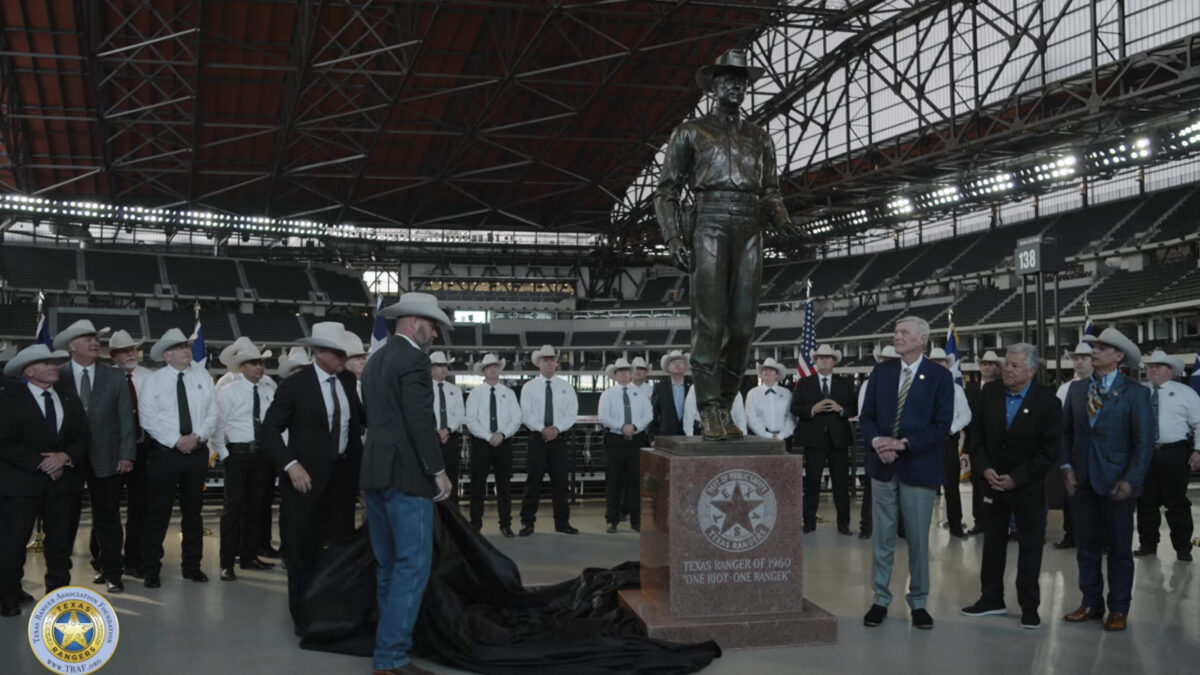
The Athletic was specifically shocked and outraged that a baseball team, the Texas Rangers, installed a statue at their stadium of a, how can I say this, Texas Ranger. This, reporter Sam Blum announced, was a huge mystery. Why would they do such a controversial thing? Why would the Rangers have a Ranger?
The source of the supposed controversy is that maybe the statue was modeled on an actual Texas Ranger, Jay Banks, who was present at moments when activists tried to desegregate schools during the Civil Rights Movement. His role is contested, but the story takes it as a given that Banks represents the segregationist past. And in any case, Blum adds, to display the statue of a Texas Ranger is to display the degrading features of American history: “The Texas Rangers law enforcement agency, as author Doug Swanson details in his book, Cult of Glory: The Bold and Brutal History of the Texas Rangers, “cannot be separated from its ‘troubled history’ and ties to racism.”
Blum’s colleagues celebrated the story, agreeing that it asked an important question, while a long series of replies said more or less the same thing.
But also look past the silliness of pretending it’s a huge mystery why the Rangers have a statue of a Ranger, for a moment, and look at the way the story is framed. It’s like a museum piece from the High Woke Era.
Blum announces there’s a controversy, and he says that observers point to the pain and trauma that follow the display of the shocking statue, but note what he doesn’t say about it. A statue in a stadium that causes horror should make people stop going to the stadium. If Texas Rangers fans are appalled, they could show it. Blum doesn’t say that attendance is suffering, or that fans are jeering the statue and complaining to the team.
In fact, Blum visits the stadium and sees this, and remember that this sentence appears in a story that describes a shocking controversy: “In front of the park’s entrance, a constant stream of people walk in, many of whom stop to take a picture, or a picture with it.”
There’s a huge controversy about a thing, and everyone is outraged; for example, a bunch of people take casual selfies with it. Blum quotes precisely one fan from the stadium, who says, actual quote, “I think it’s a good thing.” See all the CONTROVERSY!?!?!?!?
In fact, the controversy is that Blum says there’s a controversy. He’s reporting on the image in his bathroom mirror. Sam Blum outraged, reports Sam Blum.
Then Blum tries to cook the controversy, calling people and poking at them to make controversy noises. He is vigorously ignored:
Major League Baseball, which touts Jackie Robinson and the game’s association with integration, declined to make commissioner Rob Manfred available for an interview.
“MLB leaves decisions about … displays at ballparks to the 30 clubs who have strong ties to their respective communities,” said league spokesman Pat Courtney. “Your question regarding the statue should be directed to the Texas Rangers.”
Courtney did not respond to a follow-up question asking if anything would supersede that policy, and why this statue doesn’t meet that standard.
So first he tries to get authority figures to play speech police, but they roll their eyes and tell him to call somebody else. Then he tries to call the management of the team, who also ignore him. Guess what his next move is, and watch how little it surprises you: “One comment was offered by a team top sponsor, Energy Transfer, which pays for a jersey patch on the team’s uniform.” Yes, he started calling financial sponsors, trying the demonetization pivot. They ignored him too, by the way.
Blum also trots out a long list of other times the Texas Rangers have engaged in wrongthink. Example: “The Rangers have faced questions about the thought processes behind their decisions before. They are the only MLB team to never host a Pride Night, designed to proactively welcome members of the LGBTQ community.” You’re shocked and outraged, I know. Baseball without trans pride is like July 4 without fireworks.
Take the lesson with you: A journalist at the New York Times tried to spin up a controversy, but he couldn’t get the topic of the hit piece to play along, he couldn’t get authority figures or the financial backers to join the fun, and then the public mocked him ruthlessly. Apply these steps as needed, varying the dosage to match the seriousness of the cultural illness.
Ignore them or make fun of them, and their power evaporates. Good to know.