The state of Colorado has garnered a reputation for getting repeatedly smacked down by the U.S. Supreme Court. Within the past few years alone, the justices have rejected the Centennial State’s efforts to force a Christian baker to design a wedding cake for a same-sex couple, browbeat a Christian web designer into making a wedding webpage for a same-sex couple, throw Donald Trump off the 2024 ballot, and stop therapists from helping kids confused by gender ideology, to name a few.
The Democrat-led state doesn’t seem to be quite finished, however. Nearly a month after defending its climate lawfare against fossil fuel producers, Colorado officials will once again be back at the high court next week in a high-profile religious liberty case.
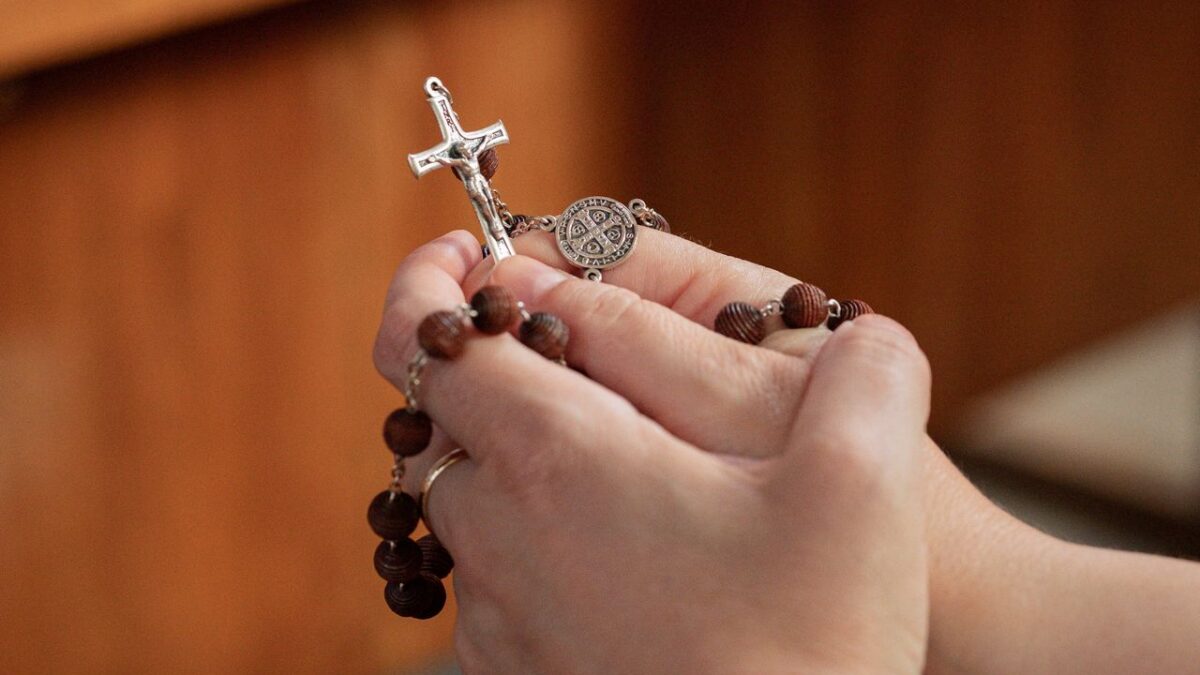
In St. Mary Catholic Parish v. Roy, the justices will decide whether the Centennial State can lawfully exclude Catholics who believe in the sanctity of marriage and biological sex from its “universal” preschool program. The Supreme Court will not only grapple with questions surrounding the First Amendment, but with a longstanding precedent that critics argue has sown confusion into the judiciary’s jurisprudence on religious exercise.
“This case is important because it’s an example of the ways that governments have been trying to evade the protections that the Supreme Court has spent decades reaffirming for religious exercise,” Becket Fund for Religious Liberty counsel Amanda Dixon, whose group is representing the Catholic plaintiffs, told The Federalist. “The court has said over and over again in a lot of different contexts that governments can’t burden religious exercise unless they have a really good reason, but governments, like the way that Colorado has here, keep trying to kind of outmaneuver that.”
Background
As The Federalist reported, the legal battle first sprouted in the years after Colorado voters approved a 2020 ballot measure authorizing the establishment of a state-funded “universal” preschool program. The state legislature subsequently codified this program into law, with participating preschools — both public and private — set to receive funding beginning in the 2023-2024 school year.
When registering for the program, schools are required to sign an agreement in which they pledge to offer equal enrollment opportunities without regard to various identity-based characteristics. This includes traits such as race, religious affiliation, sexual orientation, so-called “gender identity,” and others.
A group of plaintiffs — two parents, two Catholic parishes, their preschools, and the Archdiocese of Denver — filed a lawsuit challenging the requirement’s legality under the First Amendment. They argued that the mandate illegally infringed upon their sincerely held religious beliefs — specifically those related to sexual orientation and “gender identity.”
A federal district court ruled against the Catholic challengers in June 2024. The lower court rejected their First Amendment claims, denied their request that an injunction be issued blocking the requirement’s enforcement, and dismissed the archdiocese for what it claimed was a lack of standing. The court did, however, bar Colorado from “enforcing the nondiscrimination requirement as to religious affiliation for as long as a congregation preference existed, a ruling not challenged on appeal,” according to Justia.
The Catholic challengers faced similar defeat after appealing to the 10th Circuit Court of Appeals, which sided with Colorado in its September 2025 decision. The appellate court found that the state’s contract requirement “exists in harmony with the First Amendment and does not violate the Parish Preschools’ First Amendment rights.”
St. Mary Catholic Parish and its co-plaintiffs petitioned the Supreme Court to consider their case later that year.
‘The Default Rule for Free Exercise’
While the facts of the St. Mary case will undoubtedly remain top of mind for the justices during oral arguments, there’s another major issue the court will be forced to grapple with. That is, its 1990 Employment Division v. Smith decision.
As Federalist Editor-In-Chief Mollie Hemingway described in her bestselling book Alito, the high court’s Smith ruling permitted Oregon “to deny unemployment benefits to a Native American worker who was fired for using peyote, a controlled substance, even though his use was for religious purposes.” Hemingway noted how the majority decision authored by Justice Antonin Scalia “represented a change in how the Court evaluated laws that incidentally impinge on someone’s exercise of his religion,” with the court effectively “holding that the First Amendment does not require religious exemptions from a ‘neutral general law of applicability.’”
A law is considered “generally applicable” when it applies uniformly to everyone under its jurisdiction and is not tailored toward a specific group, individuals, or conduct.
Dixon told The Federalist that there’s “a lot of language” in Smith indicating that what the majority “was really concerned about was across the board criminal prohibitions” that ban certain religious conduct, such as a statute banning the purchase of alcohol, “which would prevent those who use wine in religious rituals from being able to access it.” In the years since the decision, however, she said that lower courts and governments have misapplied Smith in ways that have burdened Americans’ religious freedoms.
Lower courts “applied it as kind of the default rule for free exercise. And governments have treated Employment Division v. Smith since it was decided as kind of a free pass to burden religion as long as they kind of check some boxes about how they structure their law,” Dixon said. In essence, Smith has allowed “government[s] to continually change the way [they’re] operating to try to get into the bucket of being generally applicable so that [they don’t] have to accommodate religious people and groups.”
[READ: Blue States Are Redefining Religious Freedom To Stop Christians From Practicing Christianity]
While Dixon argued that the St. Mary plaintiffs’ claims still succeed under Smith, she noted that what they’re asking the Supreme Court to do is to revise the Smith framework to align more closely with its recent public benefits decisions implicating the free exercise of religion. This line of cases includes the court’s 2022 Carson v. Makin ruling, in which the majority (6-3) determined that Maine’s requirement that schools be “nonsectarian” to qualify for its tuition assistance program violated the First Amendment.
“This Court, Carson explained, has ‘repeatedly held that a State violates the Free Exercise Clause when it excludes religious observers from otherwise available public benefits.’ … And that principle includes a ‘prohibition on denying the benefit based on a recipient’s religious exercise’ … like educating students through the lens of a religious faith,” petitioners’ SCOTUS brief reads. “To penalize religious parents for choosing a school that meets their religious needs over a secular private school is thus to impose a free-exercise burden of an especially onerous character.”
A Time for Change
The St. Mary case is hardly the first in which the lower court dilemma brought on by Smith has reared its head. The Supreme Court was asked to address the 1990 decision in Fulton v. Philadelphia (2021), which centered around Philadelphia’s decision to ban a Catholic social services network from placing children in foster care because it did not place children with same-sex couples on religious grounds.
While the high court unanimously found the Democrat-run city’s actions to be unconstitutional, only Justices Clarence Thomas, Samuel Alito, and Neil Gorsuch supported overruling Smith in the case. Meanwhile, Justice Amy Coney Barrett (joined by Justice Brett Kavanaugh) authored a concurrence stating that while there are “serious arguments that Smith ought to be overruled,” there was no need to do so in Fulton. She further questioned “what should replace Smith” had the court overruled it at that time.
Barrett, Kavanaugh, and Chief Justice John Roberts’ apparent hesitancy in completely overturning Smith has been on display in the St. Mary case. Among the three presented by the Catholic plaintiffs, the one question the court did not agree to take up and rule on was whether Smith should be overruled.
Dixon told The Federalist that it’s “definitely a possibility” that the high court is preparing to handle Smith similarly to how it handled Humphrey’s Executor v. U.S., a 1935 ruling about presidential removal authority that the court overturned in Trump v. Slaughter earlier this year. Rather than overrule it all at once, the majority — assuming they side in St. Mary’s favor — could be charting a “path” to incrementally chip away at Smith over time until finally deciding to completely overturn it in a future case.
“This being another example of the fact that Smith continues to create problems for religious observers in the lower courts could be the situation where the Supreme Court realizes that it needs to give really clear guidance so that the lower courts don’t keep ending up in these situations,” Dixon said.
The Supreme Court will hold oral arguments in St. Mary Catholic Parish v. Roy on Tuesday at 10 a.m. ET.