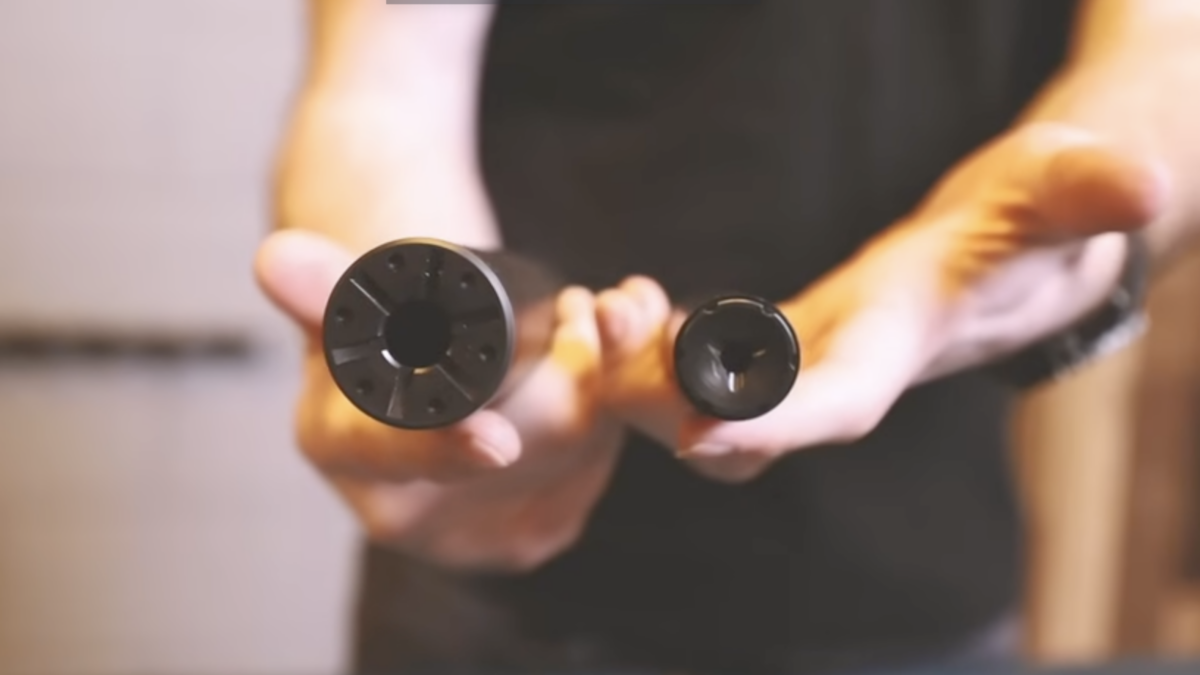

When the clock struck midnight on August 12, Second Amendment activists everywhere celebrated because for the first time in nearly a century, the burdensome regulations and registry required for firearm-muzzling suppressors could be on the chopping block.
The gun rights victory came in the form of a memorandum opinion and order from a federal district court judge in Texas, who declared on August 5, 2026 that the provisions outlined in the 1934 National Firearms Act “exceed Congress’s Article I enumerated powers and are therefore unconstitutional.”
The biggest benefactors of the decision were the large “coalition of individuals, businesses, associations, and states” who sued the Bureau of Alcohol, Tobacco, Firearms and Explosives (ATF) for using the “unconstitutional” NFA stipulations on suppressors to “infringe the Second Amendment right to ‘keep and bear Arms.’”
Under the 1968 Gun Control Act, suppressors are classified as firearms and require 4473 paperwork as well as an FBI NICS background check when purchased from federally licensed firearm dealers with Special Occupational Tax status. The NFA additionally compels suppressor buyers to submit fingerprints, a photo, and a Form 4 to the ATF. Before President Donald Trump’s Big Beautiful Bill, purchasers of the popular hearing protection devices were also required to pay a $200 tax stamp fee.
Form approval could take up to a month and comes on the condition that owners secure their suppressor and keep proof of ownership with the device at all times. Their names and other pertinent information is also added to the National Firearms Registration and Transfer Record (NFRTR), a central registry that tracks the millions of NFA devices and their owners.
The latest injunction and a lack of protest in the form of a stay extension from the Department of Justice emboldened plaintiffs like Silencer Shop Foundation and Gun Owners of America to begin transferring suppressors to qualifying parties with no paperwork, registration in a federal gun database, and no waiting period.
“I think this is an incredible moment for the Second Amendment. This is a historic and generational win for gun owners to have a gun law that was in effect for 92 years actually get repealed,” Aidan Johnston, federal affairs director of the Gun Owners of America, told The Federalist in a phone interview. “It’s very, very seldom that once we give up a Second Amendment right, that we actually get it back.”
But the fight isn’t over, especially for the suppressor-loving Americans who were not directly involved in this case.
‘Procedural Purgatory’
The decision out of Texas, while historic, is narrow and only protects the people and groups who filed the lawsuit and “where applicable, their agencies, political subdivisions, members, and customers — both current and future.”
“What we did last night was as about as covered as you could possibly be under the injunctions because these were two suppressors made by companies that are covered, sold by an FFL who’s covered, to the two customers that the injunction says were covered, and those customers were also GOA members who were covered,” Johnston said. “So there’s no way that ATF could say ‘You can’t do this.’”
Ryan Cleckner, a firearms attorney who helps federal firearms license holders “master” ATF compliance with his software FFLSafe.com, told The Federalist that gun sellers and buyers should “be excited, celebrate, get ready, start thinking through what the potential options are, but please don’t anyone rush and do anything.”
“I’m going to disappoint you by telling you do not change anything yet. I know you all want to race to do this, but nobody knows the procedure. Nobody knows what we’re supposed to be doing here. Have a little bit of a patience,” he warned.
Johnston also noted most people “aren’t as covered on all sides” and encouraged them to “consult an attorney about your specific circumstances” before proceeding.
The words of caution come from a place of universal uncertainty. The burden to provide clarity about the ruling, Cleckner and Johnston both agree, rests on the federal government. But because the ATF and DOJ did not try to extend the seven-day stay on the injunction and have yet to file an appeal in the case, both of which would have given the public insight on the government’s train of thought, Americans who want to buy and sell suppressors without the obligations outlined in the NFA are in limbo and questions abound.
“Procedurally, the way things went down leaves us in a bit of a purgatory,” Cleckner said.
While the decision suggests the injunction protects plaintiffs, it does not explain whether it applies to NFA firearms that are already in circulation or new, either in manufacture or sale. The opinion also does not specify whether people making their own suppressors will still need to apply with the previously required ATF Form 5320.1, often shortened to Form 1.
Further complicating this issue is the NFRTR.
“If this court says [suppressors are] not part of the NFA anymore, then that registry is illegal,” Cleckner added. “How quickly does the ATF have to get those guns off the registry? If it’s already on the registry to me, and I go to sell it to you, and I try and treat it like a regular firearm and no longer NFA, it’s still ‘in my name.’ How do I get it out of my name? And when I got it, I agreed to follow certain rules. Does that mean my agreement no longer applies?”
Nobody seems to know. What is known is that the NFA is not completely dead — especially in states with their own laws that require NFA compliance — meaning that not just anyone is permitted to sell or purchase suppressors.
“The average consumer out there is completely misunderstanding what happened. They think silencers got deregulated. They did not. [The court] just said that it was inappropriate for Congress to use its taxing authority to regulate them,” Cleckner interpreted.
Don’t Jump The Gun
The ambiguity of the injunction is exactly why Cleckner and the GOA are urging prudence, especially for average Americans hoping to walk out of their local gun store with a suppressor same-day.
“There’s a federal law right now that says what people are doing is illegal,” Cleckner added.
Johnston told The Federalist that the GOA believes “it’s very important to have this ruling expanded to cover all Americans because the Second Amendment doesn’t only apply to elite classes or special groups.” But he warned that doesn’t happen unless the ruling is codified through the federal rule making process.
Whether the Trump administration is willing to go to those lengths will be determined over the next couple of months. According to reporting from The Federalist’s Sean Davis, Assistant Attorney General of the DOJ’s Civil Division Brett Shumate is working behind the scenes to secure an appeal that would threaten the injunction.
“If DOJ were to appeal the ruling to the 5th Circuit, however, it would greatly increase the risk of it being overturned, allowing an arguably unconstitutional national gun registration scheme to continue,” Davis warned.
The DOJ has two months from August 5 to appeal the ruling. Even if the administration backs down and decides not to appeal, however, suppressors could still be in jeopardy.
Cleckner noted that a district court in a less gun friendly state like California could easily counter the current injunction. A less imminent, but possibly even bigger threat, he said, comes from congressional Democrats who could use any power they gain in the midterms or future elections to regulate silencers out of existence with outlandish tax stamp fees or ban them altogether.
Regardless of what happens in the future, Cleckner said the ATF and new director Robert Cekada “owes it to us to say what they’re doing.”