
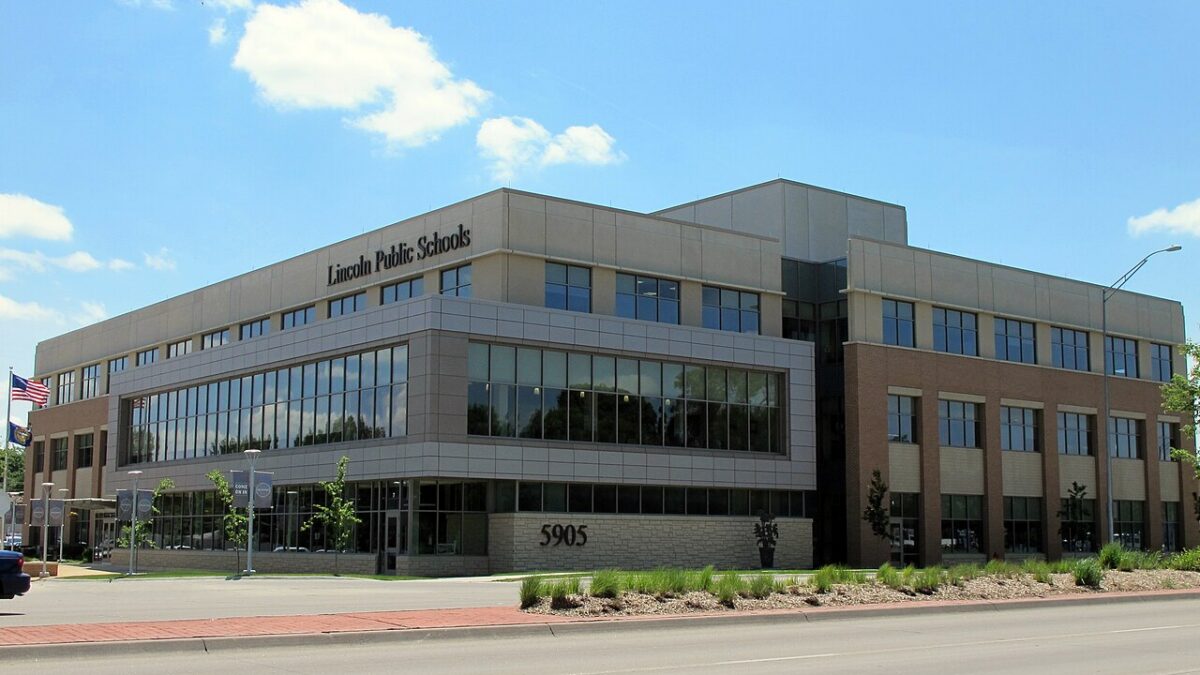

Two Lincoln, Nebraska, families are suing multiple state and local government entities over their viewpoint monopoly on a free education, arguing families are only afforded educational benefits if they agree that their children be exclusively subjected to the government’s opinions and curriculum.
The lawsuit, obtained by The Federalist, argues on First Amendment grounds that parents in Nebraska seeking alternatives to government schools are blocked from the benefits of a free education, because choosing an alternative forces families to foot the bill entirely.
The New Civil Liberties Alliance (NCLA), which is representing the two families, said, “Nebraska ranks among the worst states in the nation for parental choice.” There are no tax credits, scholarships, education savings accounts, or the like that many states have adopted to allow attainable alternatives to public schools for families.
“The unconstitutional conditions doctrine exists to stop the government from doing indirectly what it cannot do directly,” NCLA counsel Christian Clase said. “Nebraska cannot ban parents from teaching their own children their own values—so instead it penalizes them for exercising that recognized right. But the Constitution does not tolerate that abridgement of parents’ free speech rights.”
In Nebraska, it is a Class III misdemeanor for parents not to enroll their children in some form of school, whether that is public, private, denominational, parochial, or homeschooling. If a parent does not, they could face up to three months in jail and a $500 fine.
While it is the law to educate one’s children, only a public school education will afford parents the benefits that come with a free education.
The lawsuit argues that the state does not fund education, but rather it’s preferred viewpoint on education which therefore makes education a form of speech. For example, the school chooses its teachers, the guidelines of what the teachers can say, texts, images, expressive conduct, and which books they assign and what ideas to emphasize from those books. Those are all viewpoint choices on the part of the school, according to the suit.
The lack of benefits for parents who do not want to subject their children to that viewpoint violates their First Amendment right to direct their children’s educational speech, and creates a system where parents must “pay to escape government indoctrination,” the lawsuit argues.
The Jacobsen and Menter families each had experiences with unacceptable educational realities at Lincoln Public Schools (LPS).
LPS told the Jacobsen daughter that she “must accommodate transgender individuals in the girls’ bathrooms and locker rooms. She was encouraged to remove herself from those spaces if she felt uncomfortable sharing them with biological males,” the lawsuit states. She was also required to use false pronouns for students who claimed to be the wrong gender.
The school district also exposed the Jacobsen children to critical race theory-style programming that said some races are oppressors and some are victims, based entirely on skin color, according to the suit.
The Menter family was forced to pull two of their children out of LPS after the district made a prominently displayed sticker “endorsing alternative sexuality and transgendered ideologies,” the lawsuit states, and a school librarian recommended one of their children read books promoting transgender ideology.
There was climate change indoctrination as well, which saw one of the Menter children become “very forceful in suggesting that her parents reduce their driving because the school had successfully inculcated the child with the idea that carbon-dioxide was a pollutant that would destroy the planet.”
“The government’s education was motivating conduct through fear,” the lawsuit states. “Not only that, but the child was coached to take a hostile or disrespectful tone toward adults concerning this topic.”
Both families have either had to cover the cost of an education they otherwise would not have, or are facing down the reality that they will have to submit to the government’s viewpoint.
The families “have been forced to undertake burdens not imposed on public school parents and have, in effect, been penalized for refusing to continue to adopt government messaging as their own educational speech,” the lawsuit states.
In the 2024-2025 school year, Nebraska spent about $19,038 per student, and LPS spent about $17,432. An average private elementary school tuition in the state is about $7,100 per year, while high school is about $11,000. Homeschooling costs less in overhead, but typically requires one parent stay out of the workforce, costing an entire salary.
As the U.S. Supreme Court recently decided in Mahmoud v. Taylor, the “‘government cannot condition the benefit of a free public education on parents’ acceptance’ of instruction that violates their First Amendment free-exercise rights,” the lawsuit states.
Another Supreme Court case says that the “unconstitutional conditions doctrine ‘vindicates the Constitution’s enumerated rights by preventing the government from coercing people into giving them up.'” In other words, the government cannot create the conditions that coerce people into surrendering enumerated rights like those in the First Amendment.
The plaintiff families are not asking the school or state to change the curriculum, or to tell the state legislature to pick a remedy to the problem. Rather, the families are asking the court to declare that public benefits afforded only if children attend public school is an unconstitutional free speech violation.
They are also asking that the government defendants stop maintaining that unconstitutional system and award families damages equal to the per-pupil funding in LPS.
“That formal education is speech is largely undisputable. That parents have the primary right to provide educational speech to their children is legally established,” Zhonette Brown, general counsel and senior litigation counsel at NCLA, stated. “Courts have long recognized speech rights in the education context, protecting parents’ educational speech is the next logical step.”




,_Lincoln,_Nebraska,_USA.jpg)