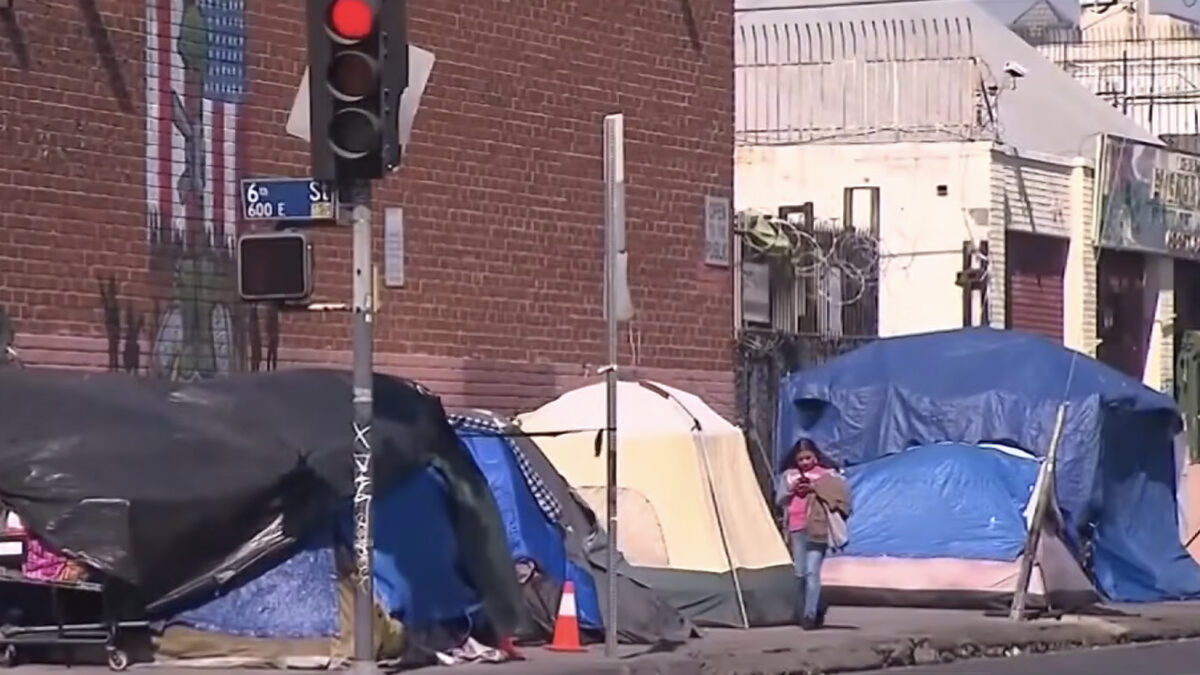

Massive sums of money, washing into an endless system of creeks and gullies, diffusing and disappearing.
The Los Angeles Homeless Services Authority, a county-city joint powers authority that has been largely abandoned by county officials over serious concerns about effectiveness, financial transparency, and basic operational competence, proudly says that it funds “more than 100 nonprofit partner agencies” in a single county.
To begin to understand what that giant system of non-profit corporations looks like in practice, look closely at a single example: Special Service for Groups (SSG). The Charity Navigator website describes SSG as an entity that performs a remarkably broad cluster of roles: “Provide behavioral health, support for older adults, social justice/anti hate, HIV/AIDS related, an extensive array of homeless, substance abuse and health access initiatives and services to vulnerable communities.”
Many divisions with different purposes live under SSG’s corporate umbrella. The Asian and Pacific Islander Forward Movement (APIFM) works within that local population on “community health and environmental justice issues,” for example, while Access to Prevention Advocacy Intervention & Treatment (APAIT) provides advocacy, education, and health services to “people at-risk for or living with HIV/AIDS.”
You can read about APAIT’s Trans Pride Gala here, as an example of their publicly funded work, and see a complete list of SSG’s divisions on the main SSG website (where they scroll across a banner near the top).
But SSG is becoming particularly important in homeless services, and is broadly funded as a homeless services agency. More about those details in a moment.
After its function, the next thing to understand about SSG is where the money comes from. In fiscal year 2025, which ended in June of that year, the organization had a little more than $264 million in revenue. You can find that number in their Form 990, the financial disclosure document a non-profit corporation has to file annually with the IRS. But if you open that document, keep scrolling down until you get to the sources of that cash. It’s on pg. 9, the “statement of revenue.” Screenshot:
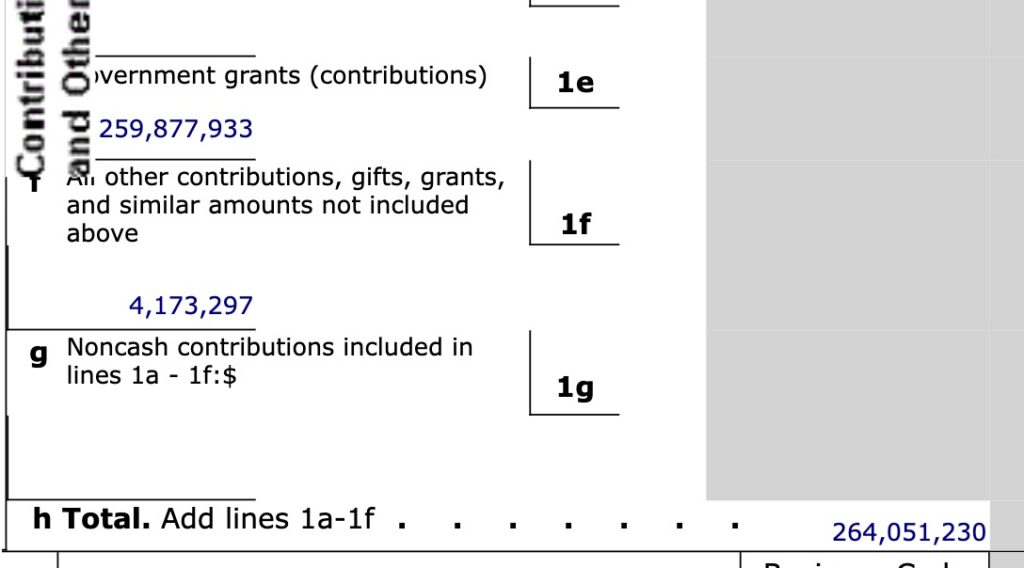
Of $264 million in annual revenue, about $260 million comes from government grants, or about 98.5 percent of SSG’s total funding. As their audited financial statements show, about $60 million of that public funding comes in the form of federal grants, much of which has been “passed through” to SSG through state and local governments.
So in practice, SSG is a government agency without really being one, providing government-funded services as a private corporation that has no obligation to comply with transparency laws like the California Public Records Act or the state’s open meeting law for local governments. They spend public money under corporate transparency rules: private enterprise with government funds.
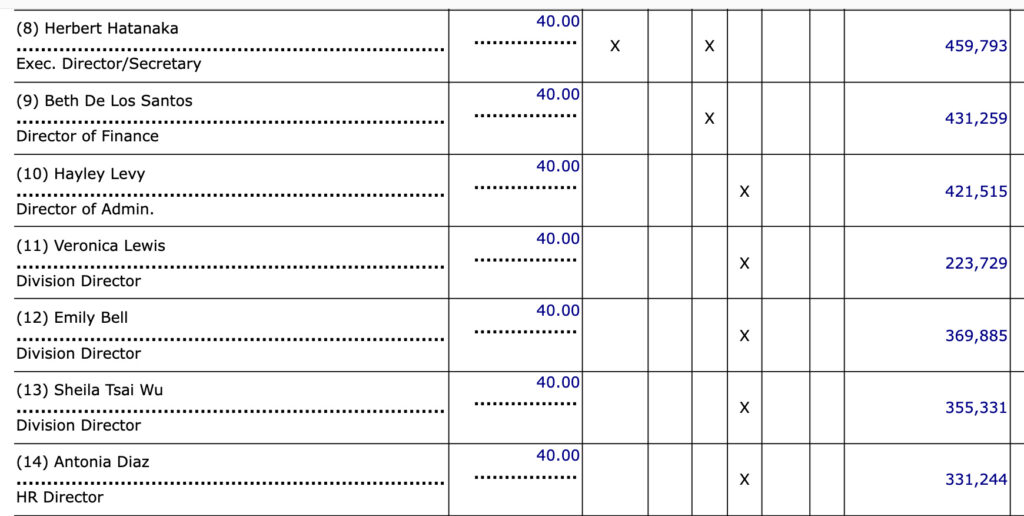
Still, SSG has some financial disclosure requirements as a non-profit corporation, and we can see on their Form 990 what they pay their top employees:
In its current form, SSG was created in September of 1993, from the bones of an older non-profit and a set of “restated” articles of incorporation.
You can scroll through twenty-five years of SSG’s financial history at ProPublica’s Nonprofit Explorer website. It’s a story of growth, then of rapid growth: In 2006, about $23 million in government grants (and $26 million overall); in 2016, about $53 million in government grants; and then, in 2019, after the Measure H sales tax increases for homeless services passed in 2017, a big jump to about $108 million in government grants.
Finally, as Los Angeles County voters passed the larger Measure A sales tax increase for homeless services in 2024, SSG’s annual revenue jumped in a single year by more than $50 million. You can go see that big jump for yourself, comparing fiscal year 2024 to fiscal year 2025 on the Nonprofit Explorer page for SSG. Also compare fiscal year 2023 to 2024, because they added almost $100 million in annual revenue in just three explosive years:
Around $167 million to $264 million, as a non-profit that had $26 million in revenue just 10 years ago.
As SSG has pushed more aggressively into the broad funding and delivery of homeless services, where a lot of public funding is available, its record has suggested that the non-profit may be growing beyond its expertise. With close to $8.5 million in city, state, and foundation funding, SSG now owns a former motel in South Los Angeles that it plans to convert into supportive housing for the homeless. Six years after the City of Los Angeles bought that property and passed it to SSG, a motel that was in operation and hosting guests when it was taken over now looks like this:
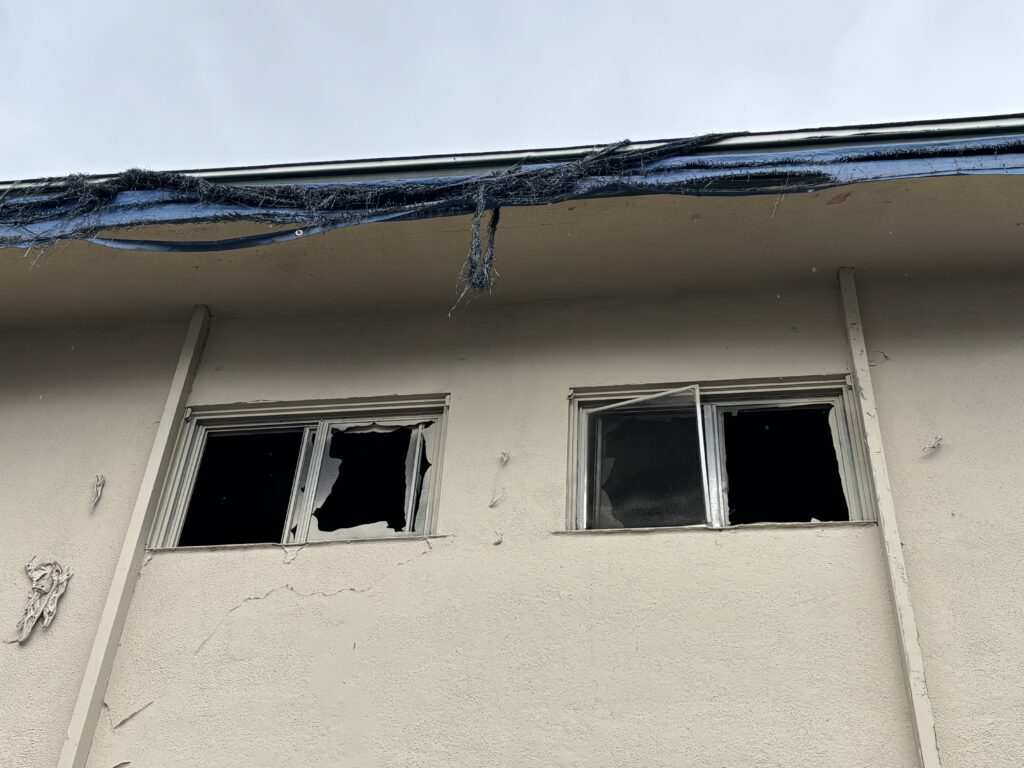
City officials have given SSG a few more years to find additional funding to begin the project, but for now a working motel has been turned into a stripped and gutted property with a security fence around it.
More controversially, SSG had a significant financial partnership for years with a Los Angeles businessman named Alexander Soofer, who is now awaiting trial in state and federal courts on a long list of fraud charges. Prosecutors allege that Soofer diverted $10 million in public funding that was intended for homeless services to his personal accounts, using the money to fund luxury travel and a $7 million house.
An interesting wrinkle in Soofer’s prosecution recently appeared in reporting from the Los Angeles news organization LAist, which pointed out for the first time that Soofer had two corporations with similar names: Abundant Blessings, a non-profit, and Abundant Blessings from Above, a for-profit corporation. Both LAHSA and SSG paid both of Soofer’s corporations with public funds to provide services like transitional housing to the homeless, but they don’t appear to have noticed that Soofer was using his for-profit corporation to collect homeless services funds. You can see this detail in SSG’s Form 990, for several years in a row. Here’s the most recent example, from the 2025 form:

For several years, SSG reported to the IRS that it was providing passed-through public funds to Abundant Blessings from Above, a 501(c)(3). But that was never true:
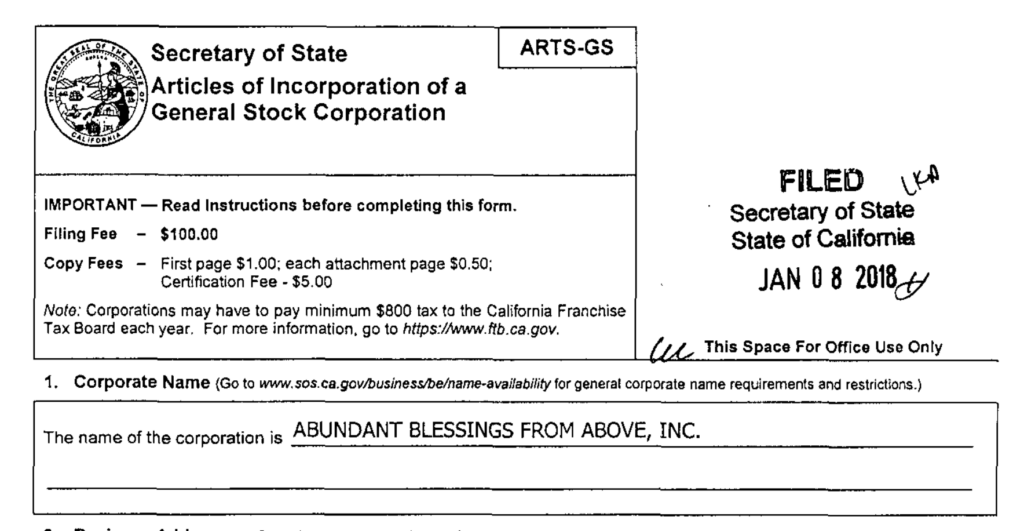
Distributing millions of dollars a year in public funds, they appear to have had no idea who they were paying.
The Federalist made a significant effort to discuss SSG’s use of public funds with SSG and LAHSA (which provides funding to SSG). The news media contact listed on SSG’s website, an executive at a private public relations firm, didn’t respond to messages, and an email message sent to SSG Executive Director Herbert Hatanaka was blocked by SSG’s email system. Finally, a reporter from The Federalist tried to visit SSG headquarters in person, but was denied access to the office.
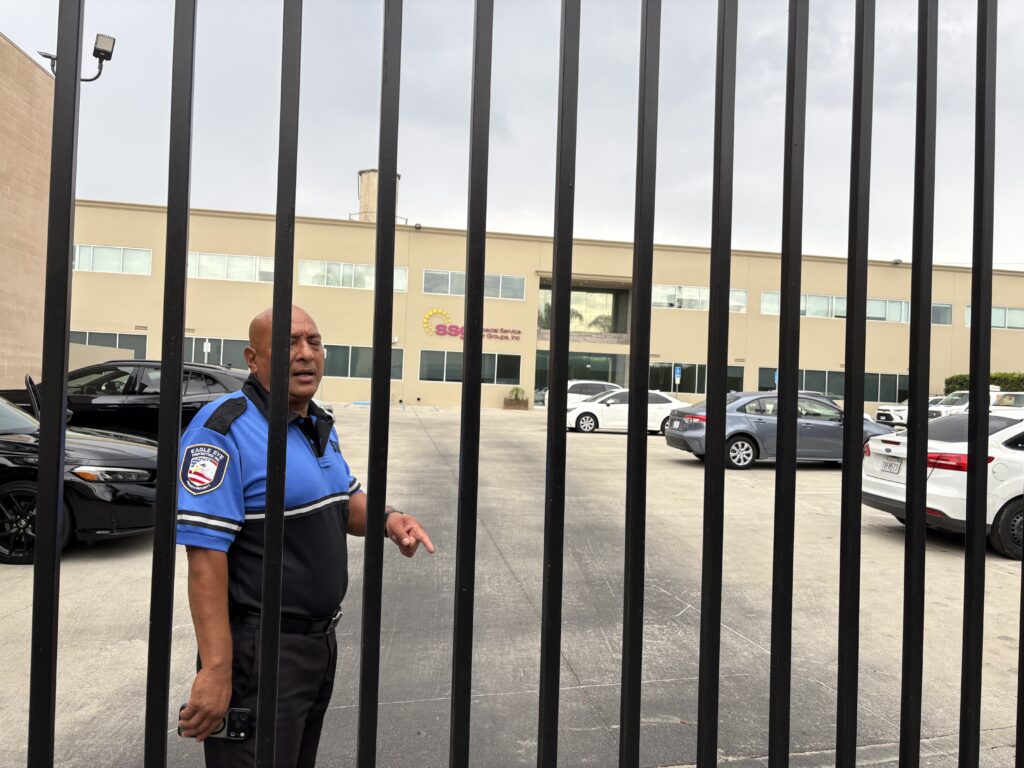
LAHSA alone funds “more than 100 nonprofit partner agencies” in Los Angeles County. There’s one, with $260 million in annual taxpayer funding from all government sources, an emptied and gutted motel, and one of their major financial partners awaiting trial.