

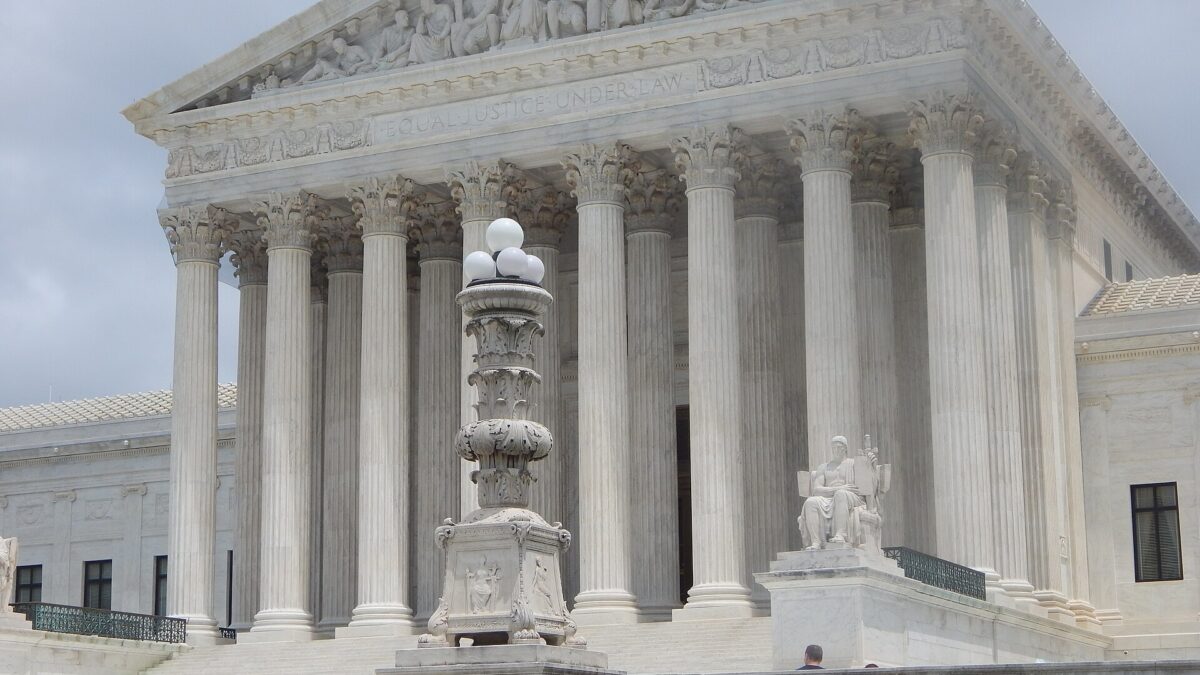
The U.S. Supreme Court on Tuesday once again shut down a lower court blockade against a key component of President Trump’s deportation agenda. The vote was 6-3, with Justices Sonia Sotomayor, Elena Kagan, and Ketanji Brown Jackson in dissent.
In its unsigned order, the high court granted the Trump administration’s request to pause a ruling issued by Massachusetts-based District Judge Brian Murphy. The Biden appointee’s directive sought to block the government’s deportation of illegal aliens to third countries –countries not of their national origin.
The ruling is the third instance in which the administration asked the Supreme Court for relief in the case. The first occurred last year, when the high court stayed (6-3) Murphy’s preliminary injunction blocking third-country deportations.
Murphy would go on to issue an order to the administration hours later, claiming that the Supreme Court’s ruling did not affect his initial blockade on the policy. The government returned to the justices and asked them to clarify their order. This time, in a 7-2 decision, SCOTUS affirmed that its ruling did, in fact, cover Murphy’s initial injunction.
Murphy’s refusal to follow the high court prompted stern criticism from Justice Elena Kagan. In a statement concurring with the court’s clarification, the Obama appointee noted that, although she disagreed with the majority’s initial decision to block Murphy’s injunction, she does “not see how a district court can compel compliance with an order that this Court has stayed.”
Murphy ultimately issued a final judgment blocking the third-country deportations in February. While the 1st Circuit Court of Appeals initially sided with the administration in pausing that order, it later permitted the Biden appointee’s ruling to go into effect earlier this month.
In addition to staying Murphy’s ruling, the Supreme Court also agreed to take up and hear arguments in the case for its upcoming 2026 term.
According to Tuesday’s order, the government and challengers are instructed to file briefs addressing whether Murphy has jurisdiction over the latter’s claims; whether Murphy “had authority to enter classwide declaratory relief and [Administrative Procedures Act] vacatur” under federal law; whether the administration’s “Guidance on third-country removals
is unlawful” under various provisions of federal law and the due process clause; and “other questions that the Government determines are appropriate for the proper disposition of the case.”
The Supreme Court’s pause on Murphy’s injunction will terminate after it issues its ruling on the case’s merits. The matter will be argued before the justices in December, with an exact date to be announced at a future date.





_(55358668883).jpg)