
The Trump administration acted this week to limit the ability of some H-1B visa holders to become permanent U.S. citizens by using a system that turns permission for temporary entry into a way to stay here forever. Predictably, the legacy media have botched the story.
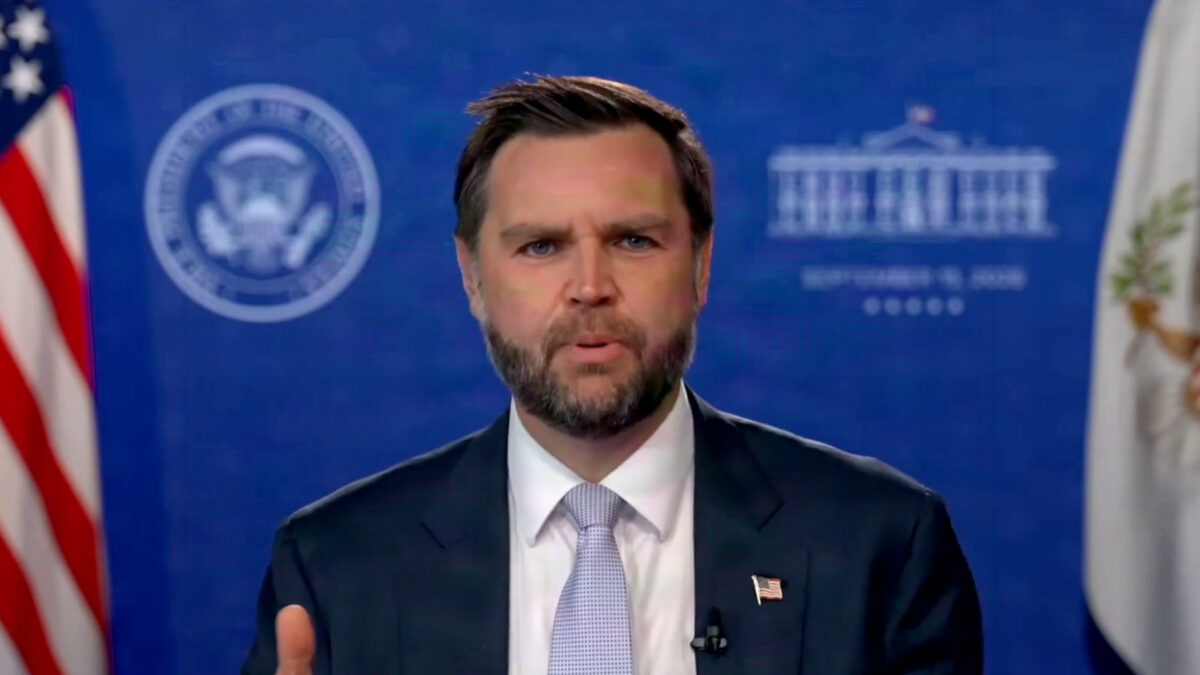
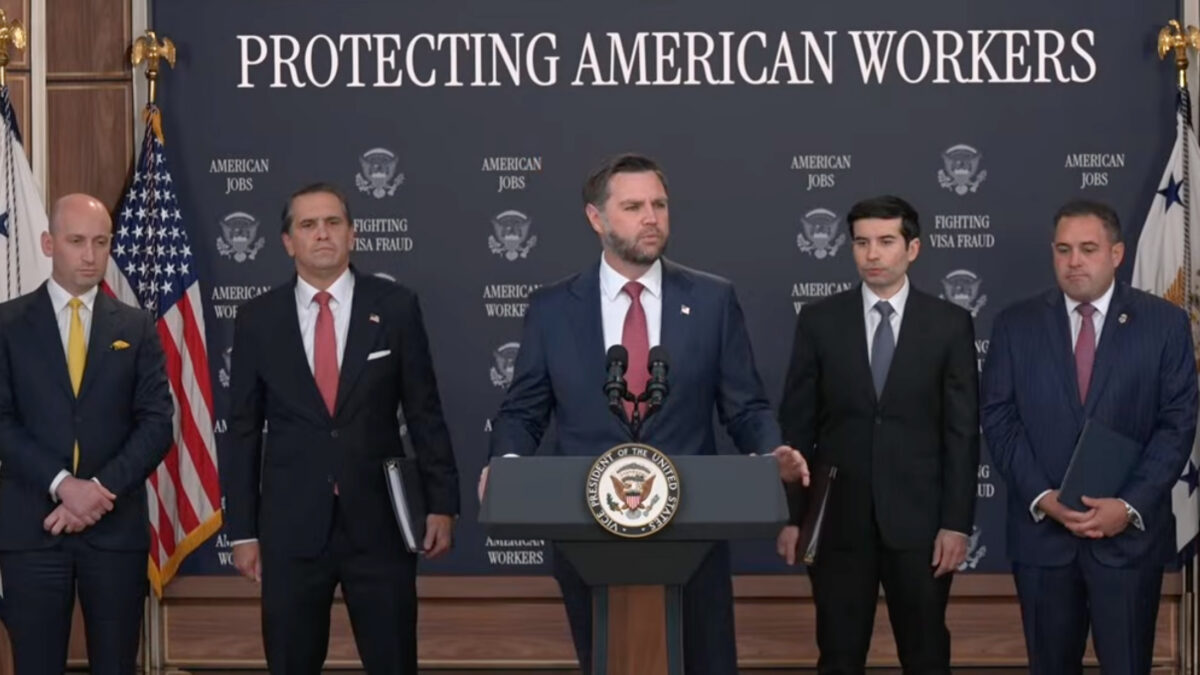
Vice President J.D. Vance, leading the White House Task Force to Eliminate Fraud, announced on Thursday that the administration would be temporarily barring several corporations from seeking permanent labor certification (PERM) for their H-1B workers. The PERM certification from the Department of Labor “allows an employer to hire a foreign worker to work permanently in the United States.”
The companies losing the ability to use PERM are Microsoft and the India-based “WITCHes,” a slightly awkward acronym for Wipro, Infosys, Tata Consultancy Services, Cognizant, and HCL Tech.
So a handful of giant corporations, including big India-based corporations that provide a flood of technical staff like software engineers to American tech companies, send tens of thousands of foreign laborers into the United States under the premise that they’re coming temporarily: filling niches in the labor market that American workers are unable to fill, for a while, and then going home.
But then, once the temporary guest workers arrive, those same corporations ask to convert the visa that allows a guest worker to visit the country into permission for permanent residency.
Vance’s announcement this week is that the administration is closing the door to companies that appear to have abused that pathway. For 180 days, with the possibility of an extension, it ends their ability to turn guest laborers into permanent residents.
Remember what The Federalist wrote a week ago: When Congress created the H-1 category for guest workers “of distinguished merit and ability,” the 1952 law that established that category of visitors explicitly defined people working under H-1 status as “nonimmigrant” visitors. They were never supposed to be here to stay.
You can read a detailed legislative history of the H-1B visa here, and notice the opening description of the topic in the very first sentence: “Nonimmigrant temporary workers seeking employment in the United States …” When corporations use PERM to turn their H-1B workers into permanent residents, they’re using a program for nonimmigrant temporary labor as a backdoor conduit for permanent lower-wage immigrant labor.
You can watch Vance’s entire press conference here, but here’s an excerpt:
Media coverage depicts Microsoft as “pushing back” on Vance’s claims, but watch how they do it. Vance said that Microsoft laid off about 6,000 Americans while filing for visas to employ about 6,000 H-1B workers. The Seattle Times published this response from the company:
Of the roughly 6,000 H-1B visa applications the company filed during its 2026 fiscal year, 80% were to extend or change the status of Microsoft employees, according to the company. The rest were for foreign-born but U.S.-based workers of other companies who were joining Microsoft, which represent about 1% of the company’s workforce.
So they don’t claim that they didn’t lay off thousands of Americans while hiring thousands of foreign workers on H-1B visas, treating new visas for existing H-1B workers as being somehow unrelated to the point about laying off American workers while using nearly an equal number of foreign laborers. “They are not new arrivals to our country,” Microsoft told the Associated Press.
But that doesn’t mean anything. A foreign worker on an H-1B visa who gets his H-1B visa extended is a foreign worker on an H-1B visa.
As Vance said this week, “Our message to Microsoft is: You’re a great American company, but you’ve got to hire great American workers.”