
It’s a shocking but obvious reality that an unborn baby in America might be better off as a puppy in some cases. Recent news stories like the nightmare saga of McKenna West’s struggle to save “Baby Gabriel” from an execution his biological parents attempted to force on her and Massachusetts giddily unleashing abortion through all nine months of pregnancy merely serve to underline that reality. The more we treat animals like children, the more we’re treating children like animals, and it’s disgusting and blasphemous.
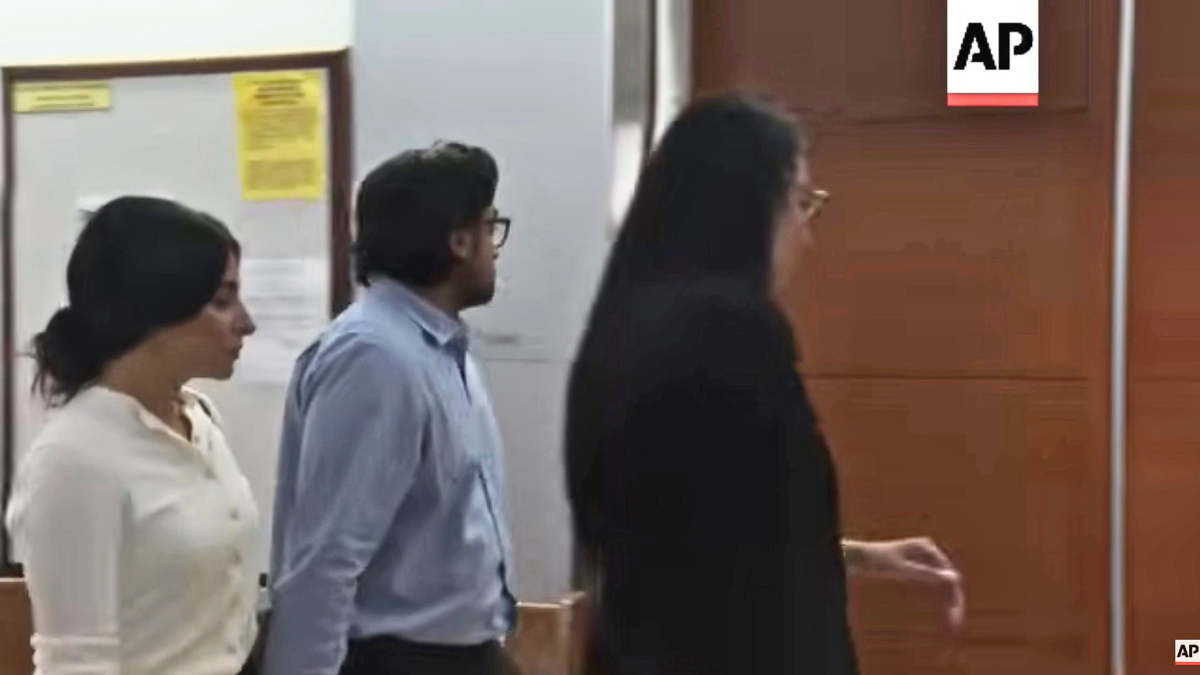
“Baby Gabriel” (now Rumi), readers will be happy to know, “is now recuperating under the loving care of his parents and his heroic team of doctors, nurses, and medical staff,” according to the parents’ attorney. Of course, the only reason this is the case is that his surrogate mother refused the parents’ command to abort him and a court ordered them to get their baby a life-saving heart surgery. So the definition of “loving” here is, uh, complicated.
What’s not complicated is that Nausheen Gilkar and Omar Ahmed treated their son as something less than human once they found out he was less healthy than they expected. At that point, the baby-acquisition process became more like shopping for a goldendoodle. The one we picked out didn’t pass the vet check-up? Oh, that’s concerning — did you have any other males left with that cool color pattern? Only, in the pet-shopping process, the consumer just moves on instead of pressuring the pet store to off the pooch instead of giving it up for adoption.
It would be fabulous if the pet-shopping approach were limited to Gilkar and Ahmed, but it’s not. That’s why there are several seasons’ worth of true-crime horror stories involving biological parents (or mere baby-buyers) forcing surrogates to abort unborn babies — or just getting the abortions themselves, as is the case with Kate Dineen and Alex Lawton, “poster parents” for the Massachusetts abortion-until-birth bill. When their unborn son suffered a stroke, the state’s 24-week abortion ban meant they had to travel to Maryland to have their baby’s life ended. After all, if the baby had survived birth, “it would mean years of pain and suffering,” and children, like pets, aren’t supposed to be unhealthy.
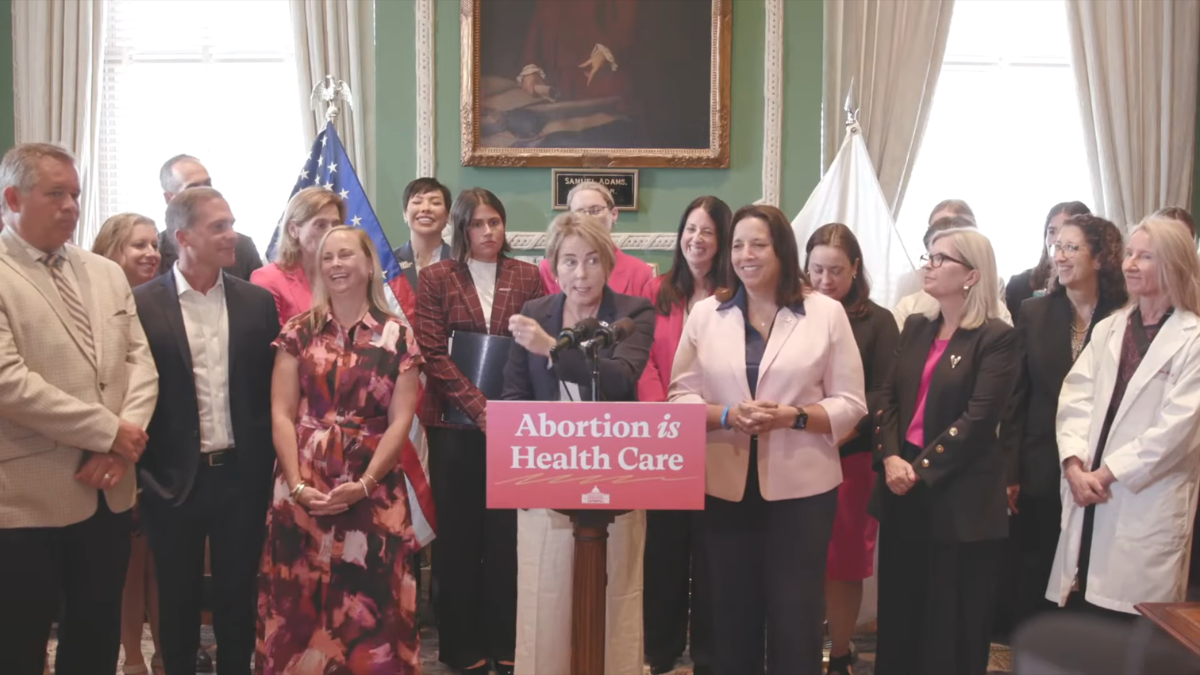
It’s something “no one should ever have to go through,” the Boston Globe observed, by which it meant traveling to obtain life-ending “services” — not having your parents pay someone to kill you. But thanks to Democrats’ new unlimited-abortion law, that travel won’t be necessary, which brought much joy to the group of abortion-eager individuals below. (Ironically, as Hannah Bates noted in these pages, many of the same Democrats backing the abortion bill also eagerly passed protections for animals in prior years.)
For further proof of how getting a baby increasingly mirrors pet acquisition, look to the near-billion-dollar industry devoted to sifting through tiny humans to find those “worth having.” It’s the commodification of tiny humans with a hyperconsumeristic touch, customizability on steroids to the point of absurd parody. Which is why Paris Hilton created and sidelined (that is, “doomed” to destruction) 20 tiny (male) lives in her effort to get a baby with the “right” sex. Barrie Drewitt-Barlow, one of the United Kingdom’s “first gay fathers,” encapsulated the consumeristic mindset this way: “Nobody wants an ugly kid.” (Authorities charged Drewitt-Barlow with multiple sex crimes earlier this year.) Prospective pet owners are notorious for seeking out the preferred breed, size, sex, color, ancestry, and so forth, while prioritizing picture-perfect health, and now would-be parents are too.
More generally, there’s the reality that having children is increasingly seen as optional, to be had if and when a stars-align gamut of criteria are met, and not an essential part of the good life. Gen Z men and women rank having children far behind a number of other priorities, such as working a “fulfilling” job or “having enough money to do the things you want to do.” About half of under-50 U.S. adults who don’t have kids say they won’t have kids, and most of them say the reason is “they just don’t want to.” The “optionality” of children is reflected in the plummeting birth rate and the substitution of other “goods,” like pets.
As the birth rate plummets, pet-spending is exploding and is expected to exceed $160 billion this year, nearly tripling the amount shelled out in 2013. Costs include luxury items like these and money dumped into the growing pet insurance market. Nearly two-thirds of pet owners claim “they would quit their job if it interfered with their ability to care for their pet,” and more than 75 percent say they would go into debt to pay for critical care for their animal. According to survey data from 2024, two-thirds of households have a pet, and more than half of those say the pet is “as much a part of their family as a human family member.” The over-the-top doggy birthday “pawties,” discussions of “gentle parenting” canines, and testimonials of pet “parents” who admit to being “‘very guilty’ of treating their pups as babies” all serve to confirm that pet owners actually mean that.
There’s nothing wrong with having a pet, obviously, and there’s a number of legitimate reasons a person might not have children. But the way large segments of our society increasingly view pets as replacements for babies and babies as glorified pets is grossly dark and sinister. On the one hand, it reflects a Bambi-fied anthropology, where animals are humanized and seen as morally superior to humans. On the other, it’s a manifestation of the perverted viewpoint of Princeton ethicist Peter Singer, who wrote nearly 50 years ago that: “Human babies are not born self-aware, or capable of grasping that they exist over time. They are not persons,” and “the life of a newborn is of less value than the life of a pig, a dog, or a chimpanzee.”
Of course, the less abstract explanation is that a growing number of Americans view pets and children as different versions of the same product: an adult accessory that exists to improve the life of its “owner” without causing too much inconvenience or making too many demands of the individual who actually matters. With God and the reality that humans are made in his image kicked to the curb, it’s a Peter Singer world where babies are less than human and animals get promoted to take their place, but what’s truly important is adults getting whatever adults want, regardless of the body count.