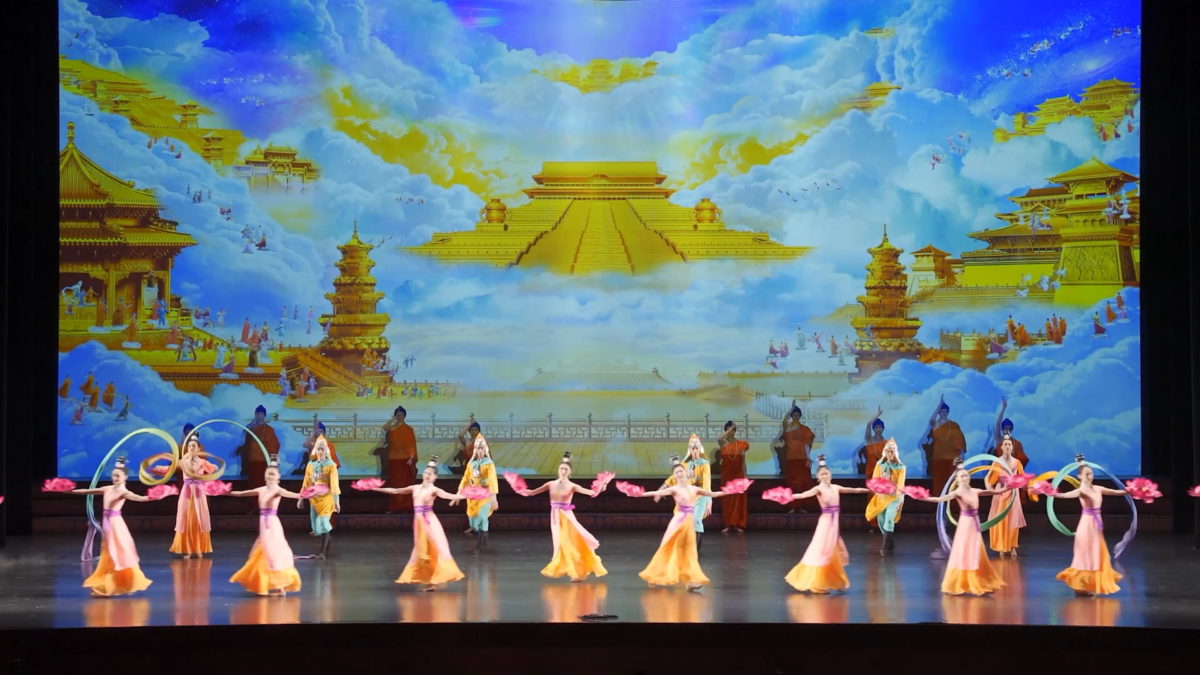

Last month, intense pressure from the Chinese embassy in Seoul led South Korea’s KBS Hall to cancel four performances of Shen Yun, an artistic performance of traditional Chinese music and dance. The communist government despises China’s pre-Communist history and traditions.
This incident followed closely after the Four Seasons Centre in Toronto scratched six shows due to anonymous bomb threats associated with a Chinese Communist Party (CCP) influence operation. These events reflect a disturbing trend: Shen Yun has reported more than 150 similar threats worldwide in the past two years, including a bomb threat in 2025 that resulted in the evacuation of Washington, D.C.’s Kennedy Center.
The new documentary Unbroken: The Untold Story of Shen Yun is directed by Fiona Young and will premiere in Los Angeles on June 17. The film delves into the CCP’s extreme, relentless efforts to silence this cultural and religious phenomenon, showcasing the remarkable resilience of Shen Yun performers.
Shen Yun has a deep tie with Falun Gong, a spiritual practice founded by Li Hongzhi in the 1990s focused on self-improvement and meditation. The discipline once attracted tens of millions in China. The CCP banned the movement in 1999, labeling it an “anti-society cult,” and has persecuted its followers for decades.
After Hongzhi was exiled to the United States, his followers established organizations such as Shen Yun Performing Arts Company and The Epoch Times to preserve traditional Chinese culture, critique the CCP, and spread Falun Gong’s teachings. This connection explains why the CCP has targeted Shen Yun with transnational aggression.
Shen Yun Performing Arts presents a new two-hour dance production each year that tours internationally. Blending exquisite classical Chinese dance with stunning visuals and a live orchestra, the show celebrates 5,000 years of pre-communist Chinese culture while powerfully depicting the persecution of Falun Gong practitioners under the Chinese regime.
Many of the performers and staff have personally experienced this repression, giving the performance profound authenticity and emotional depth. Now celebrating its 20th anniversary, Shen Yun has earned rave reviews from audiences, dancers, choreographers, and celebrities alike for the show’s artistic brilliance, breathtaking visuals, live orchestra, and compelling narratives.
Yet this success has invited scrutiny. In 2024 and 2025, The New York Times published a series of investigative reports that raised serious allegations against the organization, including exploitative labor practices. The reports claimed that Shen Yun discouraged medical care for injuries, engaged in emotional manipulation, and underpaid young performers while amassing significant revenue and supporting an opulent lifestyle for Hongzhi and his wife.
Several former performers subsequently filed lawsuits alleging forced child labor and other abuses. New York State’s Department of Labor launched an investigation into the treatment of underage trainees. No conclusions have been released.
Shen Yun has firmly denied the allegations, asserting that these claims are mere distortions from discontented former members or part of a smear campaign orchestrated by the CCP. Unbroken stands as Shen Yun’s most powerful counterargument. It weaves together two storylines, with the more captivating one centered on young performers Lucas and Jesse Browde, who are not only talented but also dedicated beyond measure.
The film showcases their intense training, presenting an unfiltered look at their struggles while illuminating the unwavering love and support of their families and supportive network of teachers and peers, who act like an extended family. At Shen Yun’s training academy in Dragon Springs, New York, the brothers discovered a deep sense of belonging and purpose. This compelling narrative effectively counters claims of child labor, emotional exploitation and isolation, and medical neglect.
The second storyline follows New Tang Dynasty (NTD)’s Steve Lance investigating the NYT reports as part of a broader narrative about the CCP’s sabotage efforts. As NTD’s Washington D.C. bureau chief and chief political correspondent, Lance presents informative insights. However, this section is weaker, partly because the film does not fully disclose NTD’s own ties to Falun Gong practitioners (the same network that produced Unbroken). Including an independent journalist with no ties to Falun Gong could have significantly enhanced the film’s credibility.
Moreover, the documentary largely sidesteps the NYT’s claims about financial opacity and the lifestyle of Hongzhi and his wife, seemingly at the expense of performers and Falun Gong adherents. Although the film runs for 82 minutes and cannot cover every allegation, the noticeable omissions undermine its impact and leave essential questions unanswered.
Despite its limitations, the documentary, just like Shen Yun performances, captivates audiences with its visually stunning cinematography — especially the synchronized precision of the young dancers — and its emotionally resonant storytelling. Whether or not one agrees with every aspect of Shen Yun and the message of Falun Gong, the film’s core warning lands powerfully: a foreign authoritarian regime should not be permitted to dictate what art free societies can watch or what spiritual beliefs individuals may hold. In an era of transnational repression, Unbroken may not be a perfect rebuttal, but it is a passionate and visually gripping one. This documentary is worth seeing as an act of support for artistic freedom and religious liberty.