
When Sydney Sweeney showed off her “great genes jeans” in a series of playful American Eagle ads last summer, people — specifically the corporate media — feigned panic that the Euphoria actress’ tastefully clothed curves were a clandestine campaign to promote the “American eugenics movement” and white supremacy.
Nearly one year later, a real-life example of the selective breeding ideology the press tried to pin on Sweeney’s denim debuted in a viral post by a couple that aborted their unborn child after learning the baby might be born with Down Syndrome.
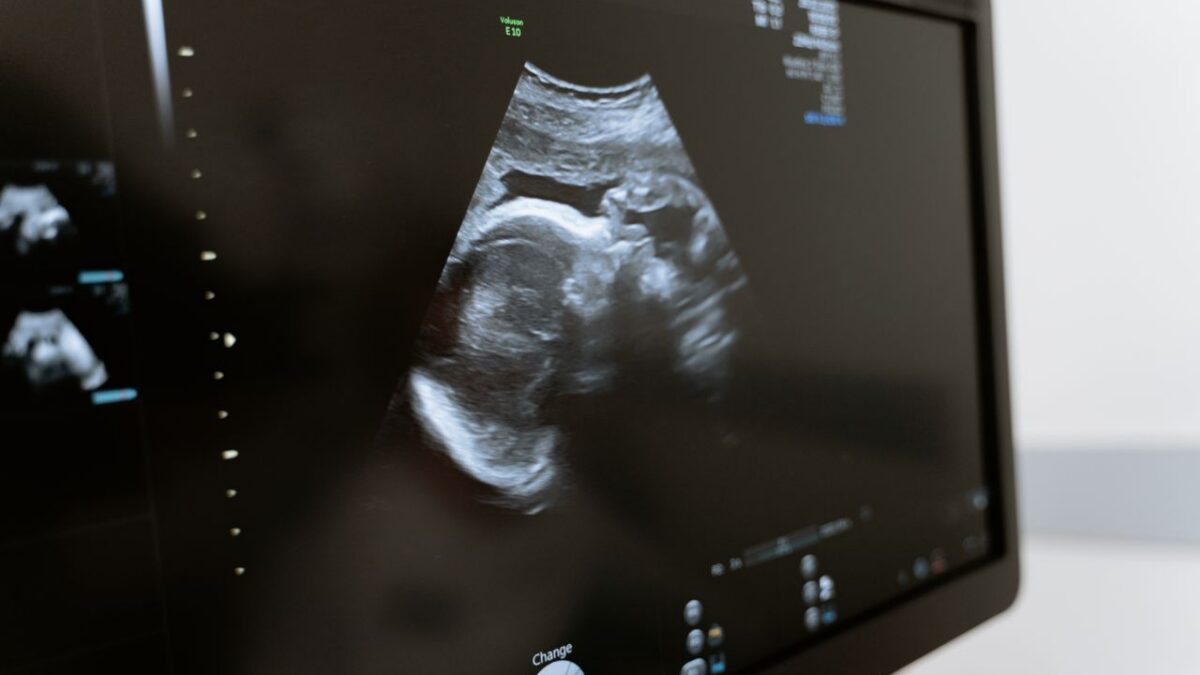
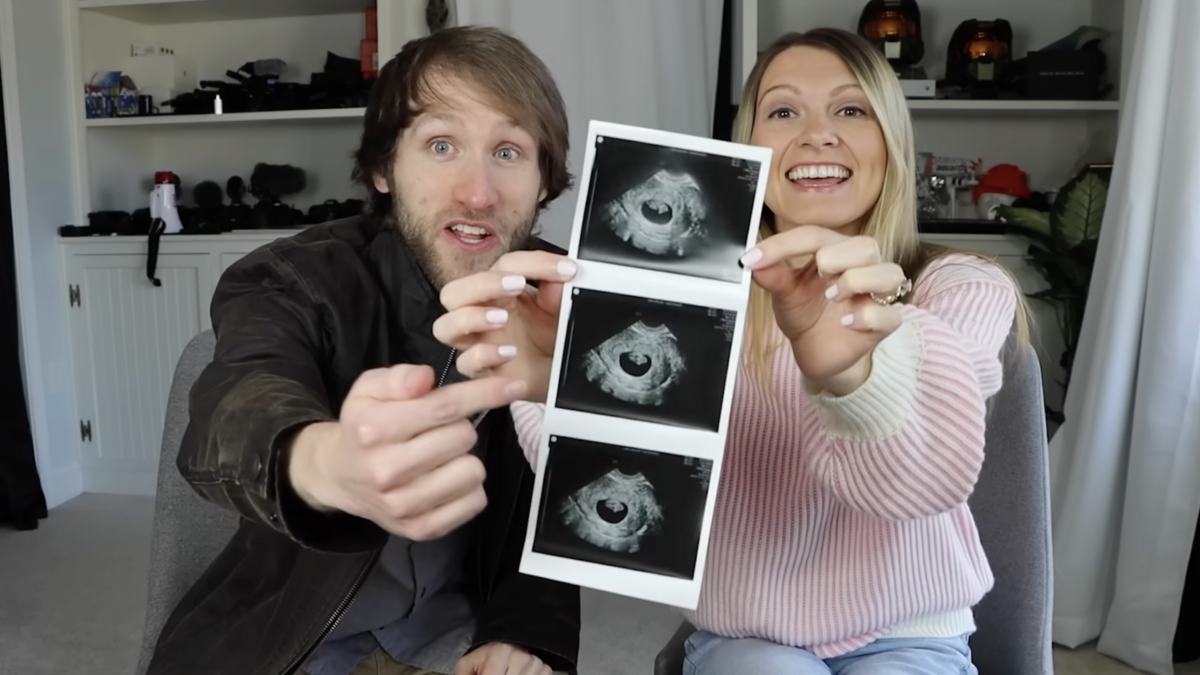
Professional YouTube couple Jesse and Ashley Ridgway were more than halfway through their first pregnancy and had already bought baby clothes and designed a nursery when they decided birthing and raising a kid with Trisomy 21 would be too “rough.” Just one month after the “McJuggerNuggets” stars bragged about saving their dog with stage 4 kidney disease, they solicited an abortionist to tear their unborn baby apart limb by limb simply because that baby likely had an extra chromosome.
Shortly after the abortion, Jesse turned to the Internet for sympathy over the “very difficult decision.” In his June 3 X post, Jesse rejected a Down Syndrome diagnosis as a “blessing,” instead calling it a “glitch” and “objectively shitty.” He concluded by teasing plans for a future pregnancy that would “hopefully have a better outcome.”
“As for us, we made a difficult decision that we believe in the long-run will be beneficial for our family. Thankfully, we had a choice,” Ridgway wrote.
One day later, Ridgway doubled down in another post claiming that the blowback to the abortion, not the abortion itself, was “deeply disturbing” and laden with “depravity.”
Ridgway’s unapologetic confession deserved a dogpile and received a decent thrashing from pro-lifers and people raising happy and healthy children with Down Syndrome. The ratio that dominated his post initially, however, didn’t last long. Less than 48 hours into the kerfuffle, corporate media rushed to uncritically cover the viral controversy and even give the Ridgways air cover for their actions.
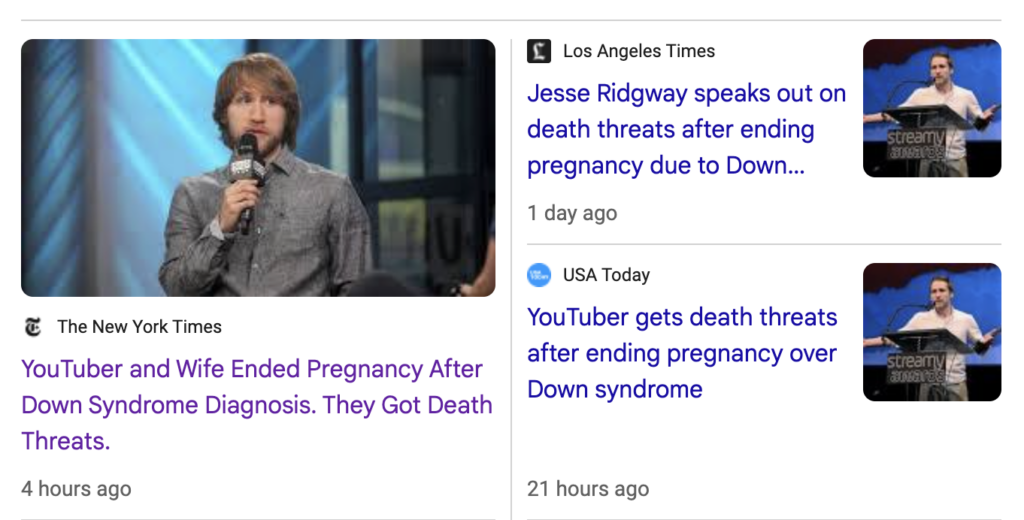
Several outlets used euphemisms for abortion such as “terminate the pregnancy” to downplay the horrific reality that a couple paid for someone to murder their child for being different. Others such as the New York Times, Los Angeles Times, and USA Today blew past the untimely demise of the unborn baby to instead highlight the alleged “death threats” the Ridgways received.
One TMZ host immediately accepted the Ridgways’ framing that aborting their first child will make room for them to conceive a baby without a genetic condition.
“Hopefully you get pregnant again and everything works out,” he quipped after interviewing the couple.
The press’ reaction to the Ridgways’ murder of their unborn chid is unsurprising given their history of abortion, IVF, and handpicked breeding activism. But it is not without consequence.
A majority of children with Down Syndrome are aborted. These abortions are quite literally rooted in eugenics and elective, chosen by the parents and only possible thanks to the radical abortion policies enacted by Democrats spurred on by the corporate media. They proliferate despite the fact that the survival rate and quality of life for people born with Down Syndrome are the highest they have ever been.
[RELATED: Down Syndrome Babies Like My Little Sister-In-Law Are Not Defects To Eliminate]
Even if those expected to be born with Trisomy 21 weren’t some of the happiest people on the planet, the mass murder of unborn babies based on their physical attributes, predicted IQ, or potential for suffering is inherently and indisputably wrong.
A corporate press that is willing to conjure a “eugenics” controversy out of nothing when real eugenics proliferates is corrupt and illegitimate. A press that platforms and promotes real eugenics is worse.
The real evil, however, lies with the Ridgways, who not only murdered their baby but profited off of that murder and all of the attention they received from the press. Because to career YouTubers like them, any clicks on monetized videos (like the one where they learn about the potential for their baby’s Trisomy 21) are good, money-making clicks — even if it comes at the expense of their child’s life.