
There have been few atrocities in recent memory more egregious than the migrant rape gangs in the U.K. For decades, groups of mostly Muslim men preyed on thousands of English girls, grooming them and sexually violating them, often repeatedly. Worst of all, law enforcement systematically turned away from the victims and allowed them to suffer, all in the interest of civil harmony and suppressing anti-immigration sentiments.
Normally, such horrors find their way into the arts and entertainment, not only because these stories contain so much dramatic potential and cultural relevance, but also because they serve as warnings of what can happen when people slide into error. Try as they might, communities cannot simply erase their greatest sins through censorship and propaganda. In order to have a future, they must confront their past, understand the depths of the depravity, and experience a collective catharsis. Without the tragedy manifesting itself in art, it will seep into a culture and corrupt it entirely.
For this reason, the U.K. continues to spiral into a hopeless dystopia. What was once the global standard of civilization, order, and modernity is now a backwards anarcho-tyranny riddled with slums, unassimilated third-world mobs, and incompetent authoritarian elites. Meanwhile, British natives are forced to accept their reduced conditions in silence.
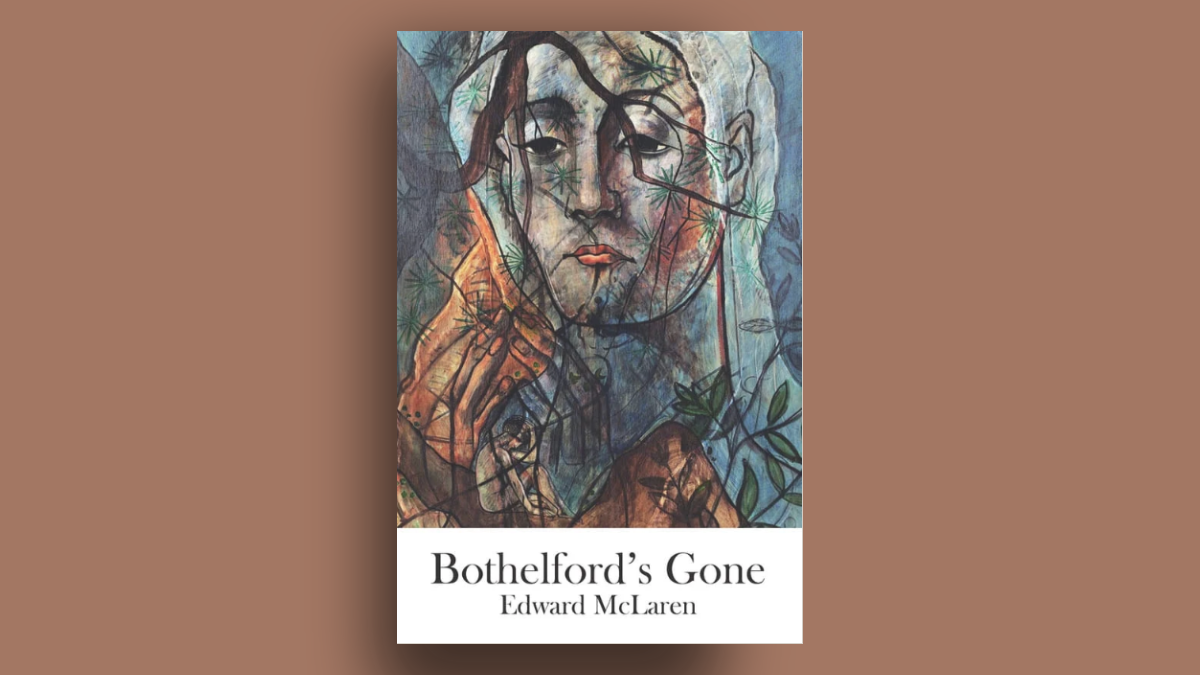
Fortunately, a few brave individuals are pushing back, telling stories that need to be told. One such person is the young writer Edward McLaren, who finally gives voice to the nightmare of the migrant invasion, leftist indoctrination, and the lost innocence of English youth in his debut novel Bothelford’s Gone. For anyone wondering what has become of the younger generations growing up in today’s England, McLaren offers an answer: Most of them are demoralized, desensitized, and deracinated drones forced to ignore the humiliations to which they are regularly subjected.
The novel centers on Jack Grundon, a white male Zoomer living in the English every-town of Bothelford. Along with the rest of the country, Bothelford is now home to a rapidly growing population of Syrians and Pakistanis, many of whom care little for British customs and live in a separate world altogether. This is first illustrated with Jack’s next-door neighbors, a quiet Muslim family that has surprisingly little contact with Jack’s household. The burka-clad mother, Fatima, quietly has numerous children — her unemployed husband soon has other wives who bear him children as well — while Jack grows up alone as an only child with his divorced mother who religiously watches British television and abides by liberal values.
As a child, Jack shows intellectual promise at school and is particularly excited about ancient mythology, but this is shut down by the leftist teacher Ms. Wright who wants to respect the wishes of Muslim households that cannot learn about false religions. As Jack advances through school, Covid descends upon the world, and he becomes hooked to the screen. Eventually, after he befriends a Syrian teen (who is far older than he pretends to be), he learns about an illicit relationship happening with one of his classmates and the Muslim teacher, Mr. Hussein. At first, he speaks out about this, but is soon put in therapy and prescribed antidepressants.
Even as Jack comes to learn more about a ring of sexual predators in Bothelford having their way with his classmate and other girls, he is too medicated and browbeaten to take action. Finally, certain clashes ensue despite Jack’s usual indifference, throwing Jack’s life into a tailspin. At that point, it becomes much more evident just how widespread the problem is, along with the cover-up. What seems like a personal conflict escalates into a confrontation with a society gone mad.
Beyond saying the unsayable about the effects of mass migration from the third world, McLaren uses Jack’s story to describe the internal crackup hollowing out England. Family breakdown, the loss of religion, tech addiction, government corruption, leftist indoctrination, and even gender dysphoria (ironically enough, the most interesting character is Jack’s gender confused classmate Fauna). All of these social pathologies have come together to fully immiserate Gen Z and deprive them of any kind of cultural or material inheritance. Jack can only vaguely sense that something is deeply wrong with his world, which finally causes him to lash out instinctively and incoherently.
For the most part, the novel’s social commentary of the book works in its favor, making Jack’s story relevant and meaningful. Occasionally, however, it can come at the cost of character development, plot progression, and nuance. All of the characters, including Jack, function more as types than well-rounded individuals with minds of their own. Many details about pivotal events are left unsaid or only hinted at, leaving the reader wondering at what is really happening. And much of the dialogue seems unrealistic and mainly intended to communicate McLaren’s disgust with the migrant community and their leftist enablers.
It also doesn’t help that McLaren chooses to adopt a stream-of-consciousness style of narration that eschews gritty details and instead builds the story around Jack’s inner self. What results is a story that is more evocative than provocative. For any other issue that is well-known, such a choice might make more sense, but for an issue about which most people have no clue, this blunts the potential influence of the book. The feelings expressed are certainly clear, but the facts are hazy and frequently up to interpretation.
Even so, McLaren deserves enormous credit for even broaching the subject and giving it serious treatment. In Bothelford’s Gone, he is dealing with an injustice so grave and so vast that it largely defies comprehension. He does what he can to depict a darkness that has consumed England along with much of Western Europe, a force that transcends politics, ideologies, culture, and modern history. It continues to reduce once great nations and empires to colorless ruins inhabited by beasts and shadows.
As it happens, fans of this novel would do well to listen to British new wave singer Morrissey’s 1992 album “Your Arsenal,” which speaks on England’s depressing descent into multicultural mediocrity and the despair of white young men in England. In one track, Morrissey recounts a young man, David, joining the National Front party to restore an “England for the English!” And in another track, he describes the “last truly British people” as “cold” and “the most depressing people you will ever know.” In many ways, Bothelford’s Gone comes off like a novelized version of Morrissey’s album. It is just as sad and for very similar reasons.
Unfortunately, it remains to be seen if the West can wake up from this nightmare before it disappears along with the fictional town of Bothelford. Until then, we can read McLaren’s book, listen to Morrissey’s music, and reflect on the choices that brought our world to this point.