
Back in the 1980s there was at least one positive cultural message for young women: “Girls just want to have fun!” Sadly, in the decades to follow, girls have mostly had the opposite of fun. By most measurements, girls and women today are sadder, more anxious, and lonelier than they have ever been. Despite the trumpeted achievements of Second and Third wave feminism (namely, boosting birth control and white-collar work), women continue to labor under unceasing social pressures and overwhelming emotional burdens.
This situation has deteriorated further in the last decade during the full bloom of the Internet Age, with women paradoxically reaching new heights in the culture and economy only to feel ever more powerless, unappealing, and unvalidated. They broke so many glass ceilings, but this has only left the ground covered with proverbial shards. Worse still is that the strategy for dealing with those shards relies on doubling down on senseless feminist messaging, ongoing grievances, and attacking masculinity.
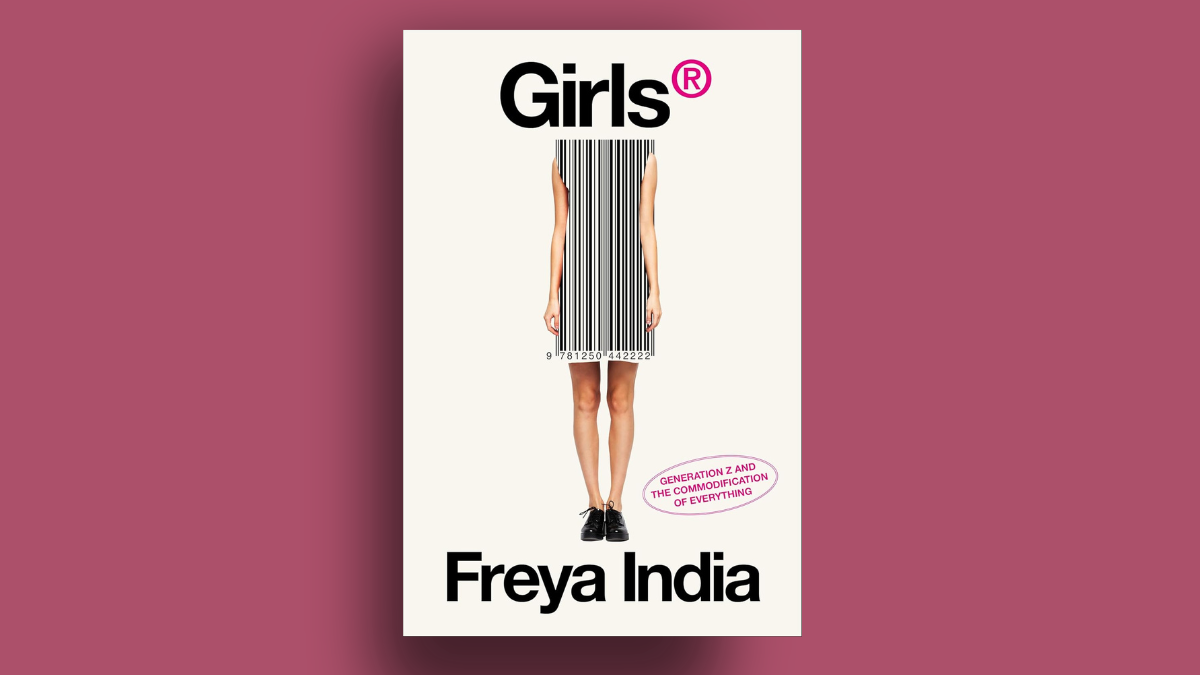
Not surprisingly, all this has made the newest generation of women (Gen Z) utterly miserable. As Freya India, a member of the Gen Z cohort herself, shows in her excellent new book GIRLS®: Generation Z and the Commodification of Everything, today’s young women have been marinating in a toxic stew of commercialization, objectification, and atomization. Consequently, they have been hollowed out and broken down in order to be reshaped into ideal consumers and products.
Even those of us who knew the internet was bad and observed its corrupting influences up close likely had little idea of just how extensive and profound the damage has been. For the past two decades, “every anxiety [girls] experience has been magnified until it feels unmanageable.” Whether it’s their appearance, their social life, their personality, their mental state, their accomplishments, or their political views, these platforms will always have the final word.
From the outset, India hopes to utterly debunk the complacent attitude that these problems are natural and that every generation of women encounters them: “I want to show how radically different this world is from the one [older generations] grew up in, how the very concepts of friendship, family, community, and falling in love have been ripped apart and redefined, and how, as these foundations have crumbled, girls have fallen apart with them.” With each example and study, India effectively puts this argument to rest, proving that what is happening to girls today is indeed unprecedented, unnatural, and sinister.
Easy to Package, Easy to Sell
To make her case, India breaks up her argument into six parts that cover each key aspect of today’s feminine malaise: image, mental health, reputation, community, romance, and identity. Time and again, she reveals exactly how Big Tech companies have aggressively worked to exploit every nook and cranny of insecurity in adolescent girls.
Naturally, she begins with self-image, perhaps the most obvious insecurity. Because social media platforms allow users to react and essentially rate other users’ posted images and videos, one’s appearance becomes a huge concern. Over time, influencers and celebrities, along with the companies sponsoring them, seized this opportunity to tell girls how to airbrush their pictures, apply more makeup, defy the effects of age, and look their best — which usually boiled down to looking more like a Kardashian.
This obsession with one’s appearance would then kick off a vicious (and lucrative) spiral of obsessions. Once girls are driven to despair over their physical imperfections, companies and their puppet influencers bombard them with remedies and treatments. Just like these girls were given advice on how to fix their nonexistent wrinkles, other influencers would give them advice on raising their self-esteem, usually with the help of expensive therapy and medication.
India points out two things about these entities capitalizing on poor mental health: (1) They usually turn completely normal feelings into full-blown pathologies in need of heavy intervention, and (2) they will do so in the name of fighting nonexistent stigmas against mental illness. Thus, the girl who might feel a little nervous about something minor is persuaded to take anti-anxiety pills and pay for years of online therapy.
With all this self-improvement going on, it is only natural that a girl would want to display it to the world. It’s not only the influencers who perform, but everyone. Thus, girls are lured into documenting their lives, sharing every detail about themselves and turning their daily experiences into entertainment for their followers. Done right, a girl could not only feel affirmed, she could become famous; done wrong, she could be ostracized and condemned. Either way, girls are routinely coerced into taking this risk. “Never before have [girls] had the technology to broadcast their personal lives to so many people, or felt such relentless pressure to do so,” India writes.
But what happens to friendships in this new online paradigm? According to India, they either flatten, disappear, or turn into full-blown AI simulations. After all, with so much time being spent online, there is little left over to form meaningful friendships. Of course, girls might claim that the likes they confer on their “friends” on social media constitute real human connection, but this falls short of any real companionship. Typically, if they want something resembling community, they could join one virtually, like “the ‘beauty community’ on YouTube, ‘mental health communities’ on Reddit, [or] ‘gaming communities’ on Twitch.” Or they could ditch the whole idea of community and vent their frustrations with people to an AI chatbot.
Predictably, the collective retreat from socializing has been accompanied by a retreat from dating. Now, if girls feel moved to enter the messy world of relationships, they must consult the appropriate app and pay for a subscription. Tinder, Hinge, Bumble, and a plethora of other dating apps are happy to oblige.
Moreover, the prospect of sexual activity might motivate a girl to again consult the internet for guidance. For that, she can consult what’s trending on Pornhub and convince herself that her own sexual objectification is actually a good thing. Of course, if all this seems degrading (because it is) and not worth the heartbreak, then a girl could just go her own way to find fulfillment, which is what more and more women are doing to the detriment of Western birthrates.
And which way is that? Whichever way leads to empowerment. Some girls seek empowerment through the occult: “For some young women, witchcraft is a way to cope with anxiety and feel more in control of their lives. Others see it as a feminist alternative to organized religion.” Other girls will invest themselves in left-wing activism to gain “a feeling of belonging, a sense of purpose.” And others, including India herself, will try to “lean in” like former Facebook executive Sheryl Sandberg and hustle to become girlbosses.
Ironically, these quests for power and meaning have left girls and young women feeling weak and empty. While girls might dream of becoming high-powered politicians and CEOs, they also have little idea of who they are, feel deathly afraid of assuming risk or responsibility, and mindlessly buy products and adopt algorithm-generated personalities to fill the gaping hole in their souls. As if by design, these girls are ultimately broken down and refashioned to become “perfect products and perfect consumers: girls who are predictable, categorizable, standardized … easy to package and easy to sell to.”
Knowing Better
All of this is only a very brief summary of what India lays out in heavily sourced detail (the endnotes alone run almost 100 pages). For the research alone, her book is a must-read. India’s writing style is also impeccably clear and readable, which is impressive for a writer in her mid-20s.
With that said, the one slightly weaker part of the book comes with her conclusion. After summarizing her diagnosis of the problem, her prescription is mainly for girls to simply keep away from these influences, seek out real community, and stay hopeful. Already, she notes, more young women are signing off of these platforms, embracing their actual appearance, and dumbing down their phones and cutting down their time on them, so the desire is there.
All the same, this could just be the pendulum swinging back from the peaks of hysteria that proliferated during the Covid lockdowns. Yes, some young adults (though certainly not all) are coming to realize the problems with being “terminally online,” but simply knowing better means little if no action is taken. India mostly seems averse to extremes — though this won’t stop radical feminists from foaming at the mouth because of this book — but taking effective action on this issue will require more extreme reforms than those that she recommends.
With that said, the virtues of GIRLS® easily make up for any potential shortcomings. Freya India has done important work by sharing her story and elucidating the struggles of her generation. What today’s young women are going through is quite new and demands new ways to respond. How this looks may be different for each individual, but India’s book will allow this healing to finally begin and encourage today’s stressed-out GIRLS® to become well-adjusted girls again.