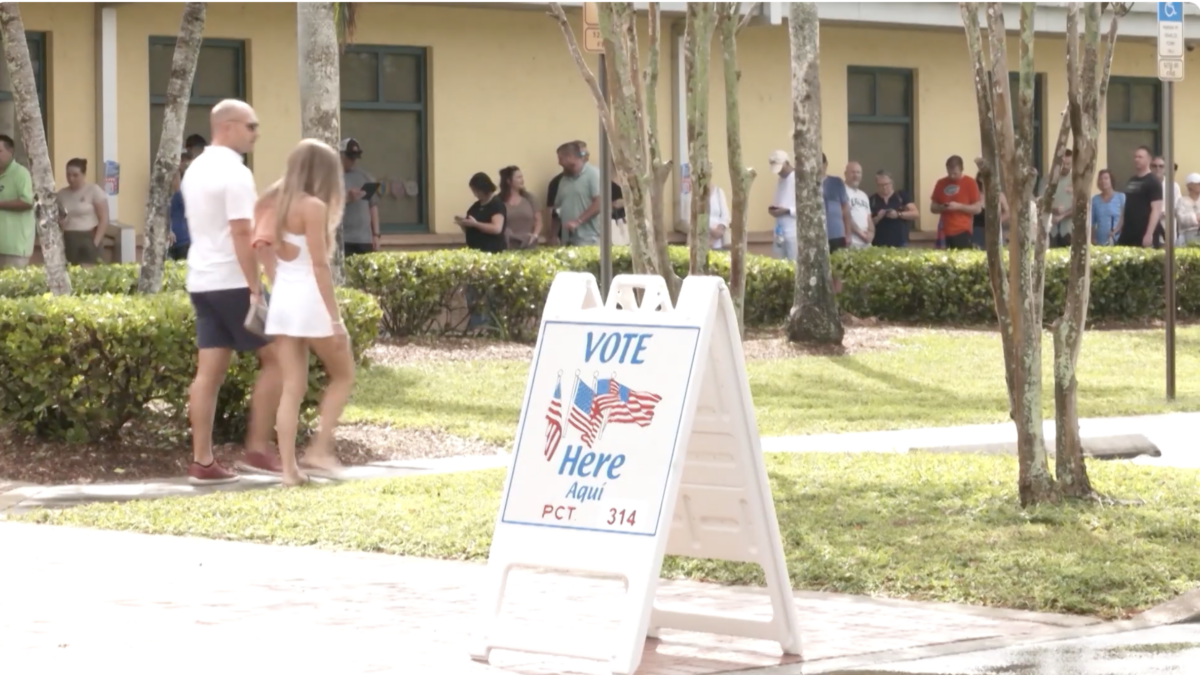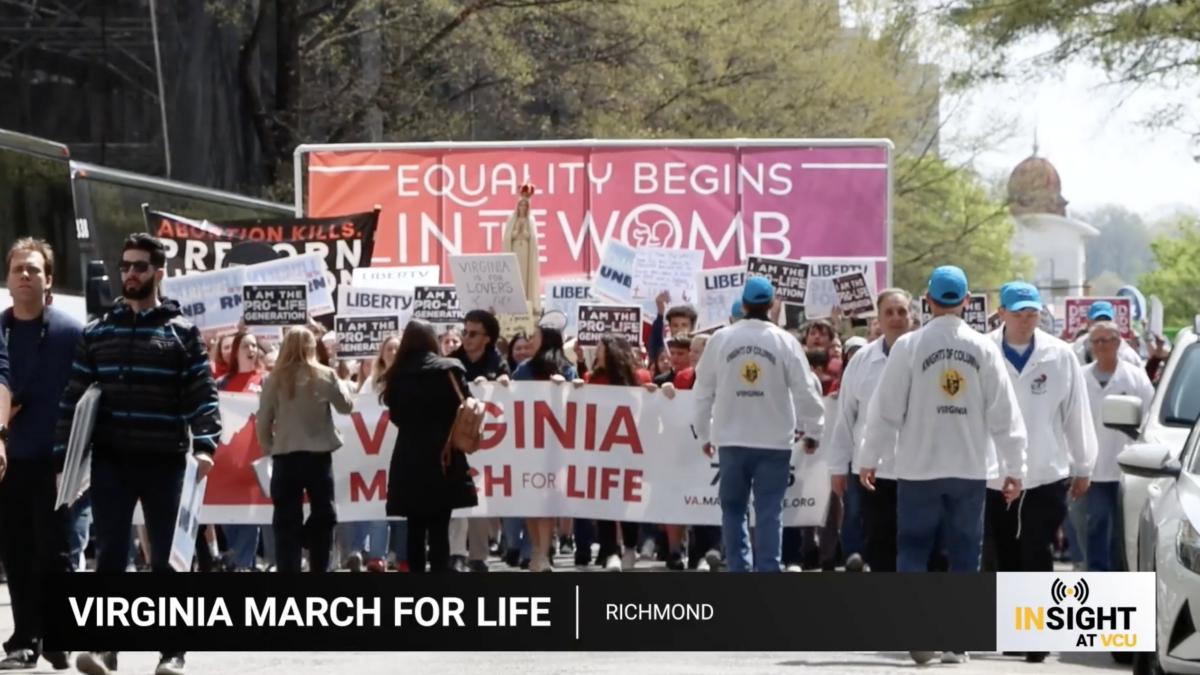

Democrats in Virginia are on a losing streak. A failed attempt to illegally gerrymander, no state budget, abysmal approval ratings, and now, a lawsuit challenging a Democrat-backed abortion amendment slated for a November vote has been filed in a county circuit court.
Physicians and citizens are challenging the so-called “Right to Reproductive Freedom Amendment” through a lawsuit filed in Tazewell County Court, the same court that overturned Democrats’ attempt to illegally gerrymander this spring. The plaintiffs, the Association of American Physicians and Surgeons, Virginia Medical Freedom Alliance, and Meagan Kade, a councilwoman from Bluefield, Va., cite manipulative language and procedural issues, requesting the court void the results of the special election.
Considered one of the most extreme in the nation, the expansive amendment would effectively remove parental notification prior to a minor’s abortion, allow unlicensed “persons” to perform abortions without penalty, eliminate basic health and safety requirements at abortion facilities, and legalize abortion until birth in the Commonwealth.
The priority passage of the amendment alarmed pro-lifers in January, when it became a lead legislative effort under the newly elected Democrat majority. Virginia law requires an amendment to pass in back-to-back legislative sessions to go to a ballot vote. After failing to block HJ1 in 2025, Republicans stood no chance against the two-chamber majority.
Capitalizing on voter ignorance and vague language to distract from the amendment’s breadth and scope, Democrats passed the amendment and crafted their question.
The ballot measure asks whether the state’s Constitution should be amended to “protect the freedom to make personal decisions about prenatal care, childbirth, postpartum care, birth control, abortion, miscarriage management, and fertility care,” “protect doctors, nurses, and patients from being punished for these decisions,” and “allow for restrictions on access to abortion during the third trimester of pregnancy except when the patient’s health is at risk or the pregnancy cannot survive?”
The “right to reproductive freedom” is not defined; the language applies to an “individual,” leaving minors unprotected and at risk of exploitation, and the question of who is protected under the amendment remains obscure, an issue that was never resolved on the House floor in 2025, said Mark Earley, an attorney and former Virginia delegate.
“Even though I would agree that it’s deceptive, even more, it’s incomplete,” Earley said. “The amount of things changed and touched by the amendment are just not covered in the ballot language.”
The question is misleading on several counts, implying that an amendment is necessary for women’s health protection, presenting abortion as a neutral issue alongside prenatal, postpartum, and fertility care and childbirth, and minimizing unregulated abortion up to birth, said Olivia Gans Turner, Virginia Society for Human Life president. The term “health” remains undefined and open to interpretation.
Fast-tracking Amendments
In April, Democrats, led by newly elected Gov. Abigail Spanberger, fast-tracked a vote on a Congressional map amendment to expand Democratic dominance across 10 of 11 districts and upend pro-life Congressional seats. After a slim majority voted it in, the amendment was blocked by a Tazewell County judge who found it illegal on several counts.
Dems fought the ruling through a series of appeals, but failed to overturn it. The Tazewell ruling stands, upheld by the state’s Supreme Court. The case made national headlines and showcased the extreme lengths politicians in Virginia will go to fulfill a partisan agenda.
Using Tazewell’s circuit court as an offensive starting point, opponents of the abortion amendment want a vote voided before November.
The defense views the redistricting ruling as a positive precedent, proof that the Virginia Supreme Court is willing to invalidate a faulty constitutional amendment for failing procedural requirements, said Victoria Cobb, president of The Family Foundation. The pro-life lawsuit is a “similar fight” to the redistricting case, and a defining argument against deceptive ballot language.
But Earley sees the case as an “uphill battle.”
Since the overturning of Roe v. Wade, the question of abortion has been on 17 state ballots, with expansive protections passed in seven of 10 states in 2024 alone. Virginia is one of several states currently considering or collecting signatures to codify an amendment.
Publicity campaigns for ballot measures are high-dollar events. Abortion advocates, with big money backing, have succeeded in convincing the majority of Virginians that unlimited and undefined “reproductive rights,” should be voted in.
Rather than waging war on the miseducation of voters, striking down the measure on legal grounds is a smart offensive. The Tazewell filing is the first, but likely not the last, to challenge the measure.