
They won when everybody lost.
Two things happened in Colorado this year, side-by-side: For the first time since the 1930s, voters have chosen a trifecta that includes a Democrat governor and Democrat supermajorities in both houses of the state legislature. At the same time, three conservative ballot measures won startling victories in a state that otherwise moved hard to the left. Colorado voters went left and went right, simultaneously.
Two of those measures landed squarely in the heart of the left/right cultural divide, dealing with transgender ideology. Proposition 134 requires schools, colleges, and sports leagues to designate teams as male, female, or co-ed, and then requires athletes to play on sports teams that match their real sex. Proposition 135 forbids transgender surgeries on minors.
With close to 95 percent of the vote counted, late in the week, both were holding at close to 52 percent approval, with little apparent likelihood that the remaining uncounted ballots would change the result. Despite the apparent trend toward statewide approval, county-level results spoke clearly to the cultural divide: 70 percent of Denver voters refused to ban transgender surgery on children, while Proposition 135 was on track for 88 percent support in rural Kiowa and Cheyenne counties, on the eastern plains.
A third measure with broader support, Proposition 133, requires a life sentence without the possibility of parole for sex traffickers who target minors. With most of the ballots counted, that measure appears to be passing with more than 62 percent of the vote.
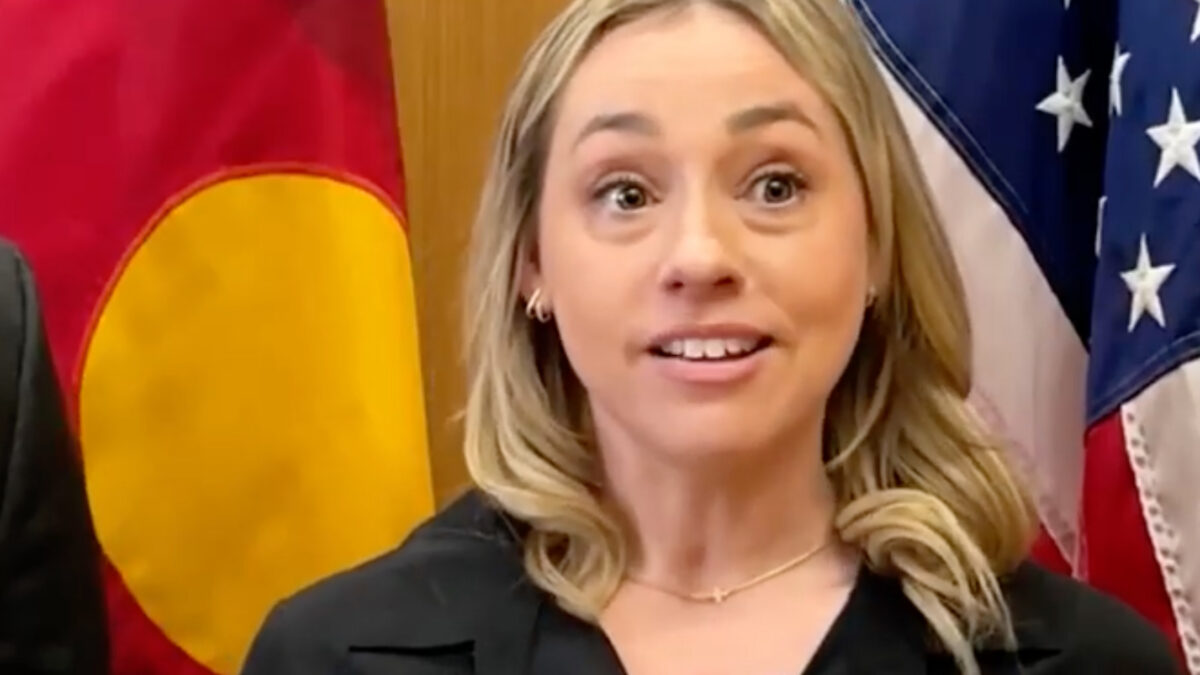
To carry the electorate against the political tide, Erin Lee told The Federalist, organizers built a coalition that smashed through cultural boundaries. Lee runs Protect Kids Colorado, the sponsor of the three ballot measures. They succeeded by refusing to be divided by partisan identity. Radical feminists who hate transgender ideology worked in partnership with conservative evangelicals, with aggressive institutional support from the Catholic Church.
“Protecting kids is the great unifier,” Lee told The Federalist. People who disagree on many things agree on that, so that’s what they worked on together. Measures that safeguard children from radical ideology, Lee said, are “as common sense as you think they are.”
Significantly, the 2026 victories came from a 2024 failure. As Lee told The Federalist, “We failed upward.” The Colorado Biological Sex Requirements for School Athletics Programs Initiative of 2024 fell short of the ballot, not receiving enough signatures. So the organizers started over. “As soon as we failed, we went, okay, let’s get ready for 2026,” Lee said. They treated defeat as a teacher, and kept going.
Ballot measures are usually understood to succeed on funding, and the measures struggled to find very much. As Colorado journalists have written, opponents “outspent Protect Kids Colorado by a 5-to-1 margin.” Many donors who write big checks for conservative issues declined support. Republican officials weren’t interested. “I learned early on that we had been blacklisted,” Lee told The Federalist. “They wouldn’t touch social issues.”
Political consultants, Lee adds, weren’t interested in working with parents: “The establishment doesn’t believe in the grass roots. The consultant class can’t make a dollar off us.”
So they built a structure that ran without deep pockets, and succeeded on “sheer manpower,” building a network of thousands of volunteers.
Decentralized, the campaign told volunteers to find their own ways to spread the message: “Everyone’s in charge. Everyone has the authority to build your teams in your community.”
As Lee told The Federalist, “Someone told me the other day that I was running this campaign like a bake sale.” Remember that: She was, and she won.
Running without much institutional support, the campaign to protect children got extraordinary backing from one institution that brought all of its weight to bear. The state’s Catholic bishops explicitly declared their support, and announced “three signature collection weekends for all Catholic parishes in our state.” They also called on Catholics to volunteer in the effort. (Note if you read the linked letter that the numbering of the ballot measures later changed.)
The bishops framed support for the measures as a duty: “As Catholic bishops of Colorado, we implore the Catholic faithful to act in accordance with Church teaching in support of these three initiatives … May we, as a community of faith, take this important stand for the dignity of the human person, the protection of children and the religious liberty of all.”
The Catholic-led support for signature-gathering pushed the measures to the ballot, Lee told The Federalist. “That was about a quarter of my signatures overall.”
Finally, as Colorado media falsely framed the ballot measures as far-right extremist measures from crazies, inventing the claim that the referendum on school sports would require children to submit to genital inspections from strangers, Lee told The Federalist that the structure of the campaign defeated the media. Thousands of volunteers all over the state talked to other parents, to people at church, and so on. They refuted media lies face-to-face, “in their spheres of interest, having one-on-one discussions with their neighbors,” and they took care to go to places where people disagreed with them.
They won by discussion. “We were fundamentally shifting culture as we were advancing policy,” Lee told The Federalist.
With the ballot measures carried in a state that will be governed by a leftist political trifecta, elected officials are already dropping hints about repealing the ballot measures at the statehouse. In an interview with the Denver Post, Governor-elect Phil Weiser said that the measures may turn out to be “not administrable,” and therefore in need of adjustment from the legislature. Legislators are making similar noises, suggesting (as one news story summarizes it) that they “will have to explore their options with advocacy groups.”
Lee’s response is simple: “I again point back to the way we did this.” The measures were passed by majorities of the state’s voters, as a result of a grassroots movement that reached into every corner of the state. “The structure we’ve built will not go away,” Lee told The Federalist. An attempt at legislative repeal would require an open assault on a giant coalition and the entire institutional structure of the Catholic church in the state.
Discussing Proposition 134 with The Federalist this week, a senior lawyer at the Alliance Defending Freedom said that the Colorado legislature “ought to be cautious.” The measure passed in Colorado is legally sound, said Senior Counsel and Vice-President of Policy Matt Sharp.
“It’s actually very similar to the laws from Idaho and Virginia that the Supreme Court upheld,” Sharp told The Federalist. It’s a plain setting of clear standards, easy for officials to implement. “We think it’s a very simple thing,” Sharp said.
Beyond that, Sharp added, “they ought to respect the will of the people, who have spoken very clearly on this.”
This week, the will of the people has been made clear by parents who wouldn’t give up on their children, despite the political obstacles. “This is our families. This is our kids. We’ve had enough,” Lee told The Federalist. That’s what it took.