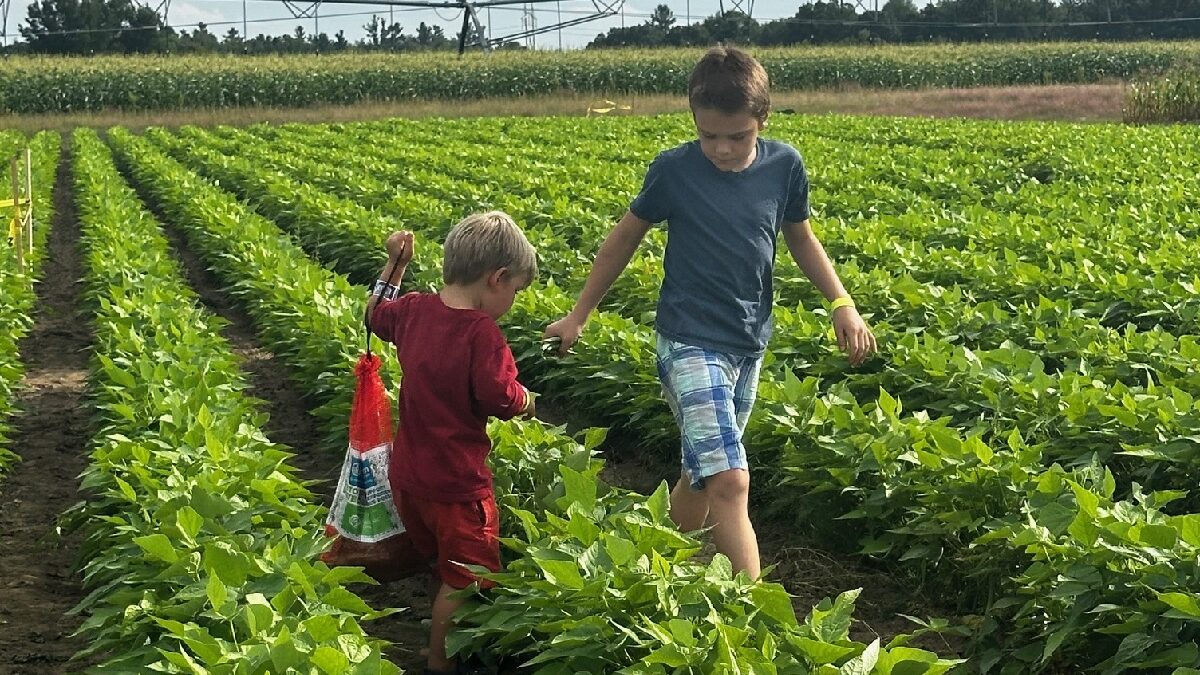

At a central Wisconsin free u-pick this harvest season, the bean and cabbage fields looked like flowers swarming with human bees, all eagerly doing work we’re told “Americans don’t do.”
“Look how many beans I have already,” a preschooler told his toddler sister. He turned to his mother, who picked in a flowered purple nursing dress as the baby sat nearby, sucking her lip in a wagon. “Mommy, look how many beans I have.”
“We’re going to do a lot of freezing this year, ’cause you love beans in the winter time, don’t you?” his mother replied. Twenty feet away, their pigtailed big sister picked in pink shorts and a Daisies Girl Scout vest. The vest must have been new, because it was blank and crisp.
Girl Scout Daisies are kindergarteners or first graders. At the Farm+Food Exploration Center, where the family was picking that day, Girl Scouts can earn up to 11 patches and badges. My farming family and their friends helped build the center, which opened just three years ago. It’s a gift from family farmers and other philanthropists to their community and country — a gift celebrating hard work and the gratitude you learn from sustaining yourself and others through it.
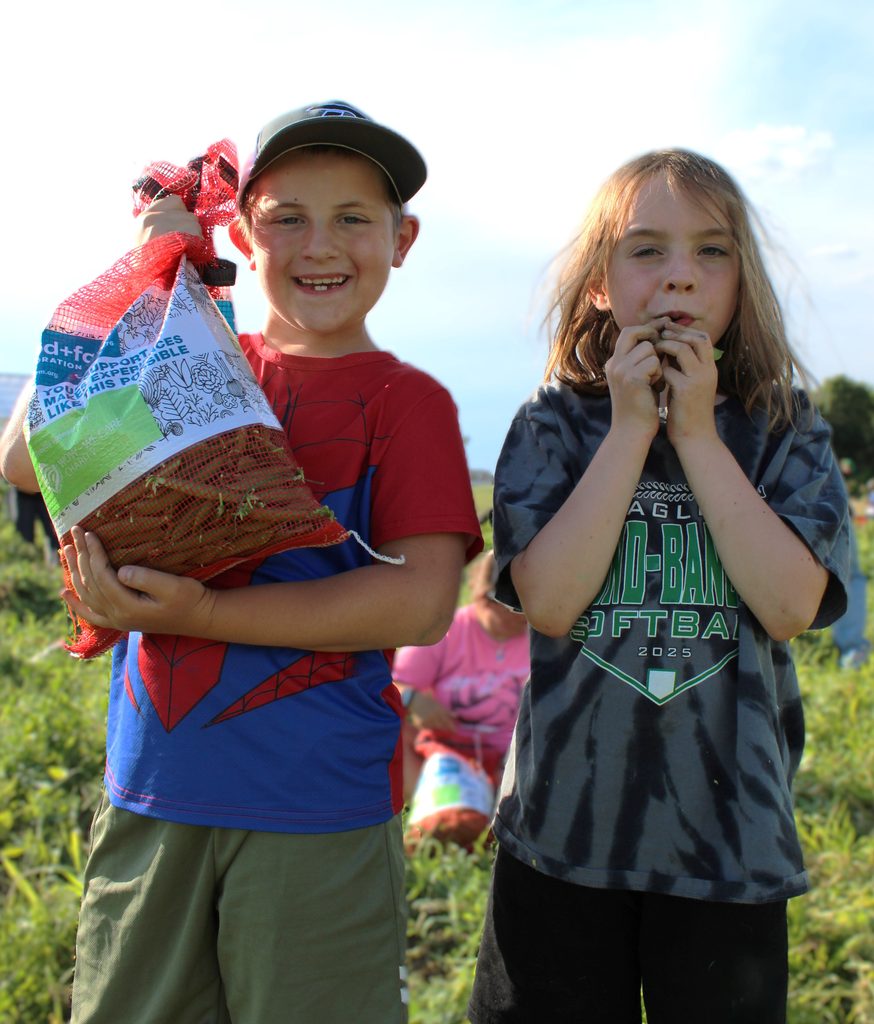
A few attendees looked like this u-pick involved more walking than they’ll do all month. Some were rolled out to the fields in wheelchairs or Gators to snag volunteer-picked produce. An older woman asked a crew-cutted football player if he’d help her pick corn. “Of course,” he replied. As they walked off to the field, he asked cheerily, “How’s your day going?”
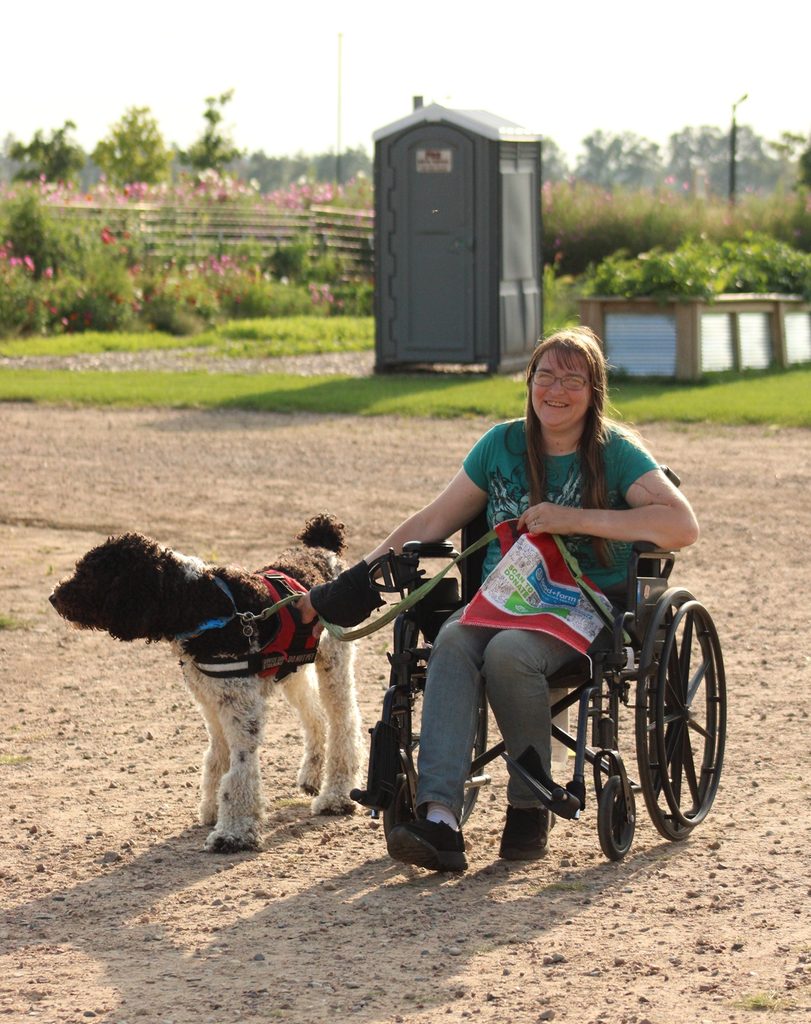
One wheelchair-bound woman brought her golden retriever and standard poodle, who sense asthma attacks before she can. Her kids loaded her chair with produce. One field away, a footballer helped a petite elderly woman whack off a cabbage with a drywall blade, reportedly the tool du jour.
Our family has a black and white photo of a baby sitting on a now antique tractor, beaming. It could be any of my aunts, uncles, grandparents, great-aunts, great-uncles, or their neighbors, and that’s why we all argue about who it really is.
In my grandparents’ day, if people weren’t farmers themselves, they were usually connected closely to someone who was. They — and often their shoulders and calves — witnessed the sunup to sundown labor it took to keep three squares on everyone’s tables.
Many more people spent summers baling or harvests detasseling corn for seed companies or Augusts through Octobers seasonal potato grading and pea picking. They knew not just the aromatic smell of a dairy but the sandy roughness of a cow’s tongue, that cow pies don’t compost so well as horse douvers (my dad’s term), the smell of grain bins on dad when he returns home white as cornflour after a 3 a.m. emergency, and most of all just how hard it is to earn your daily loaf.
That deep cultural memory is all but gone now. Just 1 percent of Americans work on farms today. Every honest job is worthy of honor, but farming cultivates gratitude in a way that earning one’s living in a climate-controlled room tapping at a screen with an endless steaming mug of anything you want at your desk does not.
Farming is one of the few jobs in our ethereal age that requires constant interaction with physical reality. The real factor might make “dirty” jobs the best jobs. My dad says constant interaction with physical realities that are often completely outside your control teaches gratitude, humility, and above all human dependence on the Almighty. Neither you or I, after all, can make it rain. Without rain, we all die. And Who made the rain to water the earth?
The more people live in virtual unreality, the less we viscerally understand about physical reality. That’s an unexamined side effect of offshoring and global supply chains. People used to making just about anything in the world show up on their doorsteps within three days so long as they have the right credit card limit are less able to grasp the many immovable limits of human existence. Our sexes are fixed. Many things about our health, dispositions, and abilities are fixed. Our family is given to us, we don’t choose them.
If you’re a farmer, the harvest — and thus your entire livelihood — is dependent on Almighty God’s protection every day from predators, diseases, hail, drought, and even too much sunshine. What’s true for farmers is true for all of us, the Holy Bible teaches.
None of us can by our own will guarantee our next breath or heartbeat. All Elon Musk’s money cannot make his soul live forever. Every person is dependent on God like newborn babies are dependent on their mothers and fathers. And every good thing we have we receive from His hand.
This people closer to the elements often understand more deeply than those of us who work with words, spreadsheets, ones, and zeroes. That’s why farming events like Becknology Days are full of Bible verses and the fifth-generation family that owns Beck’s Hybrids, America’s third-largest seed company, keeps a chaplain for staff.
When we receive gifts from God we do not deserve — like food, air, sunlight, water, and children — in a well-ordered person it will prompt a deep desire to go and do likewise. And thus generosity is the first word that comes to mind when I think of that side of my family.
Farmers are the kind of people who bring in the harvest for a family whose father was just lost in an accident, on top of needing to work 24/7 to bring in their own. They are the kind of people like a rancher we didn’t know from Adam who showed up when my family’s borrowed RV choked on an offramp in nowhere, Wyoming. Not only did he own a giant truck, he kept straps in that bad boy big enough to tow our camper to the nearest campground. And he was willing to put himself at the service of stranded strangers for nothing but a smile and a handshake.
America makes fewer of these people now. We can debate why another day. Today, we are focusing on what is good, and expressing gratitude for it. That is what Thanksgiving is for. It is a time to give, reflect on what we’ve been given, and return thanks for it to our Creator.
The thanksgiving attitude of compulsive generosity is why my family and their farming friends created the Farm+Food Center, which is a hard-to-summarize hybrid between a children’s museum, an ag expo, and a community event hub. There, even people who have no farming connections can experience modern American farming culture, science, and fun.
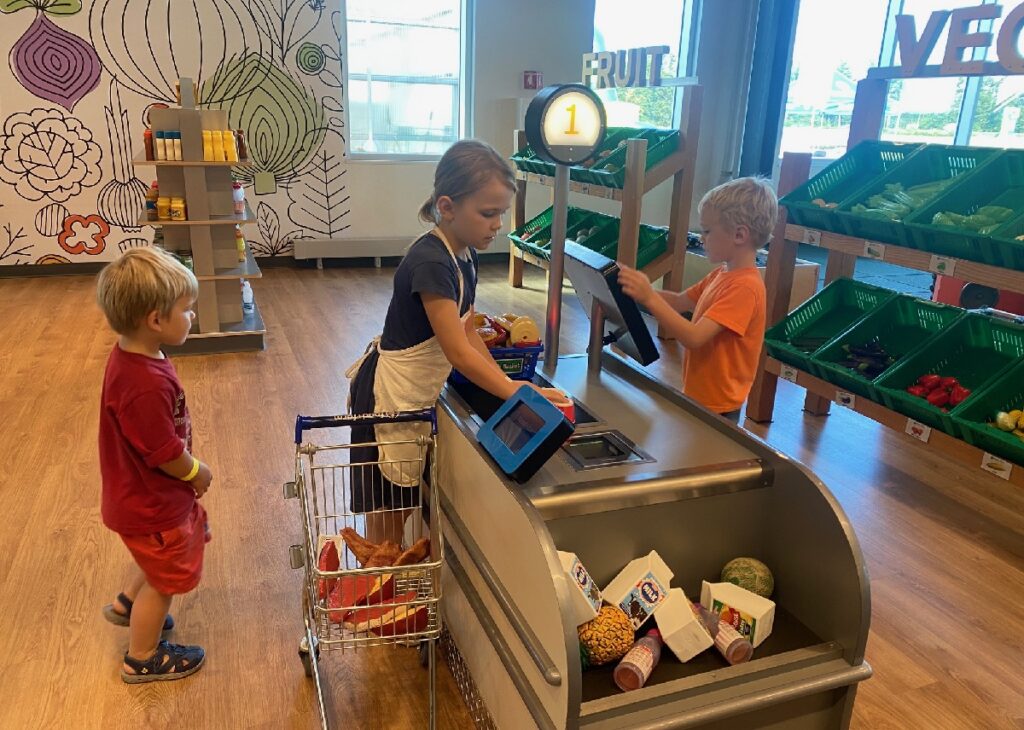
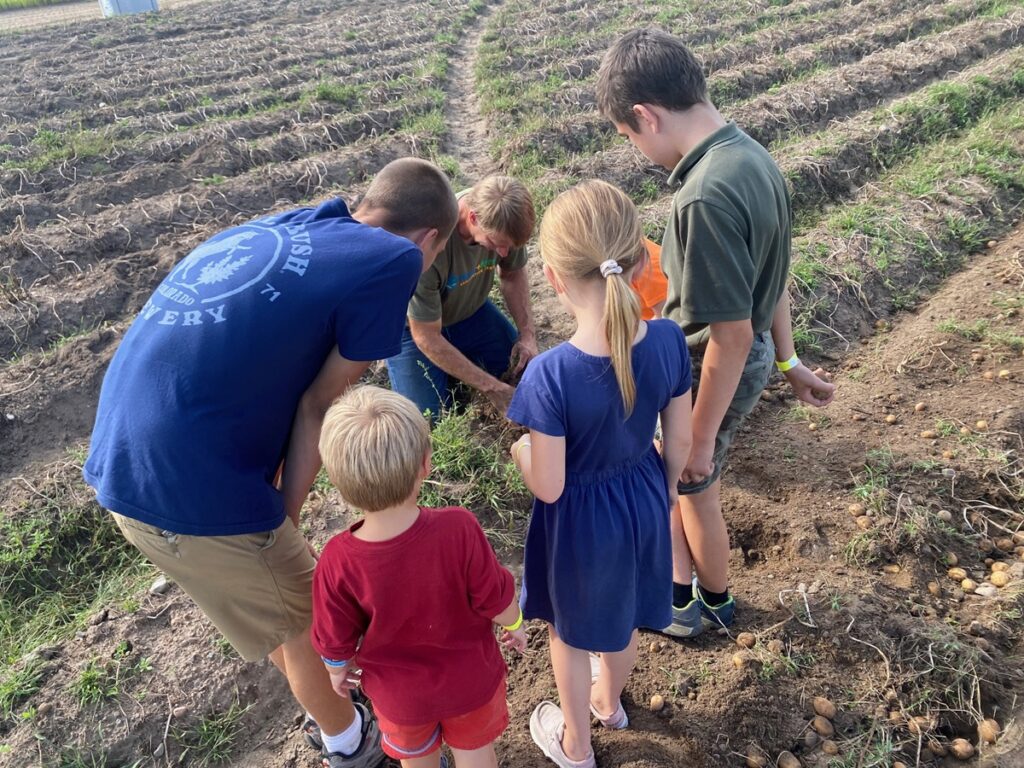
They can see how bugs adore cabbage. They can watch a tractor sift potatoes out of the ground whole, like magic. They can pick free sweet corn and green beans. They can get dirt on their shoes and sunshine on their skin. And if they want more contact with realities that turn hearts towards eternity, they can sign up for classes, volunteering, and even apprenticeships and jobs.
The family with four children ages first grade and younger walked away from that August u-pick with two five-pound mesh bags full of green beans, one full of cabbage, and one full of potatoes. It surrounded the baby’s carseat inside their canvas wagon. Those hard-working tots are not only going to eat green beans in the wintertime, now they know how green beans grow, and what it feels like to pick each one with your own hands.