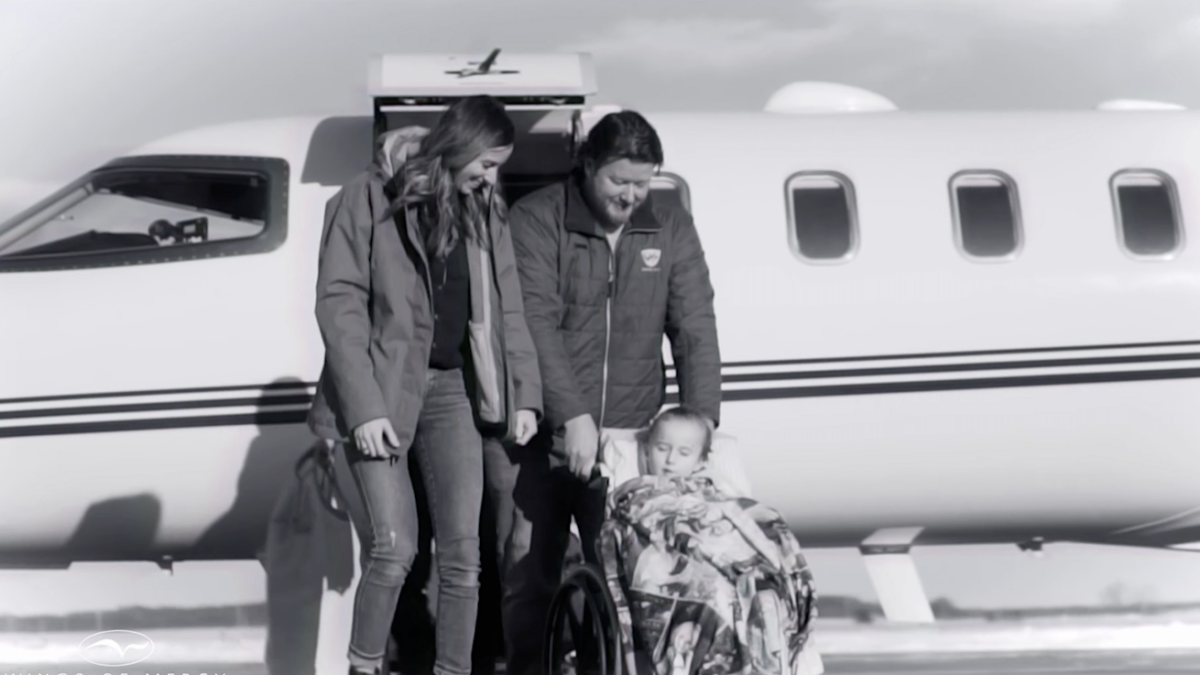

Wings of Mercy is a Michigan-based nonprofit that arranges flights for patients in need. For the past 35 years, its network of volunteer pilots has flown patients from across Michigan to appointments at the Mayo Clinic in Minnesota, the University of Wisconsin Hospital, and the Cleveland Clinic in Ohio. Wings of Mercy does not receive any money from patients or their health insurance; its operations are fully funded by private donors. But the Federal Aviation Administration (FAA) won’t let Wings of Mercy reimburse its pilots for out-of-pocket expenses such as gas, oil, or airport fees. Even accepting a free meal at the end of the flight is grounds to suspend the pilot’s license.
What’s more, the FAA recently announced a policy targeting volunteer pilots who help patients in need. Wings of Mercy and the Air Care Alliance, two nonprofits that facilitate charitable medical flights, are taking the FAA to court to protect volunteer pilots. In the process, this litigation challenges deference regimes that give administrative agencies an unfair advantage in court.
Have you ever driven a friend to a doctor’s appointment? Such acts of kindness are common despite a small cost for doing so. But what if the doctor’s office is an hour away? Some of us would refuse gas money but wouldn’t think twice about accepting free lunch from a drive-thru on the way home.
Now consider if the doctor’s office were a few states away, and several appointments were scheduled each month. This is the reality for many patients with cancer, heart disease, and other chronic conditions. Fortunately, there is a nationwide network of pilots who volunteer their time and small airplanes to transport patients in need. Unfortunately, the FAA is stifling the work of these good-hearted volunteers.
The FAA maintains that it wants to keep a strict barrier between personal and commercial flights. That’s not unreasonable in the abstract. According to the FAA, “When money is exchanged for transportation, the public expects, and the FAA demands, a higher level of safety for the flying public.” The problem comes when the FAA applies this to charitable flying. Neither the patients nor their health insurance companies pay anything for the flight. Wings of Mercy is upfront about its use of volunteer pilots and small planes. And Wings of Mercy has an excellent safety record.
Transporting patients by small plane has several benefits. Even the smallest propeller planes cruise at 120 miles per hour, cutting the travel time by car in half. That reduces an all-day drive to several hours. On longer trips, it can also avoid the need for an overnight stop. Transportation by small plane also avoids busy airport terminals and crowded coach seats, which greatly benefits immunocompromised patients. Dedicated patient flights also allow family members and caregivers to accompany patients to their appointments.
The FAA claims these regulations are in the interest of safety. But here’s the irony. FAA regulations allow a newly minted pilot with as little as 20 flight hours to complete volunteer flights so long as he or she is not reimbursed. But if a retired airline pilot with 30,000 flight hours receives even $1 in reimbursement, that flight violates FAA regulations. To the FAA, the determining factor is reimbursement, not the pilot’s experience level. A pilot’s experience influences safety much more than whether any flight costs are reimbursed.
Congress tried to fix this problem a decade ago. The FAA Modernization and Reform Act of 2012 requires the FAA to allow fuel reimbursement on charitable medical flights, subject to a few enhanced safety requirements such as the pilot’s training and experience. The FAA implemented this mandate by essentially regulating these nonprofit volunteer flights just like for-profit charter operations. That’s despite the fact that volunteer pilots are not being paid for their time and cannot receive reimbursement for indirect costs that can often exceed half of the flight’s total cost. Most volunteer pilot organizations do not have the resources to meet the regulatory compliance burden for this program, so they cannot take advantage of it.
Outside of that program, FAA regulations generally allow a pilot to cover the costs of his or her flight on a pro-rata basis. That means if a pilot flies with one passenger, the pilot can be reimbursed for half of the flight’s costs. If a pilot flies with three passengers, the pilot can be reimbursed up to three-quarters of the flight’s costs. But FAA has layered on several additional requirements by interpretation — not by amending the regulation — that make this type of reimbursement unavailable to volunteer pilots.
What’s even more concerning is the FAA’s new policy toward charitable medical flights. Last month, FAA released a National Policy titled “Surveillance for Charitable Medical Flight Exemptions.” The message from HQ is clear: FAA inspectors need to step up enforcement against volunteer pilots. This policy did not result from a crash or a near-miss incident involving a volunteer pilot. It resulted from a paperwork error by another organization that used the 2012 fuel reimbursement program. FAA swiftly cut off that organization’s ability to provide fuel reimbursement. Now, every other volunteer pilot organization is under the microscope.
For decades, administrative agencies like the FAA received deference whenever they interpreted laws or regulations. That all changed with the Supreme Court’s 2024 decision in Loper Bright Enterprises v. Raimondo. That case eliminated Chevron deference, where courts defer to an agency’s interpretation of federal law. The FAA has relied on Chevron deference to defend its misreading of the FAA Modernization and Reform Act of 2012. That ends with Wings of Mercy’s lawsuit. Wings of Mercy argues that the FAA’s interpretation is not the best reading of the statute and that it must allow fuel reimbursement for a wider range of charitable medical flights.
Although Loper Bright eliminated Chevron deference, it did not eliminate a similar deference — called Auer deference — that applies when agencies interpret their own regulations. Wings of Mercy is supporting a separate case that challenges the FAA’s attempt to amend its pro-rata reimbursement regulations by interpretation. Loper Bright requires agencies to follow the best reading of a law, not the one most convenient or most beneficial to the agency. The same “best reading” requirement should apply to regulations as well. This case provides a clean vehicle to overturn Auer deference because there is no statute governing pro-rata reimbursement rules.
These two cases will proceed on separate tracks in the Eastern District of Michigan and the Sixth Circuit. Victory in either case will bring accountability to the FAA’s unjust treatment of volunteer pilots. But more importantly, victory will allow more volunteer pilots to help more patients access lifesaving medical care.