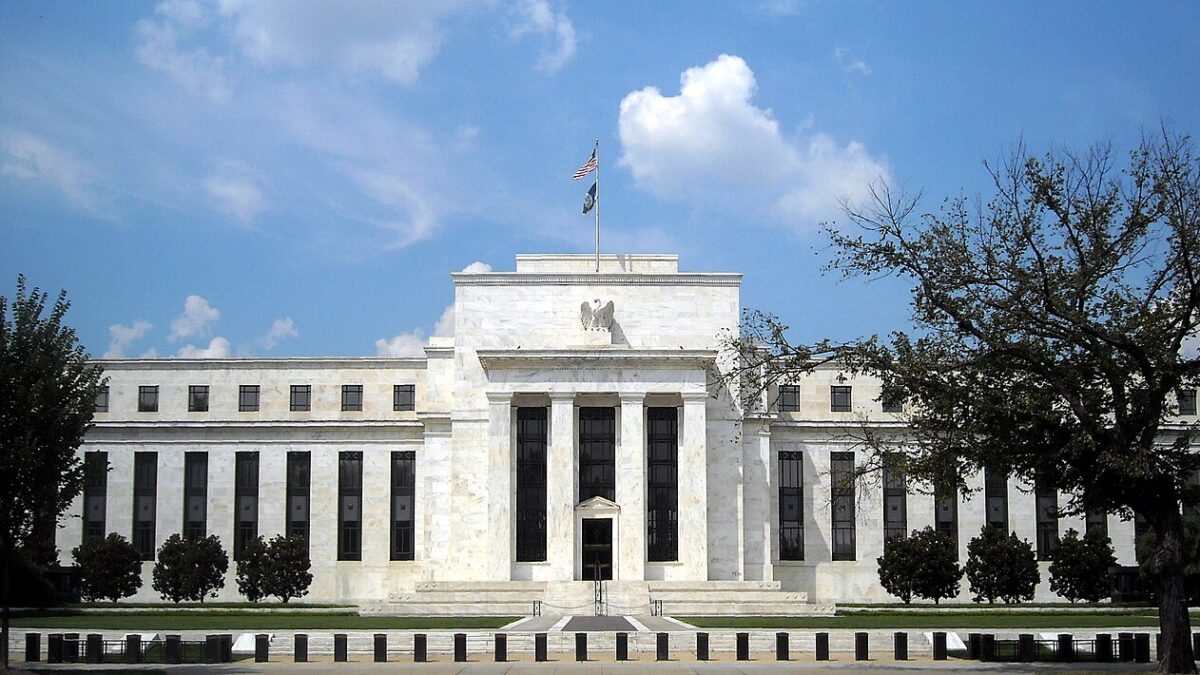

Just as President Trump has been working to make housing more affordable, the Federal Reserve threw a wrench in his plans.
Earlier this month, the central bank raised its benchmark rate a quarter point, to a range of 3.75 percent to 4.00 percent — the first hike in more than three years. Trump wanted the opposite: rates at 1 percent or lower. Unfortunately, when the cost of money rises across the economy, mortgage rates tend to follow, and so does rent.
There’s not much the White House can do about the central bank’s decision. However, there’s a lot it can still do about the price of housing itself. It can still fight the negative effects of the Fed’s rate hike with policy decisions that will make a measurable difference before the midterms.
Reducing Regulation
First, the Trump administration can continue making it easier to build housing.
America’s housing affordability problem is fundamentally intertwined with supply. When local rules, lengthy permitting processes, and federal regulations make new homes slower or more expensive to build, those costs eventually show up in what Americans pay.
President Trump has already started attacking this problem. In March, he signed an executive order directing federal agencies to review and streamline regulations affecting residential construction, including environmental reviews, permitting requirements, building standards, and rules governing manufactured housing.
Now his administration should make implementation a priority. It should use every federal lever available to encourage states and municipalities to shorten permitting timelines, cut unnecessary fees, and make it easier for builders to put new homes on the market.
Creating Competition
Second, the Trump White House can make sure Americans can actually see and compete for the homes that already exist.
Associate Attorney General Stanley Woodward and the Justice Department’s Antitrust Division should examine whether dominant players in the real estate industry are limiting competition or restricting consumers’ access to housing inventory.
Brokers are the companies that help people buy and sell houses, while a multiple listing service (MLS) is essentially the giant database they use to share homes for sale with one another, and which helps feed listings to the websites ordinary Americans use to hunt for homes.
Rep. Scott Fitzgerald, R-Wis., who chairs the House Subcommittee on the Administrative State, Regulatory Reform, and Antitrust, has already scrutinized Compass (the country’s largest residential brokerage) and Midwest Real Estate Data (one of the nation’s largest MLSes), over their private-listing partnership. Fitzgerald’s inquiry asks whether moving more homes into private networks (basically, putting homes behind a paywall) could significantly restrict consumer access to listings and raise competition concerns.
When homes represented by the nation’s most dominant brokerage are increasingly kept off the open MLS, buyers working with its competitors have a harder time finding or accessing those properties. That creates an incentive for buyers to work with the brokerage that controls the private listings in the first place. If this isn’t an antitrust violation, then what is?
If powerful companies with monopoly power are coordinating in ways that wall off housing inventory, limit consumer choice, and weaken competition just so bigger companies can get just a tad bigger and wealthier, that is exactly the kind of conduct the Trump administration’s antitrust officials should examine.
Costs of a Mortgage
Third, the administration should attack the hidden costs of getting a mortgage.
Interest rates get most of the attention, but they aren’t the only thing determining what Americans pay to finance a home. Regulations governing mortgage origination, servicing, documentation, and bank lending can also increase costs or make credit harder to obtain.
President Trump has already ordered federal regulators to examine that problem, particularly for smaller and community banks. His March executive order on mortgage credit directs regulators to consider streamlining mortgage rules, modernizing documentation requirements, and reducing regulatory barriers that discourage smaller banks from making home loans.
That effort should move quickly. More lenders competing for borrowers, lower compliance costs, and simpler mortgage rules could help reduce financing expenses even when the Fed refuses to cooperate.
The Federal Reserve may set its benchmark interest rate, but it doesn’t control America’s entire housing market. Washington cannot solve every housing problem on its own; zoning and land-use restrictions remain largely state and local matters. But the federal government still has meaningful tools at its disposal to make a difference.
The time is now to throw the kitchen sink at the housing industry and ensure the central bank can’t get away with pulling the American Dream of homeownership — or even just renting safe, affordable housing — out of reach of even more Americans.