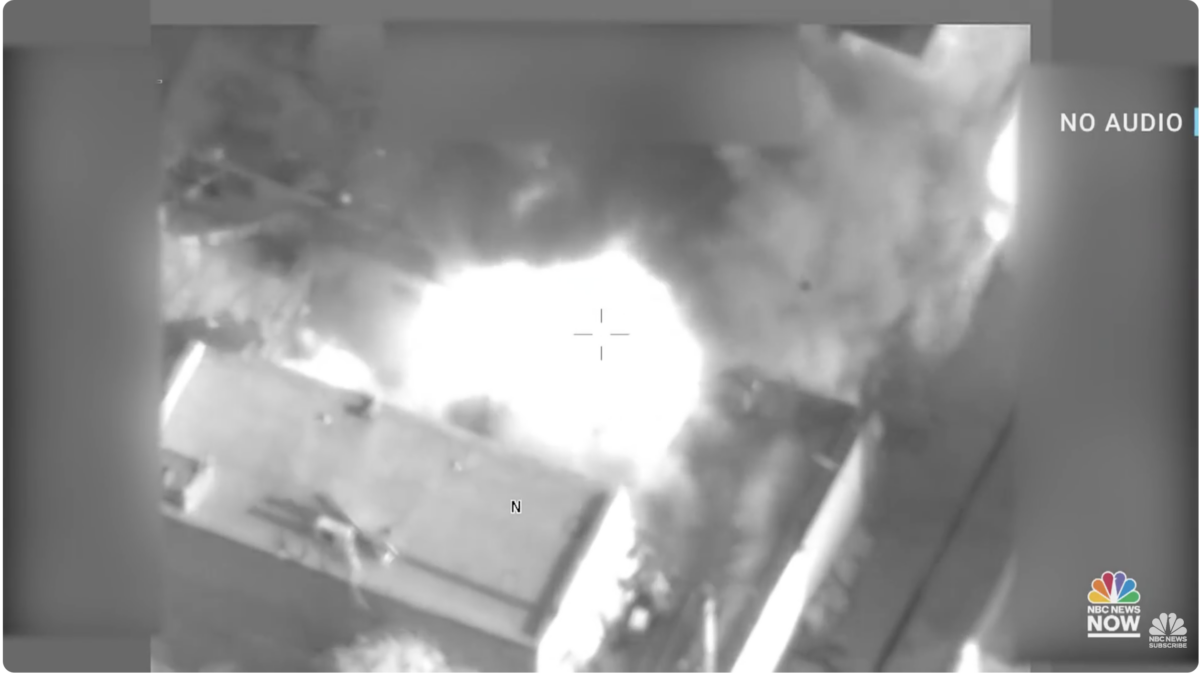

Since the United States went to war with Iran in late February, the Strait of Hormuz has been effectively closed, the Red Sea route has come under fire, and on Sept. 10 drones knocked out the Saudi pipeline that carried millions of barrels a day around Hormuz. Retail diesel just set an all-time record. Washington has spent seven months managing the price instead of the shortage: the largest coordinated reserve release in history, shipping-law waivers, a peace memorandum that didn’t hold, and public pressure on producers to cut what they charge. Each move took the price down for a few days. None of them added an additional barrel to the market. Along the way we starved the one mechanism that reliably ends a shortage: increasing supply.
That mechanism isn’t complicated. Supply gets tight. Prices rise. Higher prices make marginal wells economic, so capital commits to drilling programs, programs put rigs to work, and barrels arrive. The new supply pushes prices back down on its own, and the country restocks along the way. No governmental authority administers that. Thousands of drilling operators decide independently whether the number works, and that has bailed this country out of every supply shock in my lifetime. This year, this mechanism has barely been allowed to run.
Look at what should be the strongest signal in a generation: American refineries have run near 97 percent of capacity for more than a month. The Strategic Petroleum Reserve sits at 285 million barrels, the lowest since 1982, back when we were still filling it. Add it to commercial stocks and the country holds less crude than at any point in the weekly record going back to 1990. That is a screaming shortage.
Now look at the response. Over the past year, the country has added 34 oil rigs. Thirty-four, against a war, a closed strait, and the thinnest crude position on record. People outside this business read that as greed or timidity. In reality, drilling operators are hesitating to add more oil rigs because they question whether the price will last long enough to justify the commitment.
Nobody drills one well. An operator commits a program: rig contracts, completion crews, takeaway capacity and permits, ramped up over quarters and running well past the payback on any single well.
Until this month, every rally was talked down inside a news cycle. A statement from the White House about a deal with Iran that then fell through. A release from a strategic oil reserve we could no longer afford to draw. A president telling the largest producers they “ought to give some of that [profit] back” to consumers. The barrels behind Hormuz didn’t move because somebody posted something. What actually happened is that the market signal died before any capital could commit to it, and the thing that would have fixed the shortage never got funded by public and private industry.
Prices Now
September has been a test of the alternative. Brent crude, an oil pricing indicator, broke above $100 when the Saudi pipeline went down, for the first time since May. The rig count has risen two weeks running to its highest since May 2024. It’s the first stretch all year where operators are acting like they believe the price. It will stop the moment Washington decides the price is its problem to fix.
Meanwhile the books are balancing a different way. Commercial crude inventories sit right at their five-year average, largely because 130 million barrels have come out of the emergency reserve since February. We moved oil from the savings account to the checking account and called it stability. The rest is coming out of consumption. Retail diesel hit $6.29 a gallon last week, the highest since the government began tracking it in 1994 and up about 65 percent since the war began, while diesel demand is running 3.3 percent below a year ago. Diesel moves things rather than people, and that cost rides into everything it hauls. The market is clearing by making people poorer instead of by making more oil.
Now, our reserve is at a 1982 level, and the wells that would have covered the gap were never drilled. A postponed correction doesn’t get smaller. It compounds, and by the time it arrives, the price needed to bring capital in is far larger.
We’ve run the experiment both ways. Federal price controls in the 1970s gave us long lines for gas. President Jimmy Carter began phasing those controls out in 1979, and Ronald Reagan ended what was left of them on his ninth day in office. The U.S. rig count climbed to an all-time record above 4,500 by the end of 1981, and the price of oil fell every year for the next five. With oil near $100 from 2011 to 2014, American producers added close to 4 million barrels a day, and by early 2015 the price had been cut in half. Washington engineered neither outcome. It got out of the way.
Five Options
Getting out of the way now means five things. First, the government should stop talking the price down. Boards don’t commit capital to a price that’s temporary by political choice.
Second, take the windfall profits tax off the table. The Big Oil Windfall Profits Tax Act now in the Senate would take half of every dollar the largest producers earn above last year’s average oil price. We tried this in 1980. The Congressional Research Service found that tax reduced domestic production, increased our dependence on imports, and netted about $38 billion, not the $175 billion projected, before Congress repealed it in 1988.
Third, quit using the Strategic Petroleum Reserve as a price tool and publish a refill plan. After the 2022 drawdown, the Energy Department began buying oil for future delivery at fixed prices so producers could invest knowing the price was locked. Do it again, at scale, for 2027 and 2028.
Fourth, fix permitting. Permit decisions on federal land should take weeks, and pipeline approvals should survive a change of administration.
Fifth, write energy purchases into every trade and security agreement. If a country wants access to the American market or the protection of the American military, it should commit to buying American oil and gas over the long term. Last year the European Union pledged $750 billion in U.S. energy purchases over three years. Make that the standard.
High prices are unpleasant. They are also the only tool that reliably ends a shortage. Every time we make them go away without adding a single barrel, we choose a bigger problem later in exchange for a smaller one now. Let the market signal work. It’s been doing this a lot longer than any of us have been arguing about it.