
Abandonment is a dominant theme of our age, and most of it is government-enabled. Adults abandon their own children and spouses en masse through no-responsibility divorce, subsidized indolence, and abortion. Children abandon parents to old folks’ homes, some visiting rarely. And parents abandon children to daycare from birth, screentime with deranged strangers, and public schools that increasingly function like orphanages.
So it should be no surprise there’s now a trend of children abandoning non-abusive family members. The “no contact” movement is another logical outcome of the sexual revolution and “Me Generation’s” firm belief that people are objects to use rather than sacred souls born or vowed into lifetime obligations.
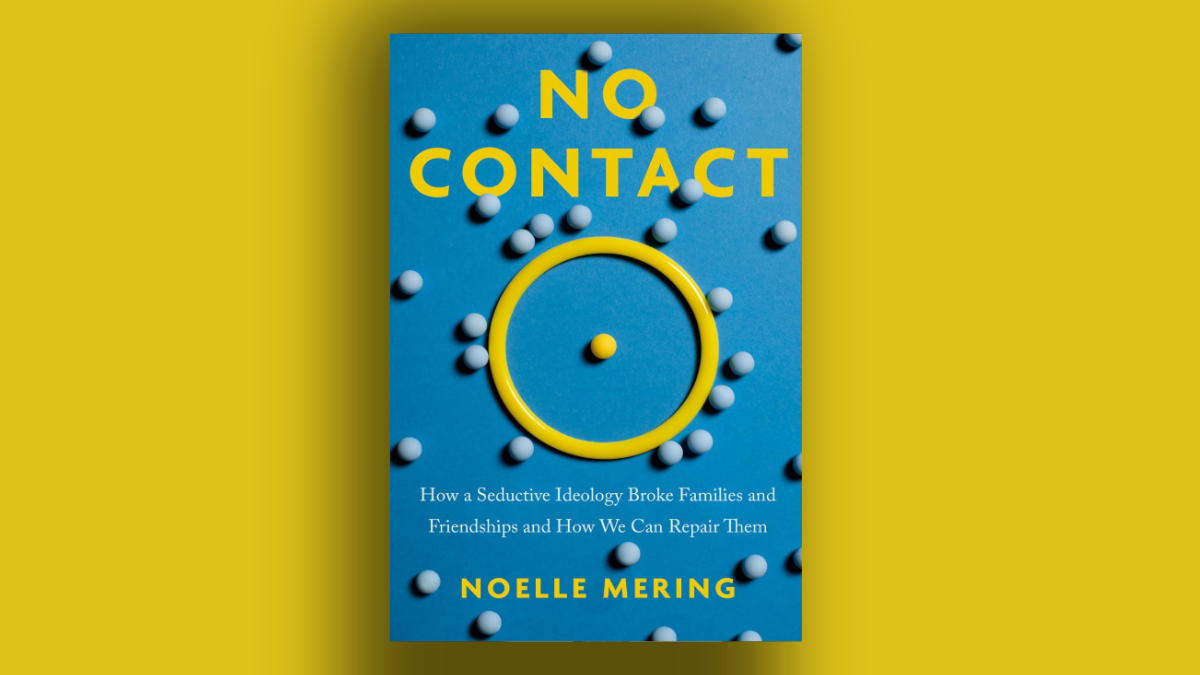
No Contact, a book out Sept. 8 by regular Federalist contributor Noelle Mering, explores this trend in the generous, apolitical style of Abigail Shrier’s 2024 bestseller, Bad Therapy. Mering notes the majority of family cutoffs today are driven by cultural Marxism. This means most kids who go “no contact” today are triggered by religious and political disagreements, such as family members’ unwillingness to enthusiastically endorse LGBTQ behaviors and disinclination to vote for Democrats.
One of Noelle’s gifts is taking seriously the perspective of those she critiques, a relationship art and discussion tone that is rare today. She is good at understanding and explaining without judgement how someone could arrive at an action as extreme-sounding as cutting off his dad for watching Fox News. Mering explains, “Today, political disputes are not merely about means but about ends — dealing with questions that go directly to the heart of what it means to be human… Increasingly, younger people project this concept of political alignment as the determinant of moral stature onto an older generation that generally doesn’t view disagreements in the same way” (emphasis original).
Appropriating Trauma and Abuse
One of my favorite sections explores the phenomenon of “broadening the definition of trauma.” As Noelle notes in chapter 3, “Therapy-speak has come to pervade everyday conversation.” While some good may come from this, some evil has, too. One of the evils has been people choosing to label as “abuse” or “trauma” things that are objectively not abuse or trauma. This is not only lying, it is cruel to people who experience genuine abuse by trivializing their experiences.
“Discomfort is pathologized, challenging relationships are toxic, everyday struggles point to childhood trauma, and ideological dissent is framed as psychological violence or genocide,” Noelle notes of the prevailing attitude. Such behaviors are markers of the West’s psychologization of spiritual problems and consequent weaponization of therapeutic language.
When Western culture abandoned Christianity, it needed to enforce standards somehow. So psychology became one substitute. The problem is, without a objective moral standard outside psychology to inform its judgments (i.e., a theology), psychology just descends into a power play, yet another system of symbols used to manipulate others rather than an objective standard to which all must conform for social happiness.
As Mering notes, citing philosopher Josef Pieper, “The abuse of language is a precursor to abuse of power. Once words are no longer bound to reality, they become weapons used to shape perception, suppress dissent, and seduce people into submission.”
So this toxic-therapeutic phenomenon largely comprises narcissistic individuals projecting their selfishness onto others, blaming their victims for the real narcissists’ actions. It can be very disorienting for a decent person to be called a narcissist by the real narcissist, because people with functioning moral standards take such accusations and their loved ones’ feelings seriously. This gives wicked people the whip hand over honest people, allowing them to harm others while claiming those they hurt are the real problem.
Noelle is gentler than this reviewer about exploring this dynamic and many of the factors that enable it, without obscuring its deep dysfunction: “Imagine a child walking on eggshells around an unpredictable parent, fearing their rejection or rage,” she writes. “Now reverse the roles. The toxicity becomes unmistakable: the authority these adult children wield mirrors the very authoritarianism they claim to oppose.”
Ostracism For Righteousness
Since time immemorial, societies have rightly ostracized people who refuse to abide by or even acknowledge moral norms such as working to provide for oneself and refraining from unjust violence. Mering makes clear that her book is not about situations in which justice and safety for the vulnerable require separation from unreformed chronic offenders — for example, refusing to allow a gambler to access the family finances and keeping children from perverts.
The key problem is that the left today groups people who disagree with their civilization-destroying practices with behavior that may warrant ostracism. Voting for Trump, they say, makes you a Nazi and Confederate. Declining to endorse transgender mutilation, the mass manufacture of children for unrelated adults to purchase, and pre-teens stripping for adults is psychotic, irrational, unhinged hate.
The truth is, Donald Trump is not a Nazi, and it’s insane to claim so. It’s loving to protect kids and bodies from the gross abuses the queer agenda demands. These are reasonable and moral positions, but the left doesn’t care about reason. That’s why it won’t engage in dialogue. It just moves past dialogue to withdrawal or inflicting pain on those they see as enemies.
That’s why leftists beat up people who disagree with their way of life by screaming false names at them like “bigot” and “hater.” This is an article of ignorant faith with them, not of reason, because when subjected to even the tiniest bits of reason (such as that men and women are different), their beliefs collapse. They don’t care about truth. They just want power. It is the political coalition of the addict or screaming toddler.
Today’s left has constructed an immoral fantasy universe that labels fundamental tenets of Christianity and natural laws evil. So leftism has become just another pagan religion that competes with and works to stamp out Christianity. This means “no contact” is simply Marxist cancel culture applied to homes and families. It is a tool of religious hatred that works to punish righteousness and advance evil, under the guise of doing the opposite.
Underneath, a Spiritual Crisis
All this is a relationship, family, cultural, and political crisis, to be sure, but underneath all that it is a spiritual crisis. The spiritual problem is the spiteful, indeed demonic rejection of the only religion that can form the basis for spiritual and social freedom — Christianity.
The proper way to respond to spiritual problems is with spiritual tools: prayer, righteous living, reading the Bible, attending church avidly, speaking the truth with love. Mering is excellent at modeling and counseling speaking the truth in love, and at commending her readers to self-reflection and repentance.
If this were a more directly spiritual book, in keeping with the realities underlying this cultural trend, it would have benefitted from more discussion of other tools for dealing with open rebellion against familial duties. These include spiritual resistance through Bible-commanded actions such as private and public rebuke, fasting, scripture memorization, hymn and Psalm-singing, church attendance beyond Sundays, individual confession and absolution to relieve guilty consciences, and fervent individual and corporate prayer.