A federal judge Thursday blocked an election integrity measure from the United States Postal Service (USPS) just days after the U.S. Supreme Court lifted that same judge’s injunction on the policy.
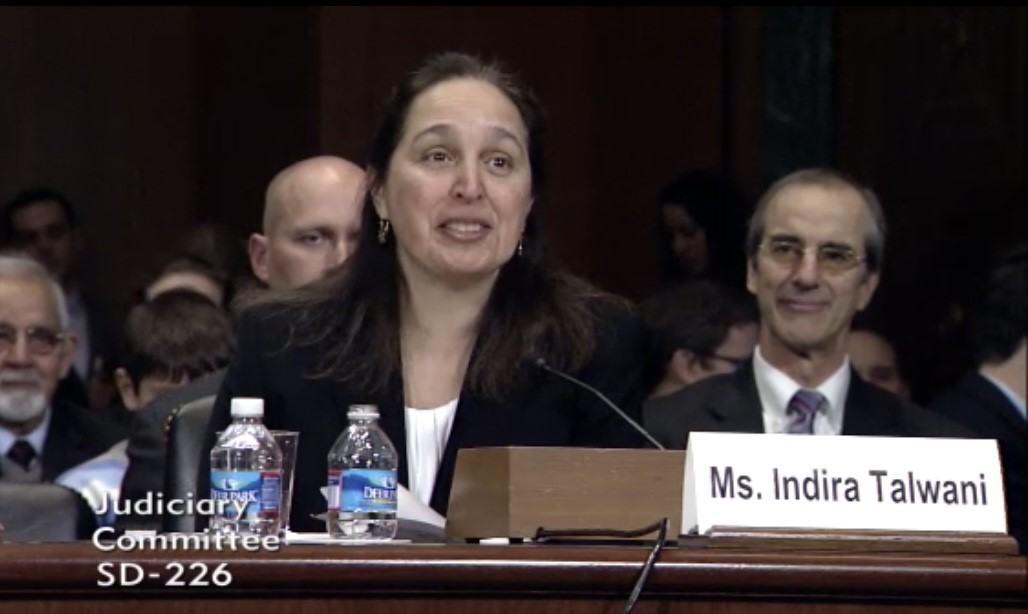
U.S. District Court Judge Indira Talwani, an Obama appointee and past Democrat donor in Massachusetts, issued a temporary restraining order on a USPS rule that would require states to provide basic voter data to the Postal Service, as well as change ballot envelopes to include unique barcodes associated with individual voters’ profiles, in an effort to start securing voting by mail.
Talwani had already issued an injunction on the policy before it was even finalized, and the Supreme Court barred this injunction. But Talwani is back now with a new injunction after the policy came out, claiming such publication satisfies the high court’s concerns that the judicial branch only reviews “final rules, not proposed rules,” and arguing that SCOTUS did not answer the question on the merits of the policy itself.
The Trump administration announced Friday it would be appealing Talwani’s decision.
Even Talwani’s review of what USPS is asking for shows how simple the USPS requirements are. Far from anything required in the SAVE America Act, which would require proof of citizenship among other things, USPS’s final rule simply requires the submission of the name of the voter, his address, and a unique barcode. It does not even verify the address, and does not check or alter voter eligibility in the states. Yet Talwani railed against these basic standards:
Through the Final Rule, the USPS is refusing to send mail ballots to eligible voters unless States or local election officials submit their mail ballot envelopes and return envelopes and receive advance approval from the USPS without regard to impending deadlines for the November 3, 2026 election. [Citation removed]. Additionally, the Final Rule requires elections officials to create accounts for a new electronic portal, certify that they have received approval regarding the mail ballot design, and thereafter upload to the USPS portal each voter’s information, including name, address, and a unique intelligent mail barcode.
Talwani called compliance before the midterms “practically impossible,” and claimed that “the record continues to lack any evidence regarding fraudulent absentee or mail-in voting. … The USPS’s interest in correcting an unsubstantiated problem through likely unconstitutional means is dwarfed by the overwhelming risk of pervasive disenfranchisement of citizens who need access to mail ballots in order to vote.”
The Massachusetts judge overlooked the fact that mail-in voting is the least secure method of voting, resulting in multiple ballots being sent to the same person or address and countless ballots being mailed to the incorrect people, sometimes even out of the state.
The restraining order is set for 14 days, stopping USPS from requiring states to comply with the bar code and voter data requirements. According to SCOTUS Wire, Talwani will also consider a longer injunction Sept. 3.
After Trump issued an executive order directing USPS and other federal agencies to implement election integrity measures, Democrat-run states and left-wing organizations like the League of Women Voters filed suit in federal court in an attempt to block the measures.