
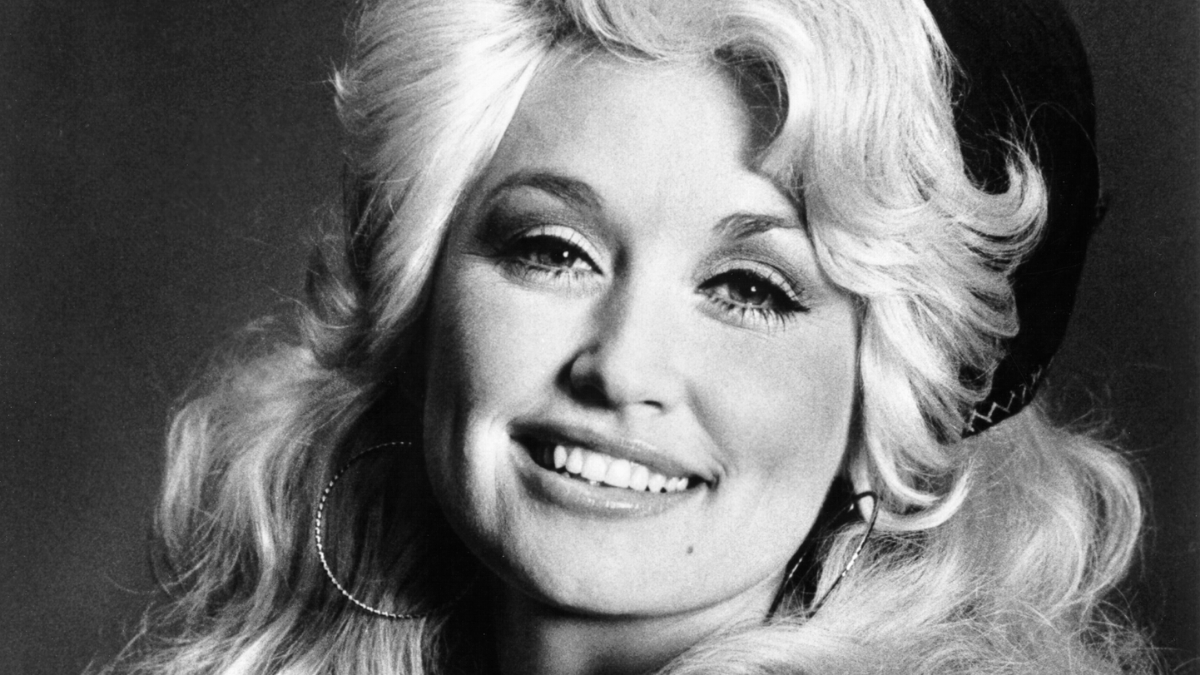

When I think of Dolly Parton, two things come to mind besides her iconic music. First, this photo, which appeared in a copy of Southern Living Magazine that I found on my grandmother’s coffee table as a young teenager, and which inspired me to cake my adolescent eyelids in sparkly white eyeshadow for months afterward. And second, her performance as Truvy Jones, the beauty shop owner and all-around community holder-togetherer in the 1989 masterpiece Steel Magnolias.
The movie is full of beloved and humorous archetypes of Southern women, and if you haven’t seen it, stop what you’re doing and go watch it, in Dolly’s memory. But none capture the heart of their subject material quite like Dolly, who was effectively hired to play herself, as she discussed in her memoir. Truvy Jones owns the beauty shop that functions as the preeminent third place for the women of her small Louisiana town, and we meet her with curlers piled high on her head, bantering good-naturedly with her husband. Like a true Southern matriarch, her wit is as sharp as her eyeliner. Her one-liners alone are worth watching the movie for:
Louie brought his new girlfriend over, and the nicest thing I can say about her is all her tattoos are spelled correctly.
When it comes to pain and suffering, she’s right up there with Elizabeth Taylor.
There’s so much static electricity in this room, I pick up everything but boys and money.
They may be scripted lines, but she was just as funny in real life:
Dolly was strong and feminine in equal measure, confident and larger than life but never abrasive or mannish. She was spunky but always warm, fiercely independent but always making people feel needed. She shied away from letting people label her a feminist, once retorting indignantly that she loved men. Her career was nothing short of revolutionary, but she never acted like she had something to prove. She just loved being a woman, and her iconic wigs, makeup, and cup size were all part of the way she cheekily reminded the world of it. When a young fan asked if she ever wished she’d been born a man, she laughed and said if she had, she would have ended up a drag queen.
My Southern grandmother would never have put it in those terms, but the generations of women I grew up admiring all possessed that same disarming femininity. They worked hard and without complaint, and they looked so good doing it. They were humble, but never to be underestimated. Like Parton, they took their Christian faith and obligation to Christian charity seriously. Above all, they believed that being a woman was a gift to be enjoyed, not an obstacle to be overcome.
And they were tough — in the quiet kind of way that you never doubt but still surprises you, and never detracting from their womanly gentility. Like Dolly, many of them had grown up in rural America. One such woman I knew, who was so universally known and beloved that the local paper simply referred to her as “Ms. Ann” in the headline of her obituary, was known to eat squirrel in her youth just like Parton did. She was also known as one of the most accomplished ladies the town had ever raised.
The matriarchs of my childhood all came of age, like Dolly, in the throes of the feminist revolution, but understood that the greatest power and influence was to be found at home in their families and communities. My grandmother left a short but successful career in missile intelligence at the height of the Space Race in Cape Canaveral to start a family with my grandfather, and doing so was the joy of her life.
While Parton and her beloved husband Carl Dean never had biological children — she hinted that they were unable to — she assumed an active motherly role to many in her extended family and her beloved Tennessee community. From her Imagination Library to Dollywood to the many, many stories of her personal investment in any young person in her orbit, Dolly left no doubt that the people she loved were her greatest pride. She felt a debt of love to the world that raised her, and unlike so many stars, spent her whole life embracing her humble roots.
Above all, she left us with the impression that she was just grateful to be here. Dolly’s character may have told Daryl Hannah in Steel Magnolias that there’s “no such thing as natural beauty,” but her own joie de vivre proved otherwise. May we all be so lucky to know, become, and raise women like her.



.jpg)