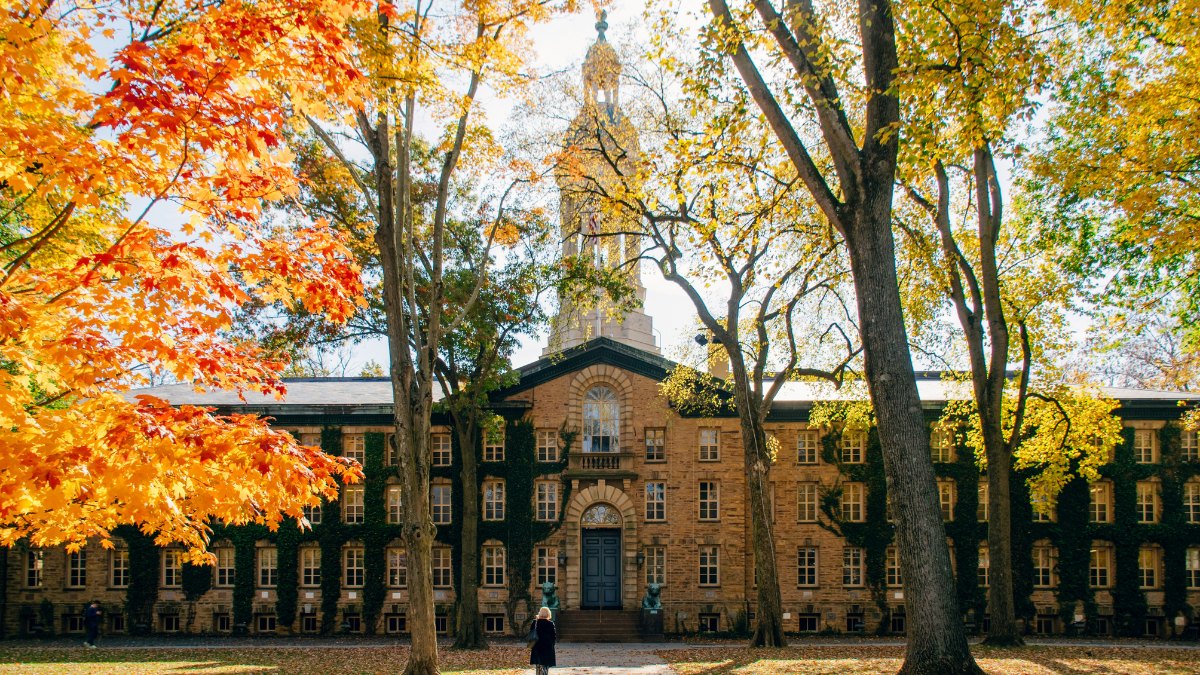

Princeton University’s decision to end unproctored examinations on July 1 due to students’ increased usage of artificial intelligence and their failure to report peers for cheating reveals a lack of honor at American universities.
Cheating is not a new problem. In fact, students created Princeton’s honor code 133 years ago to combat the problem of dishonesty in the college and to hold students accountable for their actions. While AI and social media have aided the increase in cheating, they are not the sole reasons for it. Students will always have an excuse to cheat. That is why honor is needed.
At the end of all examinations Princeton students submit, they must write: “I pledge my honor that I have not violated the honor code during this examination.” Obviously, if students are willing to write this statement after they cheat, then there is a disconnect between students and their conception of honor.
In a letter to the faculty advisory committee on policy, Princeton Dean Michael Gordin said “significant numbers” of students and faculty reported that “cheating on in-class exams has become widespread.”
“Commonly cited are the advent of generative artificial intelligence products which significantly lower the barrier to gaining unfair advantage in the context of an in-class examination,” Gordin said in the letter. “The ease of access of these tools on a small personal device have also changed the external appearance of misconduct during an examination, which is much harder for other students to observe (and hence to report).”
Gordin also cited social media as a cause of the decline of the university’s honor system, arguing that online platforms have “reportedly deterred students from reporting openly out of apprehension of doxxing or shaming among their peer groups.”
Due to this, the honor committee and the office of the dean of undergraduate students struggle “to follow up on concerns,” Gordin said.
But AI and social media should not take the brunt of the blame for students’ increased cheating on exams. There will always be reasons and ways for students to cheat on exams.
During my first week of orientation at Hillsdale College, the school faculty gave my peers and me a document to sign: the honor code. When a society stops valuing honor, people have less motivation to live honorable lives. While it would be nice for everyone to do the right thing even when no one is watching, humans often need an external force to check their actions and keep them on the right path.
A senior who spoke at my freshman convocation warned us that the college was just one class away from ruining the college’s culture of honor. The honor code allows students to leave their backpacks outside the dining hall without risk of someone stealing them. It lets students use their phones to save spots at tables. It allows professors to leave the classroom when students are taking an examination. The list goes on.
Hillsdale’s honor code stresses self-governance and integrity. In a world where getting ahead by any means is condoned, it was refreshing to hear that professors upheld the values of honesty and integrity.
Barbara Barrow, former chairman of Princeton’s student-run honor committee, said that Princeton students suggested the honor code in 1893, during a time of “widespread cheating” at the college. “An honor code is only as valid and effective as those who exist under it choose it to be,” Barrow wrote in a 1980 issue of the college newspaper The Daily Princetonian. “If Princeton is no longer populated by honorable people who exhibit a strong code of moral ethics and are willing to abide by that moral code, then perhaps the honor system is an anachronism. Frankly, I do not believe that Princeton has become that kind of place.”
In a 2025 survey of roughly 500 graduating seniors conducted by The Daily Princetonian, roughly 30 percent of seniors said they cheated at least once during their time at Princeton University. The number of students who said they utilized ChatGPT when it was disallowed increased to approximately 28 percent, rising by 12.5 percent from the previous year.
This follows the nationwide trend of instituting proctoring for in-person exams at schools that prided themselves on hosting unproctored examinations. For instance, Stanford University will allow proctors for all in-person exams starting this fall.
If we expect our leaders to act honorably, then we must embody the same values. Students who cannot govern themselves in the classroom will face moral dilemmas elsewhere.