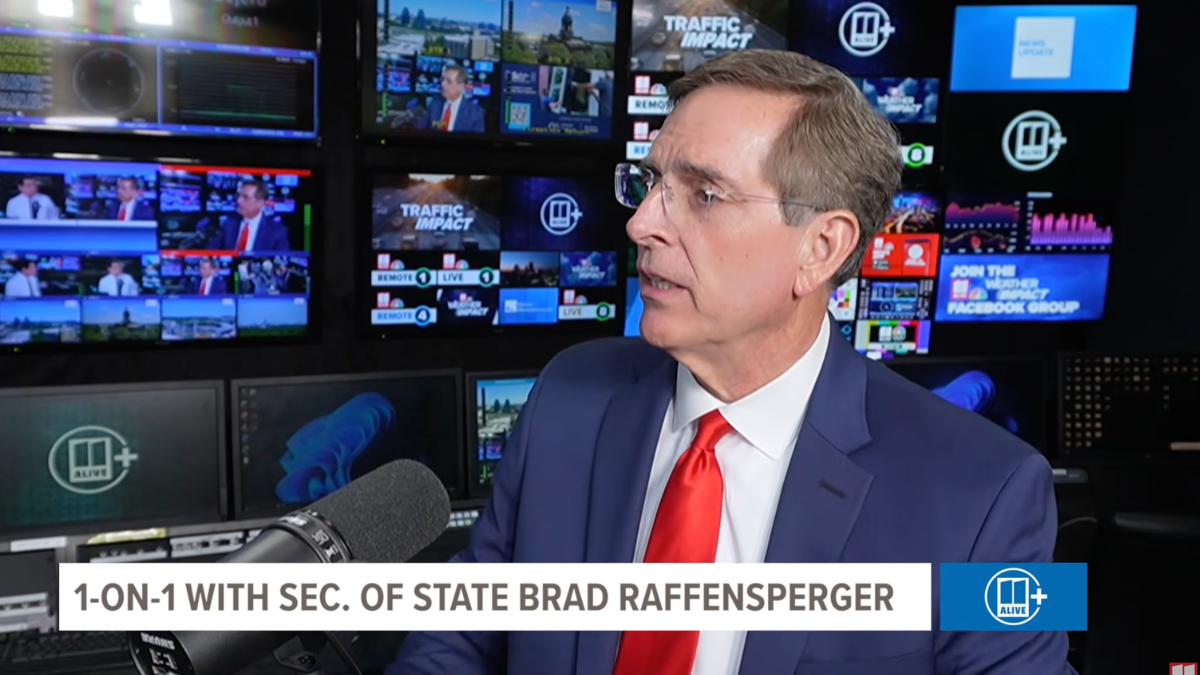

Members of the Georgia State Election Board (SEB) have been blocked from observing the compilation of vote totals in the state’s primary election this week, according to state GOP Chairman Josh McKoon, who demanded Secretary of State Brad Raffensperger reverse the decision. McKoon called the denial of access to the Election Night Reporting Room “outrageous” and “an unacceptable assault on transparency and a direct threat to the integrity of Georgia’s elections.”
The secretary of state’s secure, centralized Election Night Reporting Room — known in Georgia election circles as “the Bunker” — is an underground facility on the east side of Atlanta where votes from Georgia’s 159 counties are aggregated in real time and statewide results are prepared for public release. On election nights, a small team of SOS staff monitors the process in a conference-room-style setting as final numbers roll in.
A sitting member of the SEB quickly amplified McKoon’s demand. Salleigh Grubbs, who also serves as the Georgia Republican Party’s first vice chair, posted that she was “shocked to be told that the final tabulation of Georgia votes … is done behind closed doors, without transparency, independent observation and accountability.”
“If there’s nothing to hide — you hide nothing,” Grubbs wrote, urging Georgians to contact the secretary of state’s office and demand observer access.
Holly Kesler, a prominent grassroots elections integrity advocate, followed with a detailed legal and practical call to action. She cited two specific statutes: O.C.G.A. § 21-2-408, which guarantees poll watchers access to polling places and tabulation centers, and O.C.G.A. § 21-2-30, which charges the SEB with “ensuring uniform, lawful, and transparent” elections. She encouraged supporters to call the secretary of state’s office at 404-656-2881 or email immediately to insist on full observer access to the Bunker “so every Georgian can have full confidence in the results.”
In response to a request for comment, Raffensperger’s Communications Director Robert Sinners suggested reaching out to the attorney general’s office for a “formal opinion” with “written guidance.” He stated that “Secretary Raffensperger had nothing to do with this decision, like most things he seems to get blamed for by simply having a backbone and standing up to nonsense.” Sinners continued: “No tabulation happens at the location being mentioned. Not one ballot, not one count. If these SEB members were serious about their concerns, they would spend their time where the ballots are — at the tabulation centers in large counties on Election Day.”
The jab reflects the ongoing animosity and dysfunction between the board and the secretary of state’s office, which sometimes boils over into public comment.
An inquiry sent to Kara Murray, communications director for Attorney General Chris Carr — who is one of Raffensperger’s opponents in the Republican gubernatorial primary — received no response. Furthermore, a search online yielded no recent AG opinion on the subject. When Sinners was asked to provide a copy of the opinion the secretary of state is relying on, he said he didn’t have it and suggested contacting the board.
When questioned about the matter, James Mills, the executive director of the SEB, explained that the board did ask some pointed questions of the AG’s office and received legal advice in return. However, that legal advice was private and subject to attorney-client privilege, rather than an official legal opinion of the attorney general. While the exact details of the counsel remain confidential, Grubbs has since communicated publicly her impression that access effectively remains at the discretion of the secretary of state, “despite the official code of Georgia indicating otherwise.”
Transparency Concerns
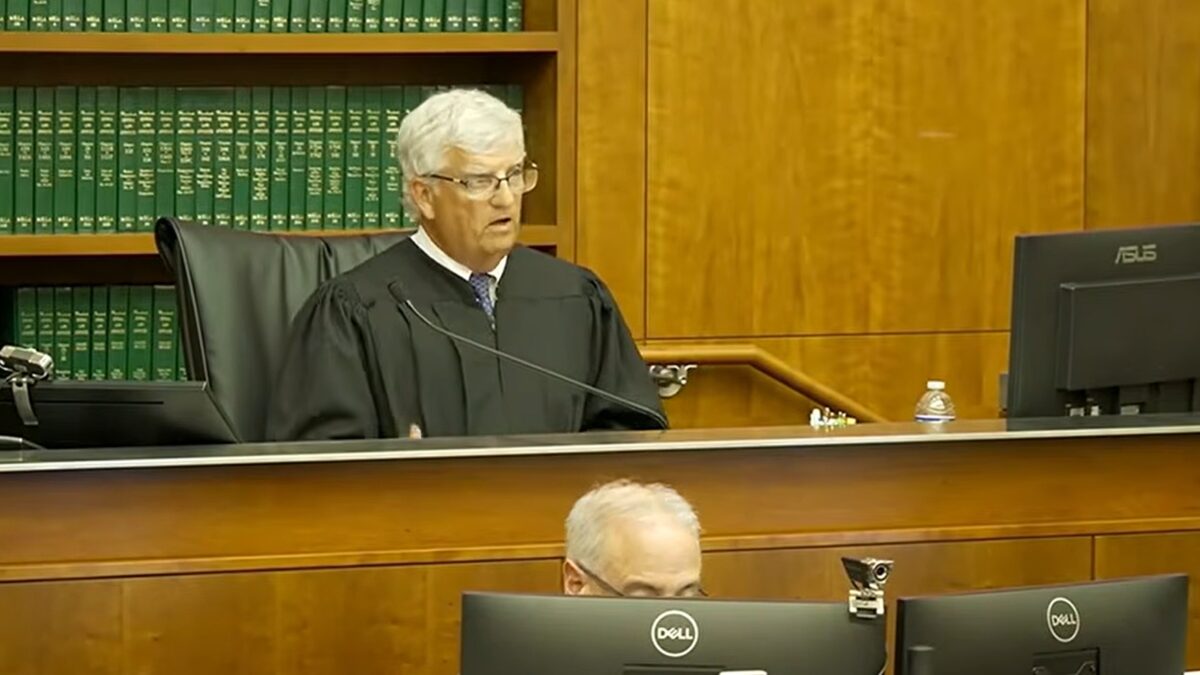
While the secretary of state’s office maintains that the facility is not a site for public oversight, video from the April 15, 2026, SEB meeting reveals that officials have granted selective access to it. The recording shows Chairman John Fervier stating, on the record, that he has previously been invited into the Bunker by the secretary of state’s office and that he accepted the invitation. The rest of the board was not invited.
When contacted for comment, Grubbs said that in a recent email Fervier informed board members that he had specifically inquired about securing access for them during the upcoming primary election, but the request was denied by the secretary of state’s office.
Even before this latest issue surfaced, election integrity activists were quick to point out that although votes are certified at the county level, Secretary Raffensperger is still overseeing the election he is a candidate in. And this latest denial of access fits a troubling pattern of transparency concerns in Georgia elections.
In 2020, Republican observers were sent away from ballot counting at State Farm Arena in Fulton County late on election night after a reported pipe burst, during which time processing continued without independent oversight. More recently, Julie Adams, a Republican member of Fulton County’s Board of Registration and Elections, sued the county for wrongfully withholding critical election records. The secretary of state’s office has also faced criticism for delayed responses to dozens of open records requests on election operations and for resisting full disclosure of voter registration data to the Department of Justice.
The coordinated push from party leadership, a board member, and key advocates underscores a broader concern: that independent oversight of the centralized vote compilation and reporting process remains limited, even as voters head to the polls.