
It was a gruesome month for Democrats in the 2026 redistricting war. Virginia Democrats’ effort to create a heavily Democrat-favored congressional gerrymander crashed and burned with losses at both the Virginia Supreme Court and the United States Supreme Court. Between those rulings, the Missouri Supreme Court slapped down an attempt to overturn a duly enacted congressional map in Missouri that may net Republicans an additional congressional seat.
Why the two ostensibly different results? Redistricting criteria are primarily set by state election law, and while Missouri Republicans followed the law, Virginia Democrats ignored their state’s constitution. As my former team warned months ago, Virginia Democrats’ scheme was doomed from the start by misguided procedural short-cuts.
Missouri: Maggard v. State
The saga of Maggard v. State began when Missouri Gov. Mike Kehoe announced a special session to redraw congressional maps, targeting a safe blue 5th Congressional District. The Republican-controlled Missouri legislature passed the proposed map, with Kehoe signing the related bill into law.
This month, in Maggard v. State, two voters sued Missouri to suspend the state’s new congressional map pending a referendum petition — a process not normally required for redistricting. The court ultimately decided against suspending Missouri’s map because the case sought to create new requirements where none existed by attempting to automatically suspend the map upon the mere filing of a referendum petition with the secretary of state.
Missouri Republicans have so far engaged in their mid-decade redistricting by the book and their new map has now been approved by the Missouri Supreme Court multiple times. Time will tell if the Democrat-led referendum petition will move beyond the filing stage or if it will be found insufficient by the state, but, regardless, it is safe to say that the Democrats will continue to challenge Missouri’s new congressional map.
Virginia: A Very Different Story
In my service to Virginia, I saw some of the Commonwealth’s most significant election-related matters and litigation in recent memory, including the start of Virginia Democrats’ gerrymandering attempt in late 2025.
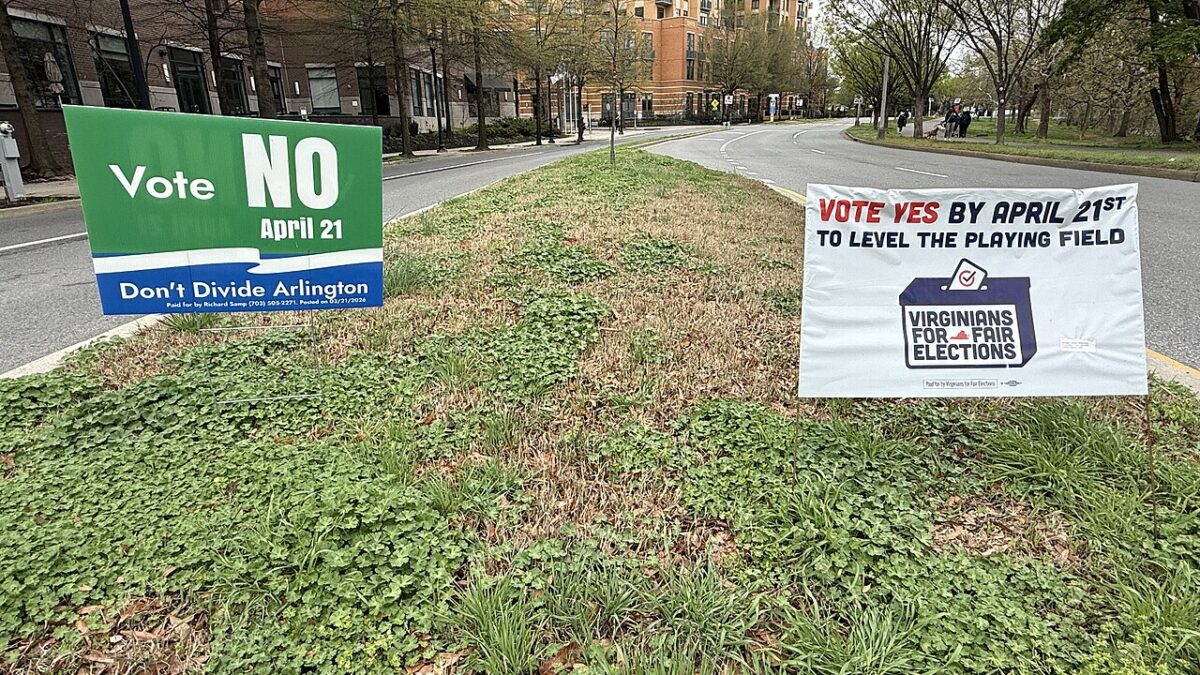
Virginia Democrats’ ill-fated attempt to gerrymander under the premise of “restor[ing] fairness” cost them more than $60 million in messaging and cost Virginia taxpayers more than $5 million — not including litigation costs. Virginia Democrats’ gerrymander attempt was doomed from the start by procedural missteps: most significantly, they began the process too late.
The Virginia Constitution vests redistricting authority with an Independent Redistricting Commission rather than the legislature. For Virginia Democrats to initiate their gerrymander, they had to first attempt to amend Virginia’s constitution to temporarily supersede the authority of the commission. In order to amend the constitution, the legislature must first approve a proposed amendment in two legislative sessions with an intervening election of the House of Delegates in between the two approvals. Only then can a proposed amendment be voted on via referendum.
The Democrat-controlled Virginia legislature first approved its proposed gerrymandering amendment on Oct. 31, 2025. At that late date — and after weeks of early voting — more than 1.3 million votes had already been cast in the November 2025 general election: roughly 40 percent of total votes cast in that election. Virginia Democrats clearly started their gerrymandering attempt during, rather than before, the general election. Accordingly, there was no “intervening” election during the constitutional amendment process, as required by Virginia’s constitution. This did not stop Virginia Democrats from approving the proposed amendment again in early 2026 and holding a referendum.
On May 8, 2026, the Virginia Supreme Court struck the proposed amendment and referendum results because Virginia Democrats violated the intervening election requirement of the Virginia constitution. The U.S. Supreme Court subsequently denied Virginia Democrats’ attempt to stay the Virginia Supreme Court’s decision a week later.
Who could have seen this coming? Then-Attorney General Jason Miyares and my team in his Election Law Section did. In fact, while Virginia Democrats were scrambling to ram through their redistricting vote in the week before the November 2025 general election, three days before it passed the legislature, Miyares, working with both my Election Law Section and the Office of the Attorney General’s Opinions Section, stated exactly that in Attorney General Opinion 25-029. Had Virginia Democrats read Miyares’ opinion, it would have saved them and the taxpayers of Virginia tens of millions of dollars.
Ultimately the misadventures of Virginia and Missouri Democrats should cause lawmakers contemplating such action to remember that while they may be free to exercise their authority, “the Rule of Law requires that it be done the right way,” as Justice D. Arthur Kelsey wrote in the Virginia Supreme Court majority opinion. Each state possesses different redistricting procedures that must be strictly followed.
Virginia Democrats cannot act beyond their state’s laws to suit their legislative agenda, just as Missouri Democrats cannot create new law via court decree to suspend Missouri’s congressional map.